

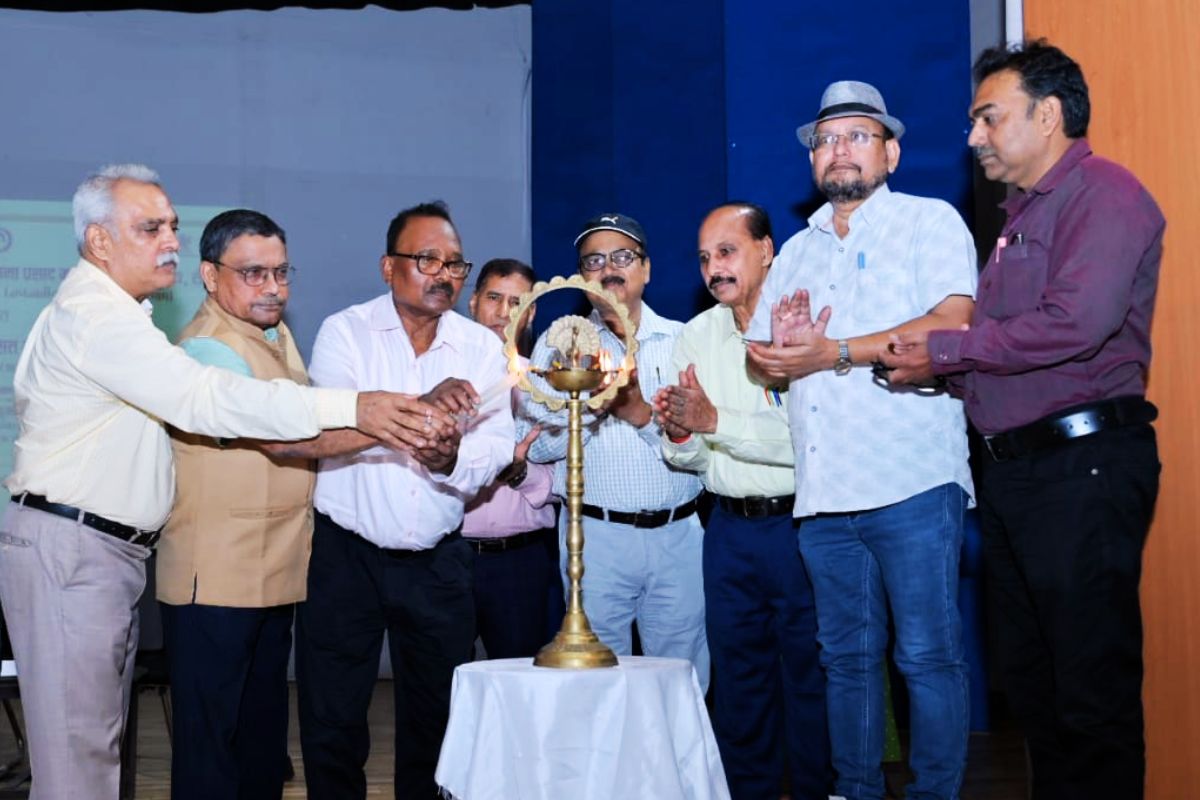
The Indira Gandhi National Centre for the Arts Regional Centre Ranchi and the Department of Tribal and Regional Languages, Dr. Shyama Prasad Mukherjee University, Ranchi, jointly organized a one-day seminar to commemorate the 170th anniversary of the Santhal Hul (1855–56), a significant event in tribal history. The seminar, titled ‘Santhal Hul: Memory of Tribal Resistance and Heritage,’ saw active participation from scholars, researchers, and students, aiming to revive the memory of tribal resistance.
Dr. Kumar Sanjay Jha, Regional Director, Indira Gandhi National Centre for the Arts, Ranchi, delivered the welcome address, shedding light on the rich but often overlooked history of the Santhal Hul. He emphasized that the Hul represented tribal identity, self-respect, and cultural struggle.
Dr. Binod Kumar discussed various interpretations of the term ‘Hul,’ highlighting that the true spirit of independence ignited with the Santhal Hul in 1855. He paid tribute to the bravery of key figures like Sidho-Kanho, Chand-Bhairav, and Phulo-Jhano.
Dr. RK Nirad addressed the importance of factual accuracy and authenticity in historical research, especially with the increased accessibility of historical sources. He emphasized that history is a responsibility requiring critical analysis.
Dr. Dinesh Narayan Verma criticized colonial narratives, highlighting that the Santhal Hul was a spontaneous revolution to protect tribal rights. He emphasized the need to present tribal struggles from an authentic perspective.
Prof. Piyush Kamal Sinha presented a balanced perspective, emphasizing that the Santhal Hul was the first organized resistance against colonial exploitation.
Sanjay Krishnan highlighted that the background of the Santhal Hul began in 1853, with many unsung heroes contributing to the movement.
Prof. SN Munda emphasized that the Santhal Hul was an example of preserving cultural and economic identity, urging the need to protect cultural heritage and local resources.
The seminar also included contributions from Dr. Kamal Bose and Dr. Jai Kishore Mangal. The event aimed to highlight the historical, cultural, and socio-political significance of the Santhal Hul and encourage a re-evaluation of tribal resistance movements in mainstream historical narratives.