

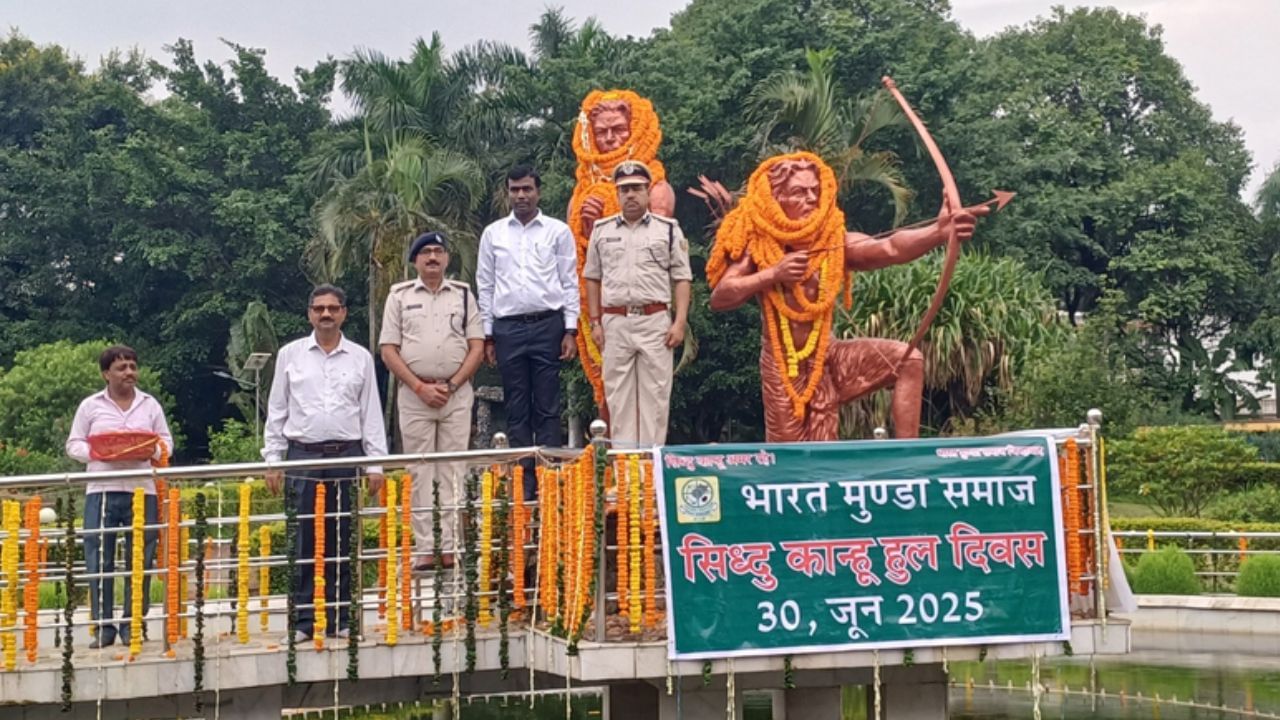
While 1857 is widely recognized as the year of India’s first major struggle for independence, historical evidence suggests the true beginning lies in 1855 with the Hul movement. This pivotal uprising, spearheaded by the Santhal community in the Bhognadih area of Jharkhand’s Santhal Pargana, predates the more famous Sepoy Mutiny, compelling the British to acknowledge the Santhals’ defiance.
The rebellion, which unfolded over nine months, saw thousands of Santhals challenge the British administration. The leaders, including Sidhu and Kanhu Murmu, ignited the rebellion against the oppressive rule of the British East India Company and exploitative practices of moneylenders. Over 50,000 Santhals from hundreds of villages participated in the uprising. Sidhu-Kanhu, along with their brothers Chand and Bhairav, established a parallel administration and galvanized the people to resist.
The resistance involved confronting landlords, moneylenders, and those aligned with the British. The slogan “Leave Our Land” echoed through the movement, highlighting the Santhals’ determination to reclaim their territory. In response, the British employed brutal tactics, including targeting women and children, but the Santhals retaliated. The colonial government attempted to quell the revolt by offering rewards for the capture of the leaders.
The aftermath of the Hul movement forced the British to act. The Santhal Pargana Tenancy Act (SPT Act) of 1876 was enacted to protect Santhal land and promote self-governance, thus ensuring the preservation of their culture. Despite the tragic loss of many lives, including Sidhu-Kanhu, Chand-Bhairav, and Phulo-Jhano, the movement secured lasting change. Sidhu Murmu was hanged on July 26, 1856, and Kanhu Murmu was executed in Bhognadih. Today, June 30 is celebrated as Santhal Hul Day, a day of remembrance for this crucial struggle.