

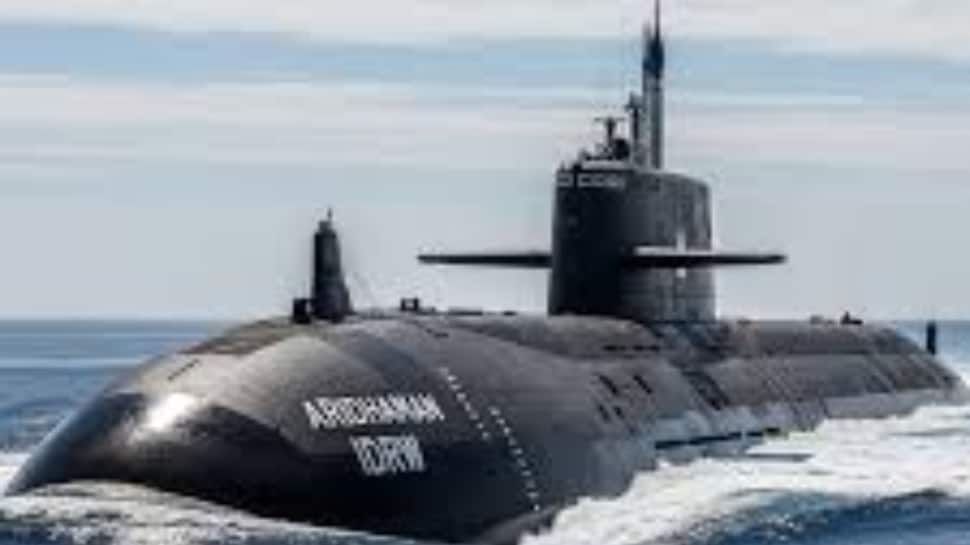
The Indian Navy is set to welcome its third indigenous nuclear-powered ballistic missile submarine (SSBN), INS Aridhaman, a development confirmed by Navy Chief Admiral Dinesh Tripathi. This strategic asset’s imminent commissioning is a critical step towards completing India’s sea-based nuclear triad. The nation recently marked a significant milestone with the induction of INS Arighaat, the second SSBN, in August. The arrival of INS Aridhaman will ensure India possesses three operational ballistic missile submarines at sea concurrently for the first time, marking a new era for its strategic defense.
INS Aridhaman is a product of the top-secret Advanced Technology Vessel (ATV) project, a long-term initiative launched in the 1990s with substantial financial backing. The submarine is currently undergoing rigorous advanced sea trials, highlighting its sophisticated design and capabilities, which surpass those of earlier vessels. A key enhancement is its size; with an estimated 7,000 tonnes displacement, INS Aridhaman can accommodate a larger number of long-range K-4 nuclear missiles. This increased missile capacity significantly bolsters India’s deterrence posture and enhances the survivability of its strategic assets, reinforcing its ‘No First Use’ nuclear doctrine. The naval expansion continues with a fourth SSBN already under construction, promising further enhancements to India’s strategic deterrence.
This indigenous capability development is a major stride towards self-sufficiency in defense. However, in a global context, India’s SSBN fleet is still developing. Major nuclear powers like China, with its Jin-class SSBNs, and the United States, with its extensive Ohio-class fleet, possess larger submarine forces. Nevertheless, the commissioning of INS Aridhaman signifies India’s determined effort to build a credible minimum nuclear deterrent, vital for ensuring strategic stability in the complex Indo-Pacific theater.