

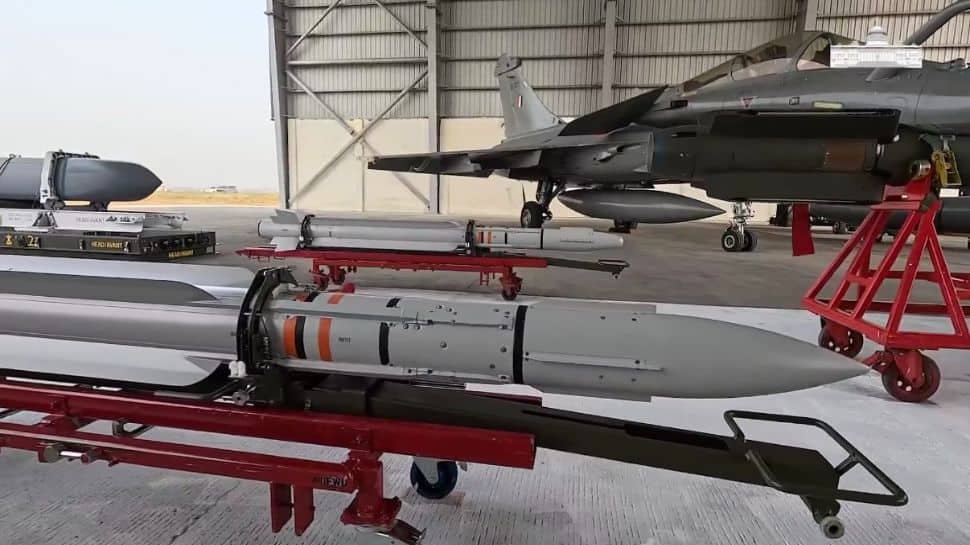
The acquisition of French-made Rafale fighter jets by India in 2016, hailed as a strategic masterstroke, is now under a cloud of doubt due to a critical omission: the absence of the Meteor missile. This long-range air-to-air missile, a key component of the Rafale’s combat suite, was not included in the initial deal for the 36 aircraft. The Meteor’s unparalleled range of nearly 200 kilometers provides a decisive edge in air superiority, a capability that was central to the aircraft’s intended role against adversaries like Pakistan’s F-16s armed with AMRAAM missiles.
After years of operation without this vital weapon, India is reportedly close to approving a Rs 1,500 crore deal for a new consignment of Meteor missiles. Defence officials confirm this move is aimed at bolstering the Indian Air Force’s (IAF) Rafale fleet, acknowledging the jets’ prolonged period of operational deficiency. This belated acquisition highlights a significant lapse in the original procurement planning.
Critics are labeling this a failure in strategic planning and accountability. The decision to opt for 36 ‘best of the best’ Rafales was heavily predicated on their advanced capabilities, including the Meteor missile. Without it, the aircraft’s touted superiority is diminished. The entire justification for the Rafale deal was to counter advanced threats, yet the jets were deployed without their most effective countermeasure. Allegations of overlooked critical systems and potential corruption are surfacing as a result of this oversight.
The need for such long-range weaponry was implicitly demonstrated during recent air encounters, where the ability to neutralize threats from afar proved crucial. The ongoing process to procure Meteor missiles signifies a correction to a decade-old planning error, aiming to finally deliver the full operational potential of the Rafale fleet.
While India pursues indigenous missile development, such as the Astra Mark 2 for its other aircraft, the Rafale’s Meteor gap remains a stark reminder of flawed execution. The protracted delay in acquiring this defining weapon raises serious questions about the decision-making processes and oversight within India’s defence procurement system, casting a shadow over one of its most significant defence acquisitions.