

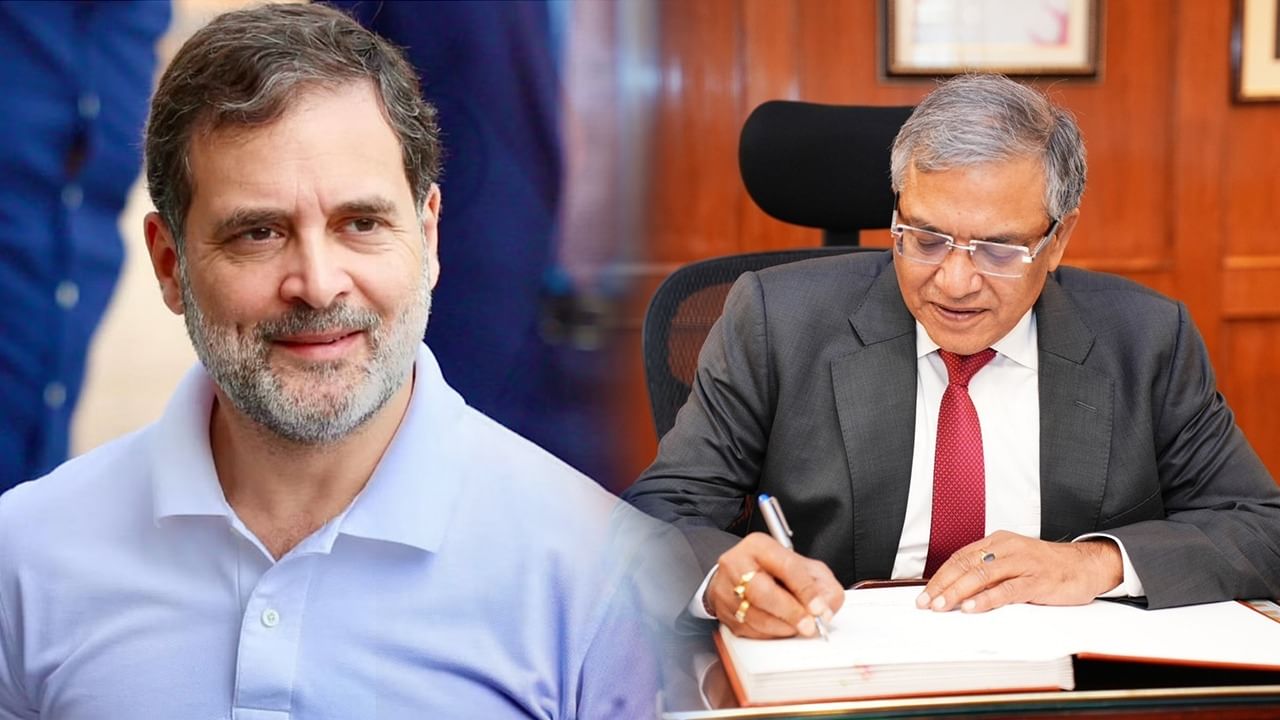
The Chief Election Commissioner, Gyanesh Kumar, addressed the allegations of vote tampering made by Rahul Gandhi, a senior Congress leader and the Leader of the Opposition in the Lok Sabha. Kumar declared that Gandhi must either submit an affidavit or apologize to the nation. This statement came during a press conference, where Kumar specified that if Gandhi failed to comply within a week, the charges would be dismissed as unfounded. The Election Commission’s demand for an affidavit followed Gandhi’s accusations, but Gandhi declined, asserting that his statements were public and within his capacity as a Member of Parliament. Kumar underscored that mere repetition does not validate a claim, drawing a parallel to the unchangeable natural order. He emphasized the necessity of a sworn statement within the next seven days, failing which the accusations would be considered unsubstantiated. He stated that the Election Commission could not address such serious issues without proper documentation, as doing so would violate the constitution.
The Chief Election Commissioner also addressed the issue of names of valid voters, stating that no name would be removed without substantive evidence. He also said that the Election Commission could not act on serious topics without an affidavit. He also responded to questions on why an investigation wasn’t initiated. Kumar responded by stating that 150,000 notices were issued without evidence or an affidavit. Kumar stated, “We stand like a rock with the voters…” He also said that an affidavit must be submitted or an apology to the country must be offered. The Chief Election Commissioner noted the commission’s long-standing dedication over 75 years and highlighted the need for evidence when facing accusations. He reiterated that no valid voter’s name would be removed without proof and that they remain steadfast in their position. Regarding Rahul Gandhi’s claims of match-fixing in Maharashtra, Kumar addressed the alleged irregularities. He asked why claims and objections weren’t filed when the draft list was available. Kumar also responded that the election commission received no names of voters with supporting evidence. He further noted that the elections took place eight months ago. The commission had also responded to questions about the voting process, indicating that with 10 hours of voting, the average voting percentage per hour is 10%.