

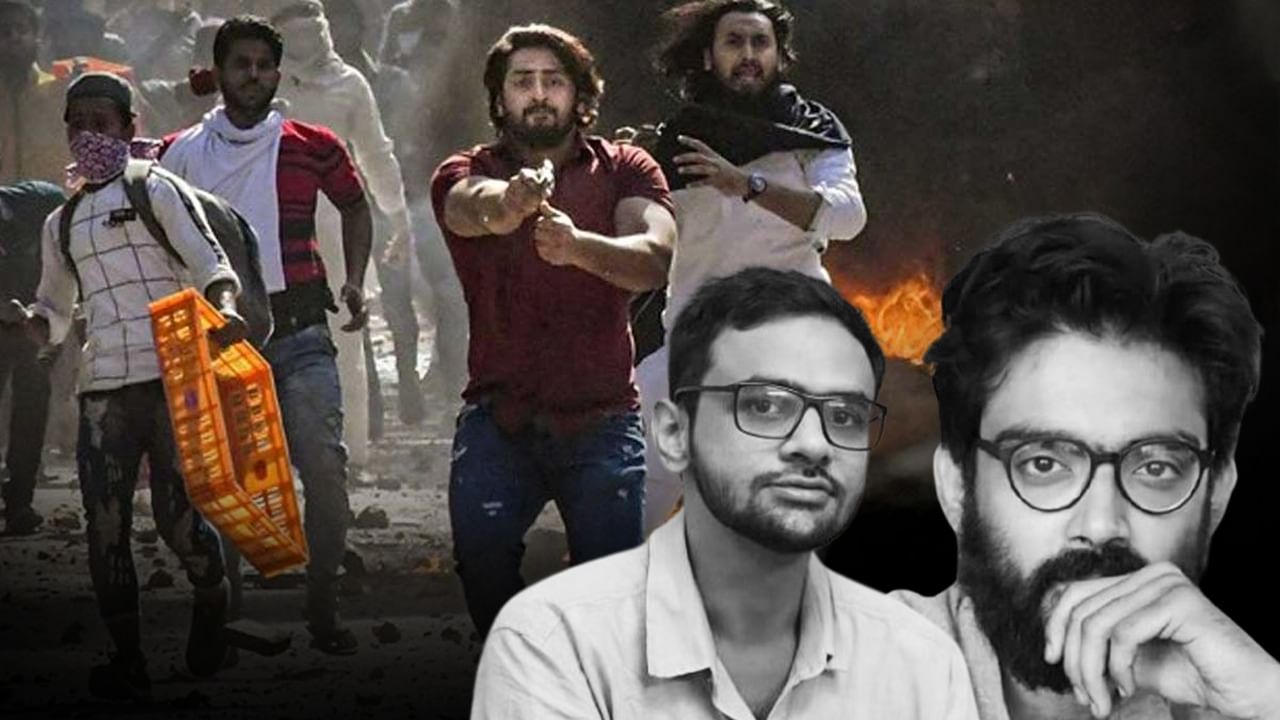
The Delhi High Court recently dismissed the bail applications of Umar Khalid and Sharjeel Imam, who are implicated in the 2020 Delhi riots. The two former Jawaharlal Nehru University (JNU) students have been incarcerated for five years. Sharjeel Imam was arrested on August 25, 2020, while Umar Khalid was taken into custody on September 13, 2020. A contrasting figure in this scenario is Shahrukh Pathan, who was seen pointing a gun at a Delhi Police officer during the same riots; he has since been released from jail.
Shahrukh was granted 15 days of bail in March of this year by the court, which considered his father’s deteriorating health. His legal counsel argued that he had been in judicial custody since March 3, 2020, and had never been granted interim bail. Pathan faces charges in two cases related to the riots, including the act of pointing a gun at Head Constable Deepak Dahiya and allegedly being involved in a conspiracy to murder Rohit Shukla.
Umar Khalid and Sharjeel Imam face charges under the Unlawful Activities (Prevention) Act (UAPA) and the Indian Penal Code (IPC), accused of being the primary instigators of the February 2020 riots. The riots resulted in 53 fatalities and over 700 injuries, triggered by protests against the CAA-NRC.
Sharjeel Imam and Umar Khalid’s requests for release have been denied after five years. Despite appealing to the High Court, their petitions were rejected. Their previous attempts for bail in a lower court were also unsuccessful. Challenging this lower court decision, Imam and Khalid cited their lengthy detentions and pointed out that other co-accused had been granted bail.
In its decision on Tuesday, the High Court asserted that the right to participate in peaceful protests and to give public speeches, as protected under Article 19(1)(A), is not absolute and must not be misused. The court determined that allowing unrestricted protests would undermine the constitutional framework and potentially destabilize law and order.
The court stated that citizens cannot be permitted to engage in conspiratorial violence under the guise of demonstrations or protests. Such actions are not protected by freedom of expression. The court maintained that the Constitution provides the right to demonstrate or protest, provided that such demonstrations are organized, peaceful, and unarmed.
The judgment further stated that citizens possess a fundamental right to voice their concerns regarding legislative actions. This right fortifies the democratic process by involving citizens in governance. Furthermore, this right is critical, as it enables citizens to express their disagreement, expose flaws in governance, and seek accountability from government officials. Nevertheless, any such actions must be conducted within the boundaries of the law.