

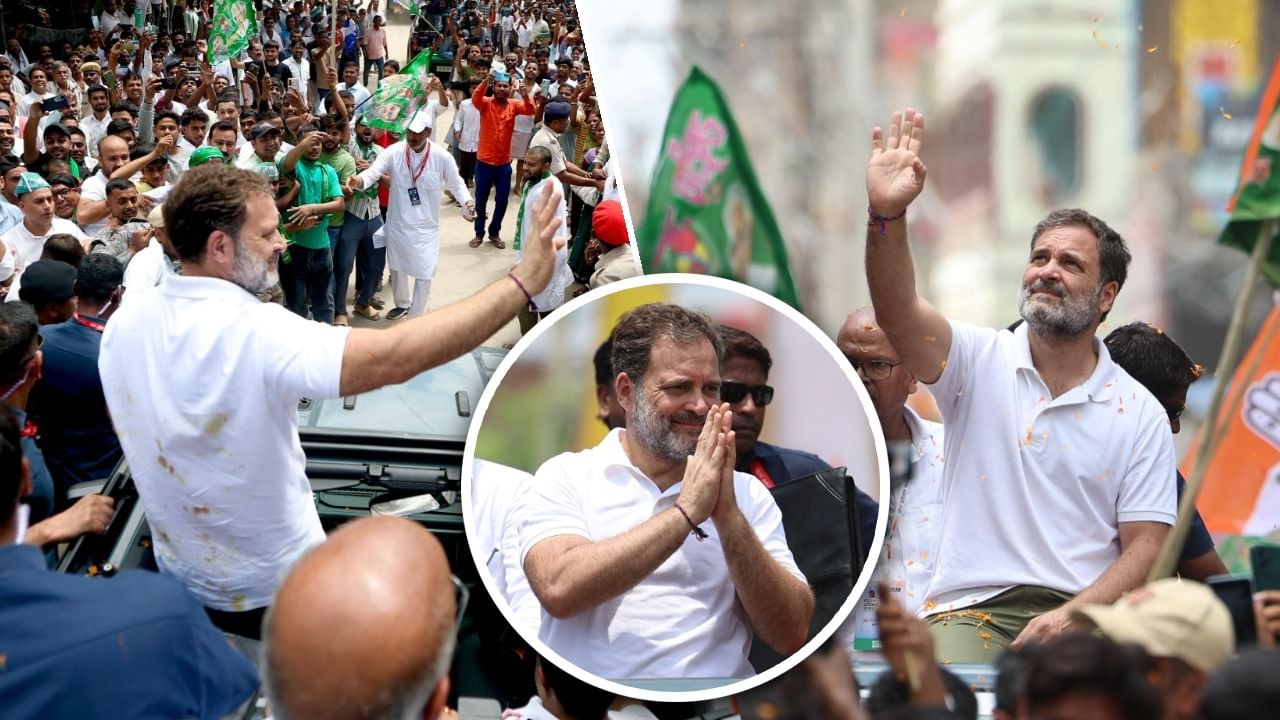
Ahead of the Bihar assembly elections, a new political initiative, the ‘Voter Rights Yatra,’ is being spearheaded by Rahul Gandhi. Starting from Sasaram on Sunday, the yatra aims to address concerns of alleged ‘vote theft’ and will arrive in Gaya on Monday. The schedule includes a visit to the Surya Dev temple and a public address. The night’s stay is planned at the Rasalpur Cricket Ground.
This yatra sees participation from key figures within the ‘INDIA’ opposition coalition, including former Deputy Chief Minister of Bihar, Tejashwi Yadav. The primary objective for Gandhi is to re-establish the Congress party’s support base, which has seen a decline over the last three decades. The Congress is now considered a junior partner in Bihar’s political landscape, allied with the Rashtriya Janata Dal-led Grand Alliance. The party’s current standing is evident in its performance in the previous elections, where it contested 70 seats and secured 19 victories, compared to the RJD, which contested 144 and won 75.
The yatra is designed to cover 20 districts over 16 days, traveling approximately 1,300 kilometers. It aims to reignite the party’s connection with voters, particularly in light of the ongoing Special Intensive Revision (SIR) of the voter list.
The route includes major cities such as Aurangabad, Gaya Ji, Nawada, Nalanda, Sheikhpura, Lakhisarai, Munger, Bhagalpur, Katihar, Purnia, Araria, Supaul, Madhubani, Darbhanga, Sitamarhi, East Champaran, West Champaran, Gopalganj, Siwan, Chhapra, and Arrah. The concluding event, a ‘Voter Rights Rally,’ is scheduled for September 1st in Patna’s Gandhi Maidan, expected to draw prominent leaders from the INDIA alliance.
The ‘Voter Rights Yatra’ is strategically planned. Starting from Sasaram, known for its Dalit population and the legacy of Babu Jagjivan Ram and Meira Kumar, the itinerary is crafted to resonate with specific communities.
The focus of the yatra, spearheaded by Gandhi and Yadav, is to attract support from Dalit and Muslim voters, traditionally considered Congress’s strongholds. This is exemplified by Gandhi’s focus on Dalit voters during his multiple visits to Bihar. The objective is to mobilize the traditional voter base and to expand the party’s appeal.
The yatra also highlights the importance of the Gaya district for the Grand Alliance. In the 2020 assembly elections, the NDA and the Grand Alliance each secured 5 seats. The region is a significant area for the Dalit population. The historical context of the region adds to the significance of the yatra.
In 2020, the Grand Alliance secured all six seats. The performance of the NDA and the Grand Alliance in the Nalanda and Newada regions is noted. The electoral shifts and the recent by-election outcomes underscore the volatile political dynamics.
The Congress is working on connecting again with its traditional voters. The party is making efforts to connect with Dalit and Muslim communities. Recent appointments and initiatives reflect the party’s commitment to these communities.
In the 1990s, the Congress’s vote share in Bihar was 24.78 percent, but it steadily declined. In 2015, the Congress’s vote share was only 6.7 percent, and in 2020, it improved slightly to 9.48 percent. Rahul has organized several rallies and events to connect with Dalits. He also handed over the command of the Bihar Pradesh Congress to Dalit leader Rajesh Ram. He also appointed another Dalit leader, Sushil Pasi, as the co-in-charge of the party to show himself as a well-wisher of this community. Rahul Gandhi is now trying to provide further proof of his goodwill by conducting this yatra from Dalit-Muslim-dominated areas. It remains to be seen what impact these efforts have on the voters of Bihar.