

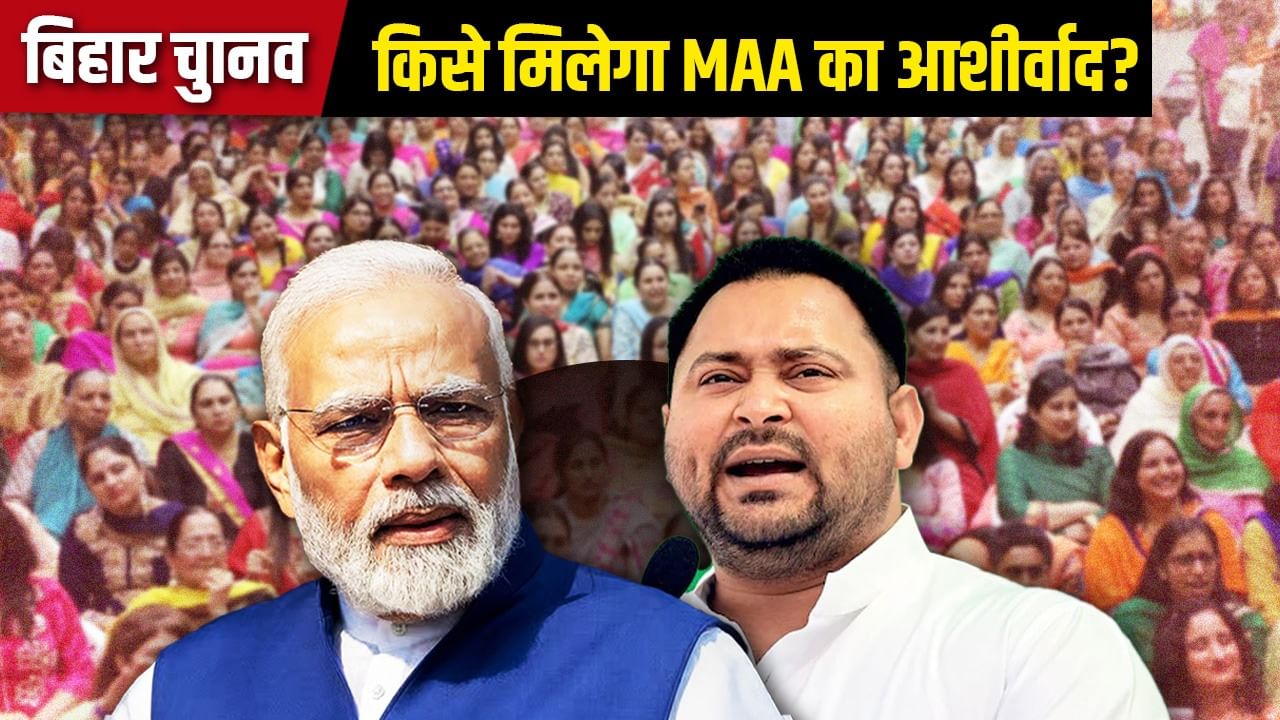
As the Bihar Assembly elections draw nearer, the political climate is heating up significantly. Political parties are aggressively engaging in a war of words, using accusations and counter-accusations to gain an edge on the electoral battlefield. Prime Minister Narendra Modi addressed insults directed at his mother during an India alliance rally, and RJD leader Tejashwi Yadav has responded by taking a page from Modi’s playbook.
In the past, when PM Modi has been targeted with disparaging remarks from opposition figures, he has chosen to respond with grace and composure rather than direct confrontation. He has also effectively transformed personal attacks into campaign strategies, using them as focal points in rallies and placing the opposition in a defensive position.
Instances of this strategy can be seen in the 2007 Gujarat Assembly elections when Sonia Gandhi labeled him a ‘merchant of death,’ and the 2014 Lok Sabha elections when Mani Shankar Aiyar called him a ‘tea seller.’ Additionally, prior to the 2019 Lok Sabha elections, Rahul Gandhi’s use of ‘Chowkidar Chor Hai’ proved to be detrimental to his campaign.
More recently, Rahul Gandhi and Tejashwi Yadav conducted a voter rights campaign before the Bihar elections. During a rally in Darbhanga, PM Modi’s mother was targeted with abusive language. Though the Congress and RJD stated that their leaders were not on stage during the incident, PM Modi emphasized that even his deceased mother was subjected to verbal attacks. He underscored the importance of mothers in society and expressed dismay over the incident, which he found uncharacteristic of Bihar’s culture. He also reiterated that his mother had no connection to politics, yet was targeted.
The BJP has effectively utilized the issue of derogatory remarks against PM Modi’s mother in Bihar, incorporating it into their election campaign, as the opposition lacked a strong response. Tejashwi Yadav, however, is working to counter this. He has put forth the slogans of ‘Empowered Women, Strong Women, and Safe Women,’ and has also redefined the meaning of ‘MAA’ (Mother).
Tejashwi participated in a women’s dialogue at Patna’s Veterinary College, where he stated his intention to launch the MAA scheme to honor women. He explained that MAA symbolizes Makaan (house), Annaaj (grain), and Aamdani (income). Tejashwi is clearly aiming to engage with women voters, who constitute a significant voting bloc in the state.
Other political parties are also actively pursuing the women’s vote. The RJD, part of the India alliance, has announced the MAA scheme. Meanwhile, Priyanka Gandhi is scheduled to meet approximately 2,000 women in Patna and is expected to unveil an election manifesto focused on women, targeting women from various backgrounds.
Simultaneously, PM Modi plans to provide financial assistance to 75 lakh women under the Chief Minister’s Women Employment Scheme, disbursing ₹10,000 each via DBT. The event will be attended by Chief Minister Nitish Kumar. This scheme is a major financial undertaking aimed at supporting a large segment of women.
The emphasis on female voters by the NDA is apparent in Nitish Kumar’s policies. After becoming Bihar’s CM in 2005, he implemented several key measures for women, including the reservation of 50% of seats for women in local bodies in 2006, making Bihar the first state to do so. Other initiatives include the Chief Minister’s Balika Cycle Yojana and the 35% reservation for women in all state jobs in 2016. In 2018, the Chief Minister Kanya Utthan Yojana was launched, providing financial aid to female students until graduation.