

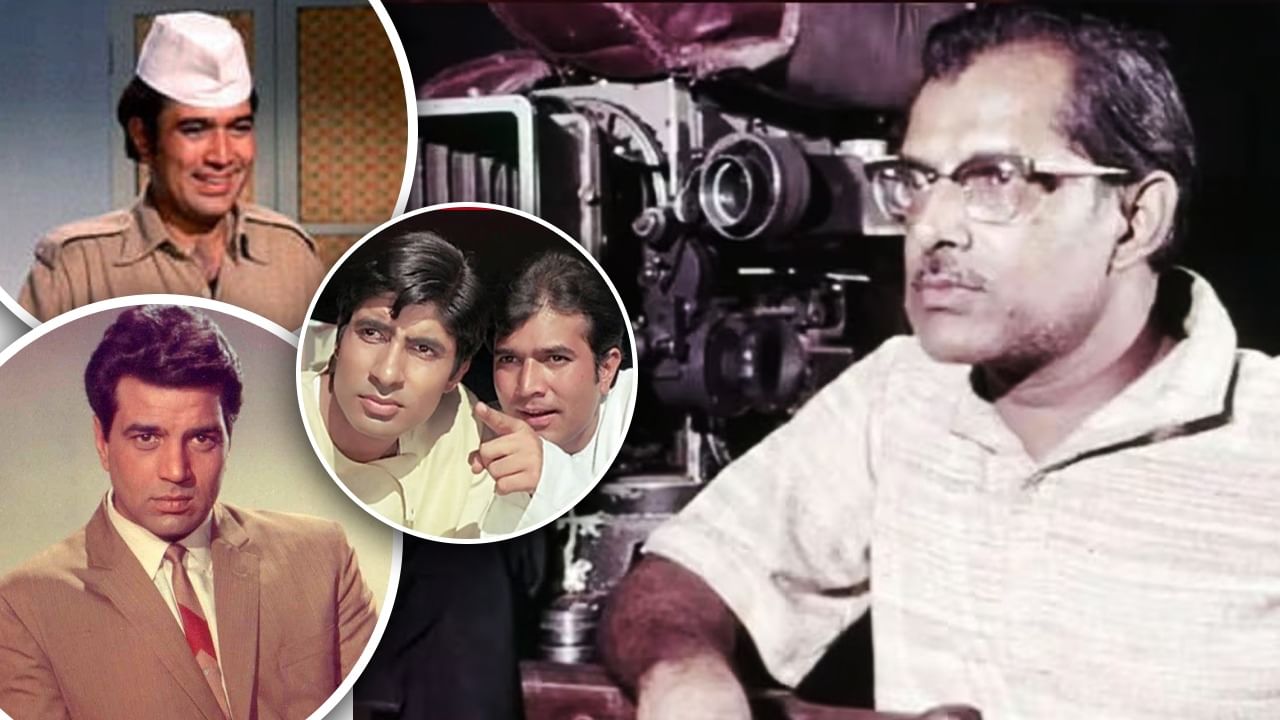
Hrishikesh Mukherjee’s name is synonymous with a brand of cinema that prioritized storytelling and character development over the prevailing trends of star-driven narratives. His 1979 film ‘Golmaal’ exemplifies this. While the name might evoke images of the more recent Rohit Shetty-Ajay Devgn series, the original, spearheaded by actors such as Utpal Dutt and Amol Palekar, was a comedic masterclass that showcased Mukherjee’s ability to craft humor with depth.
Mukherjee’s directorial choices consistently reflected a dedication to simplicity and authenticity. He worked with leading actors but resisted the allure of excessive extravagance, creating films that were both critically acclaimed and commercially successful. This approach is evident in his meticulous script selection and his careful crafting of each scene.
His philosophy was rooted in the belief that a superstar’s role should be determined by the story’s needs, not the other way around. This is clearly seen in ‘Anand’ (1971), starring the then-superstar Rajesh Khanna. A less courageous director might have been swayed by Khanna’s popularity, but Mukherjee prioritized the narrative, allowing Amitabh Bachchan, who was then relatively unknown, to occupy a significant portion of the film’s screen time.
The opening sequences of ‘Anand’ focus predominantly on Bachchan’s character, Dr. Bhaskar Banerjee, effectively establishing his presence and connecting with the audience. This decision, while potentially risky from a commercial standpoint, ultimately elevated the film to a classic. It allowed for the development of a complex character arc, a cornerstone of Mukherjee’s narrative style.
This commitment to script over star power continued in his subsequent works. In ‘Namak Haraam’ (1973), Bachchan and Khanna were cast together again, but Mukherjee ensured that even minor characters were given their due, demonstrating his respect for every role.
Mukherjee acted as a mentor to several artists, including Bachchan. He often discovered and nurtured talent, giving newcomers a platform to shine. His guidance extended beyond the actors themselves, as he was also instrumental in shaping the careers of many others.
Known as a father figure to numerous actors, Mukherjee cultivated a sense of camaraderie on set. His focus remained firmly on the core of the story. He favored a naturalistic style that moved away from the typical cinematic conventions.
Mukherjee’s films stood out for their simplicity and emphasis on everyday life. Born in Kolkata on September 30, 1922, his background was in mathematics and science. He drew inspiration from filmmakers like P.C. Barua and Bimal Roy, learning his craft in the world of cinema. He worked as a cameraman, editor, and assistant director before taking on the mantle of director.
In the 1950s, when Bimal Roy moved to Mumbai, his entire team of collaborators joined him. Mukherjee served as assistant director and editor on projects like ‘Do Bigha Zamin’ and ‘Devdas.’ He went on to develop a unique style that combined social commentary with a focus on family and everyday relationships. He was also known for his work with actors like Dilip Kumar, Raj Kapoor, Dev Anand, and Guru Dutt.
Hrishikesh Mukherjee’s legacy rests on his ability to create films that are still relevant today. Dharmendra, Rajesh Khanna, and Amitabh Bachchan all credit him with shaping their careers and providing them with iconic roles. Unfortunately, many believe that the magic of his storytelling did not continue after his time.