

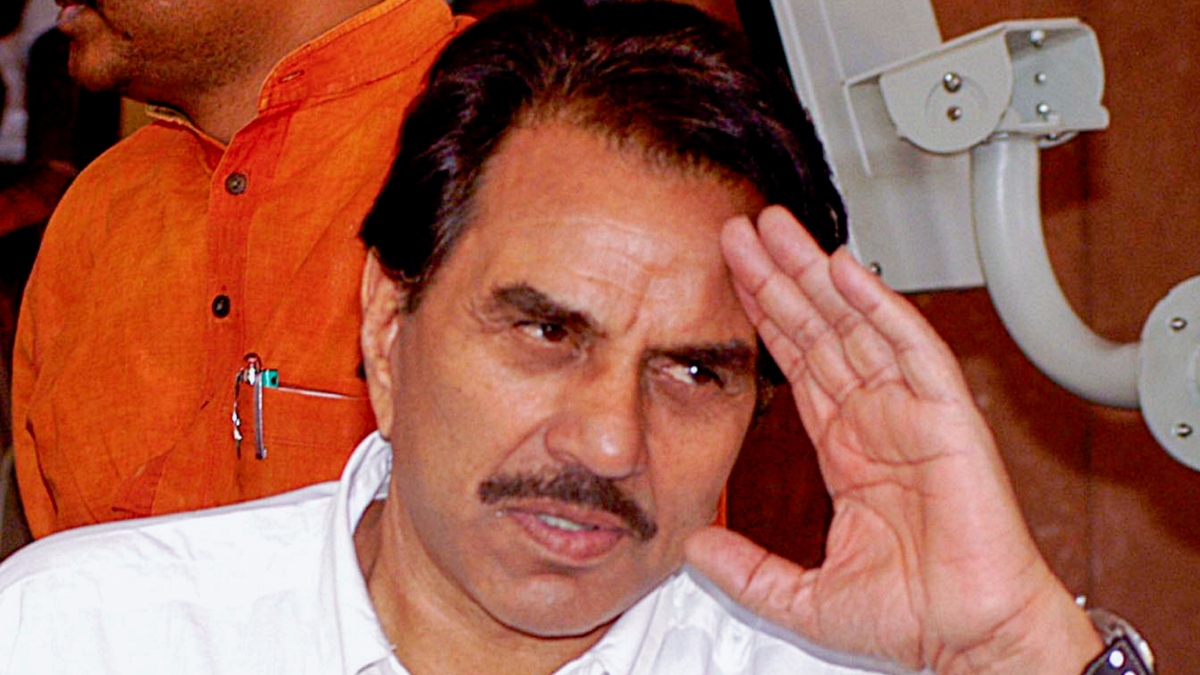
The recent passing of legendary Bollywood actor Dharmendra at 89 has brought attention to various aspects of his life, including his brief but memorable stint in politics. While celebrated as the ‘He-Man’ of Indian cinema, his political career as an MP from Bikaner, Rajasthan, remains a relatively obscure chapter. His election in 2004 and the subsequent ‘missing’ posters incident offer a glimpse into his unique journey in public service.
Dharmendra embarked on his political journey under the banner of the Bharatiya Janata Party (BJP) in 2004. He contested from the Bikaner Lok Sabha seat in Rajasthan, aiming to represent the people of the region. His sons, Sunny Deol and Bobby Deol, actively participated in campaigning efforts to support their father’s electoral bid. In a significant electoral triumph, Dharmendra defeated the Congress candidate, Rameshwar Lal Dudi, by a substantial margin of 57,000 votes, marking a strong start to his political career.
However, the path of a politician proved challenging for the acclaimed actor. Merely a year after his victory, the city of Bikaner witnessed the appearance of ‘missing’ posters featuring Dharmendra. This was a direct consequence of his prolonged absence from the constituency, as reports indicated that he had not visited Bikaner for an extended period post-election. The posters served as a stark message from disgruntled constituents expressing their disappointment over their representative’s lack of engagement.
Following the ‘missing’ poster controversy, Dharmendra made a concerted effort to address the concerns of his constituents. He visited Bikaner and stayed at the Circuit House, making himself accessible to the public without elaborate security. He actively engaged with residents to understand their issues. A notable initiative was his involvement in the restoration of the Sursagar lake, a significant landmark in Bikaner. Dharmendra took up the matter with Chief Minister Vasundhara Raje and even sought central government aid to bridge funding gaps. Despite his efforts, the project’s completion was primarily attributed to the Chief Minister, and public sentiment towards Dharmendra remained mixed.
Dharmendra’s experience in politics led him to conclude that it was not his calling. After serving his term as an MP, he decided not to contest elections in 2009, effectively stepping away from politics permanently. He returned to his established career in filmmaking and personal life in Mumbai. His wife, Hema Malini, and son, Sunny Deol, continued their involvement in politics, but Dharmendra remained steadfast in his decision to remain outside the political arena, citing a lack of suitability for the field.