

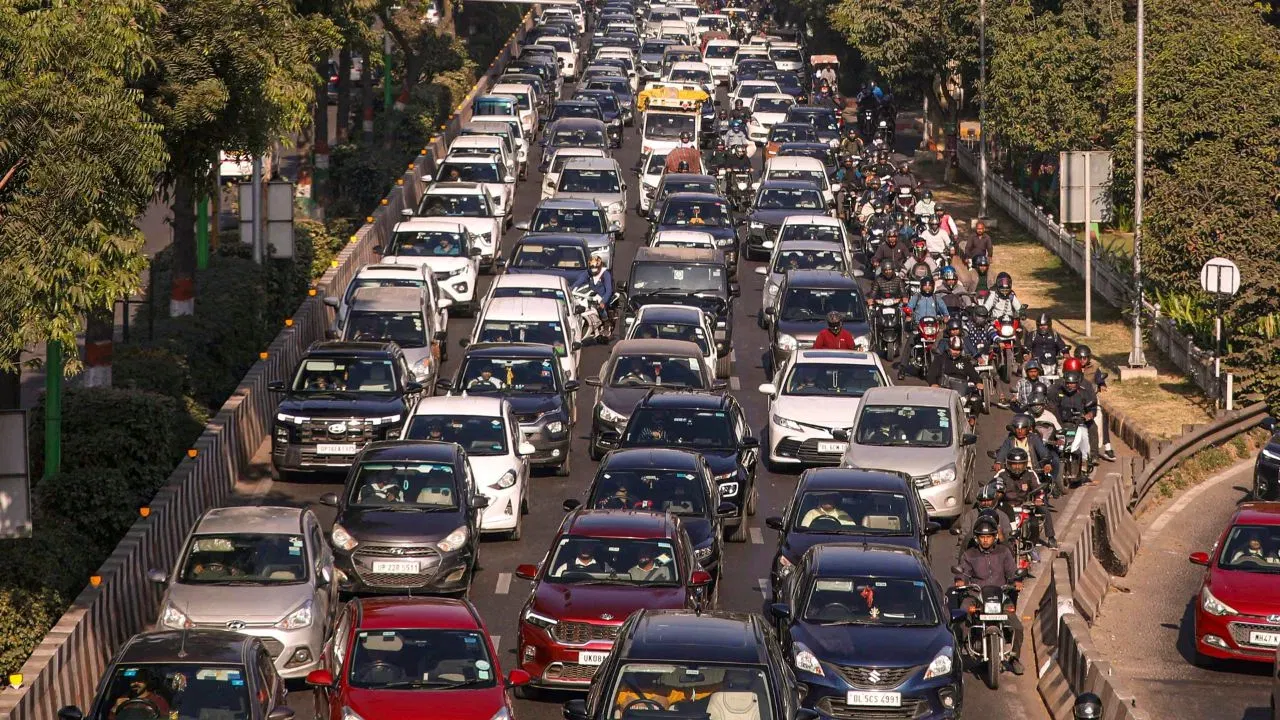
The Supreme Court has strongly criticized the National Highways Authority of India (NHAI) over the issue of toll collection on roads experiencing severe traffic congestion. The court questioned the rationale behind charging commuters ₹150 when they are stuck in traffic jams for extended periods. This intervention came in response to a case involving the NH-544 in Kerala, where travelers have been enduring lengthy delays due to road conditions.
The situation pertains specifically to the Edappally-Manuthy section of NH-544. What was once a one-hour journey has, in some instances, stretched to 12 hours, yet motorists are still being charged at the Paliyekkara toll plaza. The Kerala High Court previously suspended toll collection for four weeks, citing the poor road conditions, ongoing repair work, and resulting congestion as grounds for the suspension.
The NHAI appealed this decision to the Supreme Court, arguing that an overturned truck, which they classified as an “Act of God,” was a primary cause of the congestion. They further stated that service roads were available and that heavy rainfall had hampered repair efforts. The NHAI suggested a possible partial reduction in toll fees instead of a complete suspension.
The Court, however, expressed strong disagreement. Justice Chandran pointed out that if a pothole caused the truck to overturn, it was not merely an act of God but a consequence of inadequate maintenance. Chief Justice Gavai further questioned the fairness of charging ₹150 for a journey that now takes twelve times longer.
During the proceedings, the Supreme Court also brought up the example of Delhi, where even minor rainfall can bring the city to a standstill, highlighting a broader issue of infrastructural shortcomings across the nation. Jayant Mutraj, the senior advocate for the petitioners, argued that the NHAI had failed in its duty and that continuing to collect tolls on unusable roads was a violation of public interest. He emphasized that the High Court’s decision to suspend tolls was made after the NHAI repeatedly ignored directives.