

Suzuki Motor Corporation has revealed its powertrain strategy for the next ten years, incorporating a range of technologies including internal combustion engines, electric vehicles, and hybrids. This approach is designed to help the company meet its carbon neutrality goals, with the aim of achieving zero carbon emissions by 2050 in Japan and Europe, and by 2070 in India. This strategy emphasizes Suzuki’s commitment to both traditional petrol engines and the advancement of electric and hybrid vehicle technologies.
The roadmap includes plans to launch new models featuring fuel-efficient hybrid engines and vehicles that can use biofuel or e-fuel technology. Suzuki believes that providing various powertrain options will be crucial for the future of the automotive industry, adapting to the specific demands and infrastructure of each market. This strategy aims to bolster Suzuki’s position in global markets and foster eco-friendly mobility in the expanding Indian auto market.
Focusing on the Indian market, the Japanese car manufacturer is set to introduce FFVs (Flex Fuel Vehicles) capable of utilizing up to 85% bioethanol by March 2026. Maruti Suzuki India has already begun offering E20 bioethanol-compatible engines since April 2025.
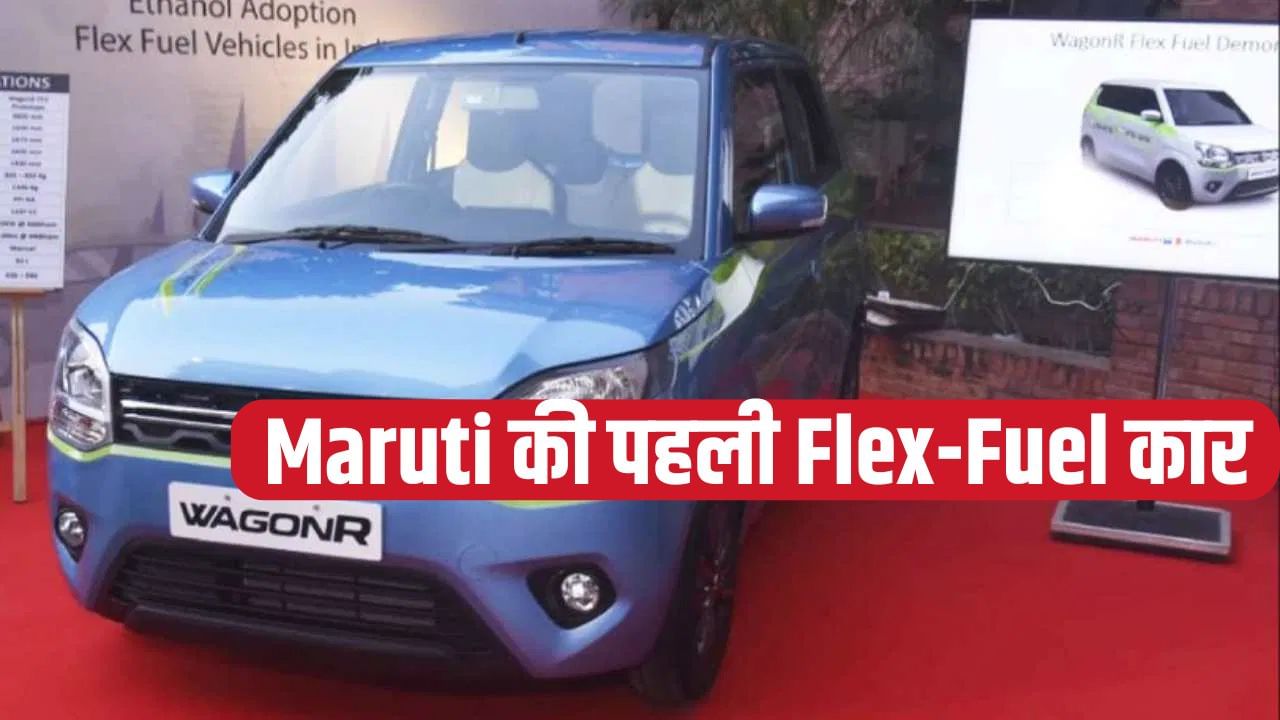
The Maruti Wagon R flex-fuel prototype, first showcased in late 2022 and at subsequent auto expos, is poised to become India’s first mass-market flex-fuel vehicle. It will be designed to operate on ethanol-petrol blends ranging from 20% (E20) to 85% (E95). The model’s development involved Maruti Suzuki engineers with input from Suzuki Motor Corporation in Japan.
In 2026, the Indo-Japanese automaker will introduce its multi-powertrain strategy in India with the eVitara electric SUV and the Fronx hybrid compact crossover. The Maruti Fronx will represent the brand’s first hybrid offering, showcasing an in-house developed strong hybrid powertrain. Reports suggest that the new Maruti Suzuki strong hybrid system will be more cost-effective than Toyota’s Atkinson hybrid powertrain. The company intends to integrate this new hybrid powertrain into models like the new generation Baleno, a compact MPV, and vehicles such as the next generation Swift and Brezza.