

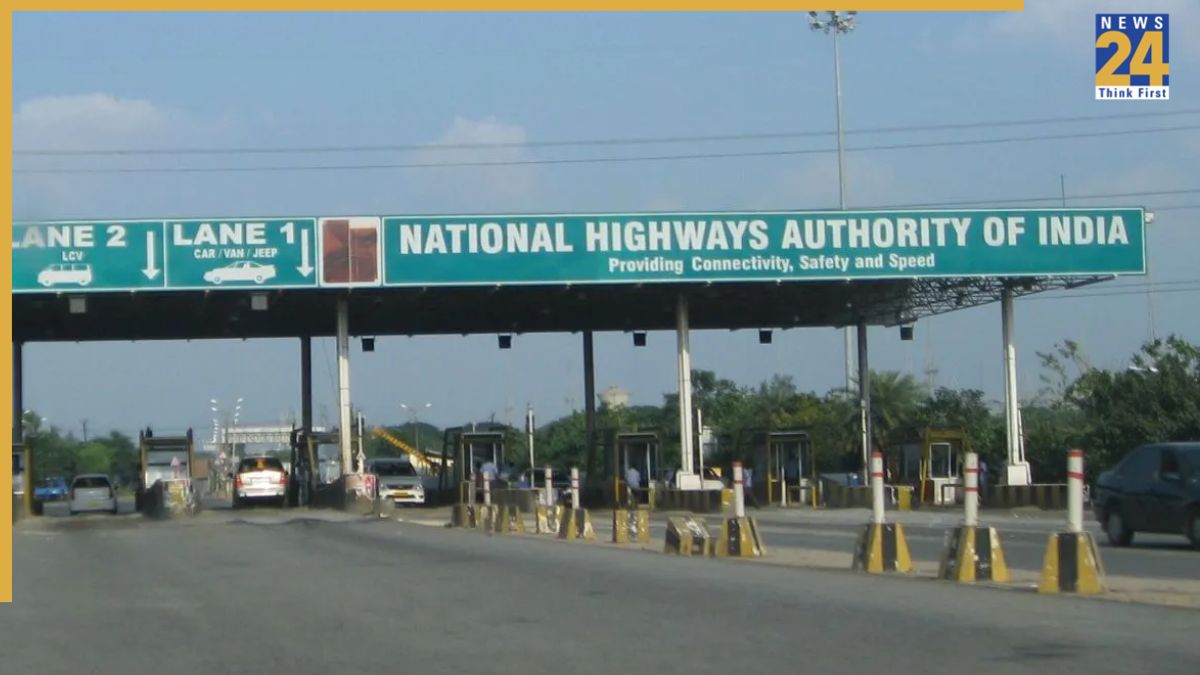
In a significant development, the National Highways Authority of India (NHAI), through its subsidiary, the Indian Highways Management Company Limited (IHMCL), has entered into an agreement with ICICI Bank to launch the nation’s inaugural Multi-Lane Free Flow (MLFF) tolling system. The Choryasi Fee Plaza on NH-48 in Gujarat will be the first to implement this technology. The agreement was formally signed on August 30, at the NHAI Headquarters in Delhi, with NHAI Chairman Santosh Kumar Yadav and senior officials from NHAI, IHMCL, and ICICI Bank in attendance. The implementation of MLFF is designed to provide highway users with a seamless and uninterrupted tolling experience. The technology will facilitate electronic toll collection via FASTag, eliminating the need for vehicles to stop at toll booths. The Choryasi Fee Plaza in Gujarat is poised to be the first in the country to eliminate toll barriers. Furthermore, a separate agreement was also signed with ICICI Bank for the implementation of MLFF at the Gharaunda Fee Plaza in Haryana, which is located on NH-44. NHAI has plans to expand MLFF-based tolling to approximately 25 National Highway fee plazas during the 2025-26 financial year; the identification of suitable locations is currently underway. NHAI Chairman Santosh Kumar Yadav highlighted that the MLFF agreement is a major step in modernizing tolling in India. It is expected to create a more efficient, transparent, and user-friendly system, which aligns with the agency’s technology-focused approach to National Highway operations and will pave the way for the technology’s nationwide adoption.
**Understanding the Multi-Lane Free-Flow (MLFF) Tolling System**
The MLFF system is a barrier-free tolling system designed to improve traffic flow by reading FASTag and Vehicle Registration Numbers (VRN) using high-performance RFID readers and Automatic Number Plate Recognition (ANPR) cameras. This system is designed to streamline toll collection, eliminate stops at toll plazas, decrease traffic congestion, and reduce travel times. It is also expected to improve fuel efficiency and reduce vehicular emissions.