

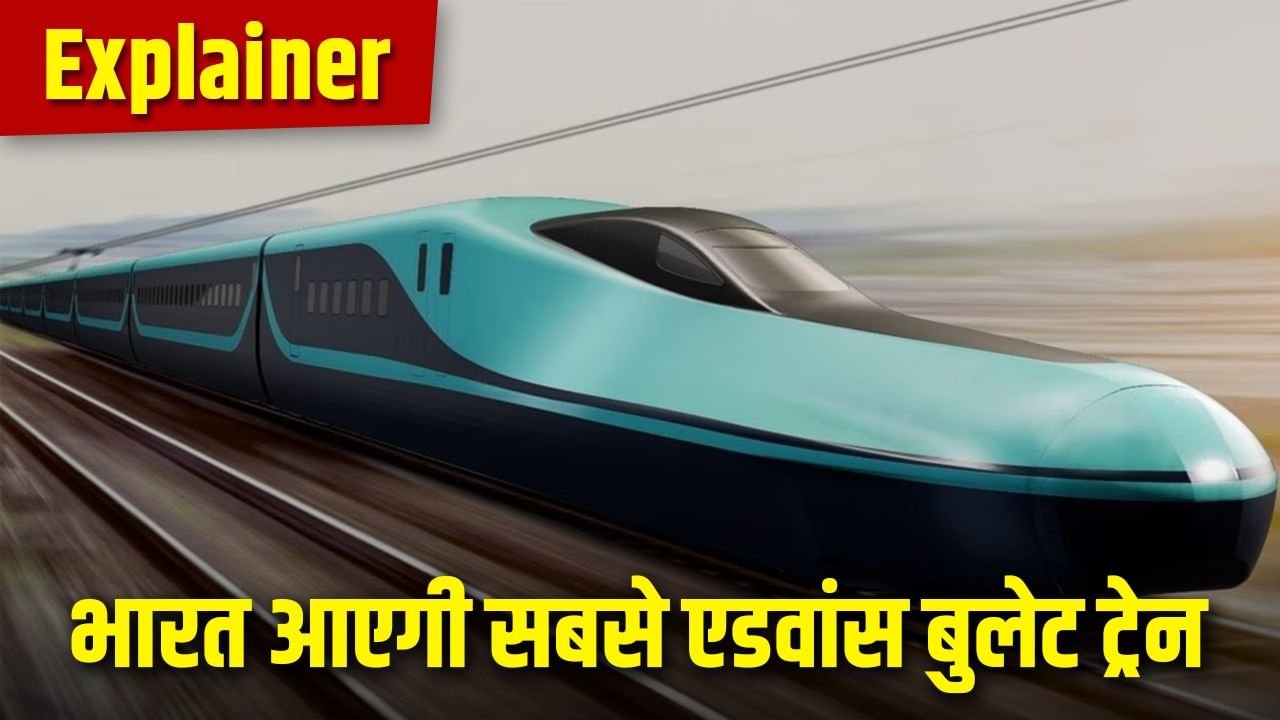
The introduction of high-speed rail in India is on the horizon, promising to drastically reduce travel times between major cities. Central to this advancement is the E10 series Shinkansen bullet train from Japan, a cutting-edge model designed for superior performance and passenger comfort. During a recent visit, Japan committed to providing this state-of-the-art technology to India, signifying a major step forward for the country’s infrastructure.
What distinguishes the E10 series? How does it compare to existing bullet train technology? What innovative features and amenities does it offer, and when can we expect to see it operating in India?
The E10 series Shinkansen represents Japan’s latest advancements in high-speed rail technology. It is a significant upgrade over current models like the E5 and E3 series. A key feature of the E10 is its ability to withstand seismic activity, ensuring operational safety even during earthquakes. Despite its high speeds, the E10 can achieve rapid braking, offering enhanced safety compared to its predecessors. Moreover, the train is designed with passenger comfort in mind, providing improved facilities and a more pleasant travel experience.
Built by Japan Railways, the E10 Shinkansen boasts a top operational speed of 320 km/h, with the potential to reach 360 km/h under optimal conditions. The train’s braking system is also highly advanced, requiring a stopping distance of less than 3.4 km from maximum speed, a notable improvement over the E5 series, which needs 4 km. The E10 is equipped with a more powerful and sophisticated engine and is designed to be fully automated in the future.
Currently, the E10 Shinkansen series is in the final stages of development. The introduction of the E10 in Japan is scheduled for 2030, which will replace the E5 and E2 series. India will initially receive E5 and E3 trains as temporary solutions. The Mumbai-Ahmedabad bullet train line, slated to commence in 2027-28, will initially utilize the E5 trains, with plans to eventually transition to the E10 series. Prime Minister Modi’s recent visit included a tour of the factory where the E10 trains are being manufactured.
Initially, Japan planned to offer the E5 series Shinkansen to India; however, due to project delays and the availability of advanced technology, the E10 series was proposed. Inspired by Japan’s cherry blossoms, the design of the E10 series includes earthquake-resistant features, such as L-shaped guides that prevent derailment during seismic events. The E10 trains will provide more luggage storage, dedicated window seats for wheelchair users, and a luxurious seating arrangement, improving the overall travel experience.
India has been eagerly anticipating the arrival of its bullet train network. The initial phase is set to launch by 2028. Known as the high-speed rail project, it is rapidly advancing, with the first section in Gujarat expected to open by 2027. The complete 508-kilometer route should be operational by 2028, reducing the travel time between Gujarat and Mumbai to just two hours and seven minutes.
The high-speed rail project in India began with a study in 2009. The Ministry of Railways and the Japan International Cooperation Agency (JICA) spent four years preparing the initial report. Further delays arose in securing funding and finalizing agreements. Japan agreed to provide 80% of the project funding through low-interest loans. The Mumbai-Ahmedabad High-Speed Rail (MAHSR) project broke ground in 2017, with Prime Minister Modi and then-Japanese Prime Minister Shinzo Abe officiating the launch. While initial progress was slow, the project is now on track for completion by 2028.