

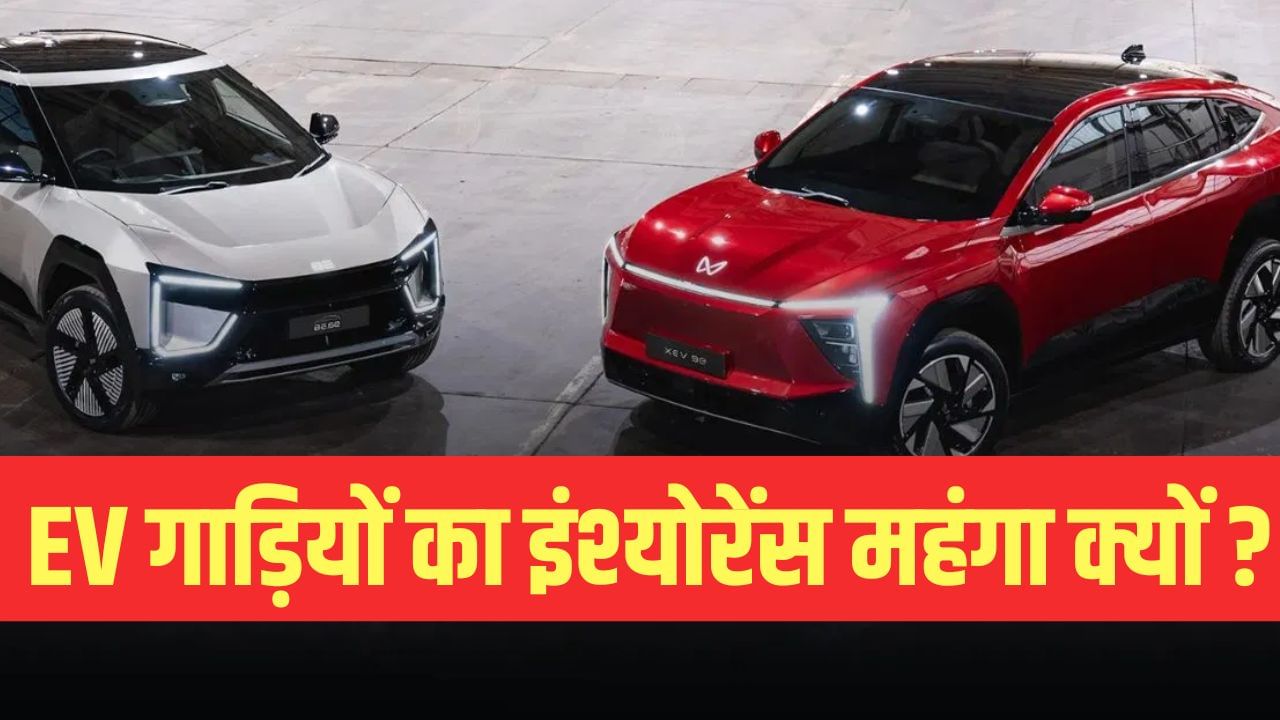
The electric vehicle (EV) market in India is experiencing rapid growth, driven by rising fuel prices, government incentives, and increasing environmental awareness. However, a significant concern for potential EV buyers is the higher cost of insurance compared to traditional petrol or diesel vehicles. This article delves into the reasons behind this disparity.
Car insurance premiums are influenced by various factors, including the engine’s power, the car model, and usage patterns. Third-party insurance can start from ₹2,000, while comprehensive policies can range from ₹10,000 to ₹20,000 or more.
EV insurance costs are primarily determined by the vehicle’s kilowatt (kW) capacity, with annual premiums ranging from ₹1,780 to ₹6,712, or even higher for extended coverage periods (e.g., ₹5,543 to ₹20,907). The make and model of the EV also play a role in determining insurance premiums.
A critical factor driving up EV insurance costs is the battery. The battery often represents a significant portion (30-40%) of the total vehicle cost. Replacing a damaged battery can be an expensive undertaking, potentially costing several lakhs of rupees.
For instance, a battery replacement could cost between ₹4 and ₹6 lakhs, significantly more than typical engine repair costs in a petrol car. This higher replacement cost contributes to insurance companies perceiving a greater risk and, consequently, charging higher premiums.
The limited availability of spare parts is another contributing factor. Unlike petrol and diesel cars, which have well-established supply chains, EV parts are not as readily accessible across India.
If an electric car sustains damage to components such as a fender, control module, or battery pack, sourcing and repairing these parts can be expensive.
Moreover, the scarcity of dealerships and service centers further elevates repair costs. To mitigate these increased expenses, insurance providers often increase their premiums.
EVs are equipped with advanced technology, including features like ADAS, smart connectivity, digital displays, and automated braking systems. While these features enhance safety and convenience, their repair can be costly.
Even minor accidents can result in substantial repair bills, potentially running into lakhs of rupees. Insurance companies must account for these risks when setting premiums.
Instances of EV battery fires in recent years have increased the risk perception for insurance providers. Battery failure or fire incidents can necessitate the complete replacement of the vehicle.
Additionally, specialized training and tools are required for EV repairs, which are not always easily accessible. These factors contribute to the elevated cost of insurance.
The uncertainty surrounding the resale value of EVs also impacts insurance costs. While the second-hand market for petrol and diesel cars is well-established, the future resale value of EVs is less predictable, particularly concerning the battery’s lifespan.
Decreased battery performance can significantly reduce a vehicle’s value, prompting insurance companies to charge higher premiums to protect their interests.
The higher initial cost of EVs, despite government subsidies, contributes to increased insurance premiums. Insurance companies base their premiums on the car’s on-road price, and due to the higher cost of EVs, insurance premiums are naturally higher.
The insurance market for EVs in India is still developing. Insurance companies have limited data on EV performance, maintenance costs, and long-term damage trends.
This data scarcity leads insurance providers to increase premiums to manage risk, providing a financial buffer against potential losses.
While EV insurance is currently more expensive, the market is expected to evolve. As the EV market grows, premiums should gradually decrease.
The government’s support for green mobility, potentially through insurance tax breaks, could further reduce costs. Furthermore, advancements in battery technology, leading to lower repair costs and enhanced safety, will contribute to more affordable insurance options. As the EV network expands and demand increases, EV insurance is expected to become more cost-effective.