

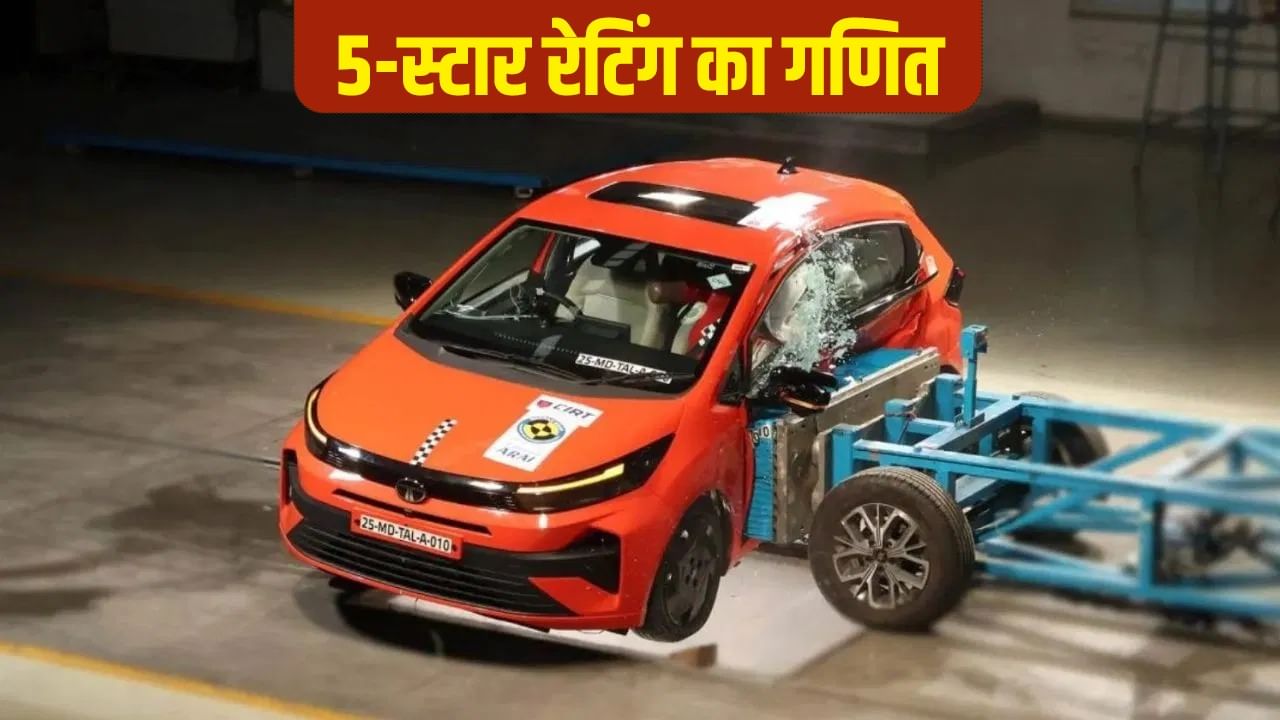
The Indian automotive landscape is currently buzzing with discussions about “5-star safety ratings.” Consumers, when purchasing new or upgrading existing vehicles, are increasingly prioritizing safety alongside fuel efficiency and aesthetics. But how exactly do cars earn these coveted 5-star ratings? What steps are involved in the crash test process, and what does it signify in practical terms? This article delves into these crucial questions.
Crash tests are designed to evaluate a car’s ability to protect its occupants during a road accident. With millions injured or killed in road accidents annually, assessing the effectiveness of a car’s structural integrity, airbags, seatbelts, and other safety systems is paramount, and crash tests provide this crucial assessment.
Globally, organizations like NCAP (New Car Assessment Program) are responsible for conducting these tests. In India, Bharat NCAP has been introduced in recent years. Furthermore, European NCAP, Latin NCAP, and Global NCAP are significant entities that assess vehicles sold in various global markets.
The crash test procedure involves subjecting a car to collisions under diverse conditions.
After the test, sensors embedded in dummies (human-like devices) provide valuable data. This data indicates the potential for injury to a person’s head, chest, legs, and spine. Based on the gathered data, the car receives a rating.
* 0 to 1 star: Low safety
* 2 to 3 stars: Moderate safety
* 4 stars: High safety
* 5 stars: Maximum safety
It’s important to understand that a 5-star safety rating doesn’t equate to absolute 100% safety. It signifies that the car provides superior safety compared to other models. Real-world accidents are also influenced by factors like speed and road conditions.
In India, with thousands of accident casualties daily, it is essential for consumers to understand that their car offers both visual appeal and robust safety features. This has been reflected in the increased sales of cars like the Tata Nexon and Mahindra XUV300, which benefited from their 5-star ratings.
The recently launched Maruti Victoris achieved a 5-star rating in the Global NCAP (New Car Assessment Program) crash test. The Maruti Victoris is priced from approximately 10.50 lakh rupees to 19.99 lakh rupees. It is equipped with safety features such as 6 airbags, Level-2 ADAS, a 360-degree camera, and features like ABS and ESP.