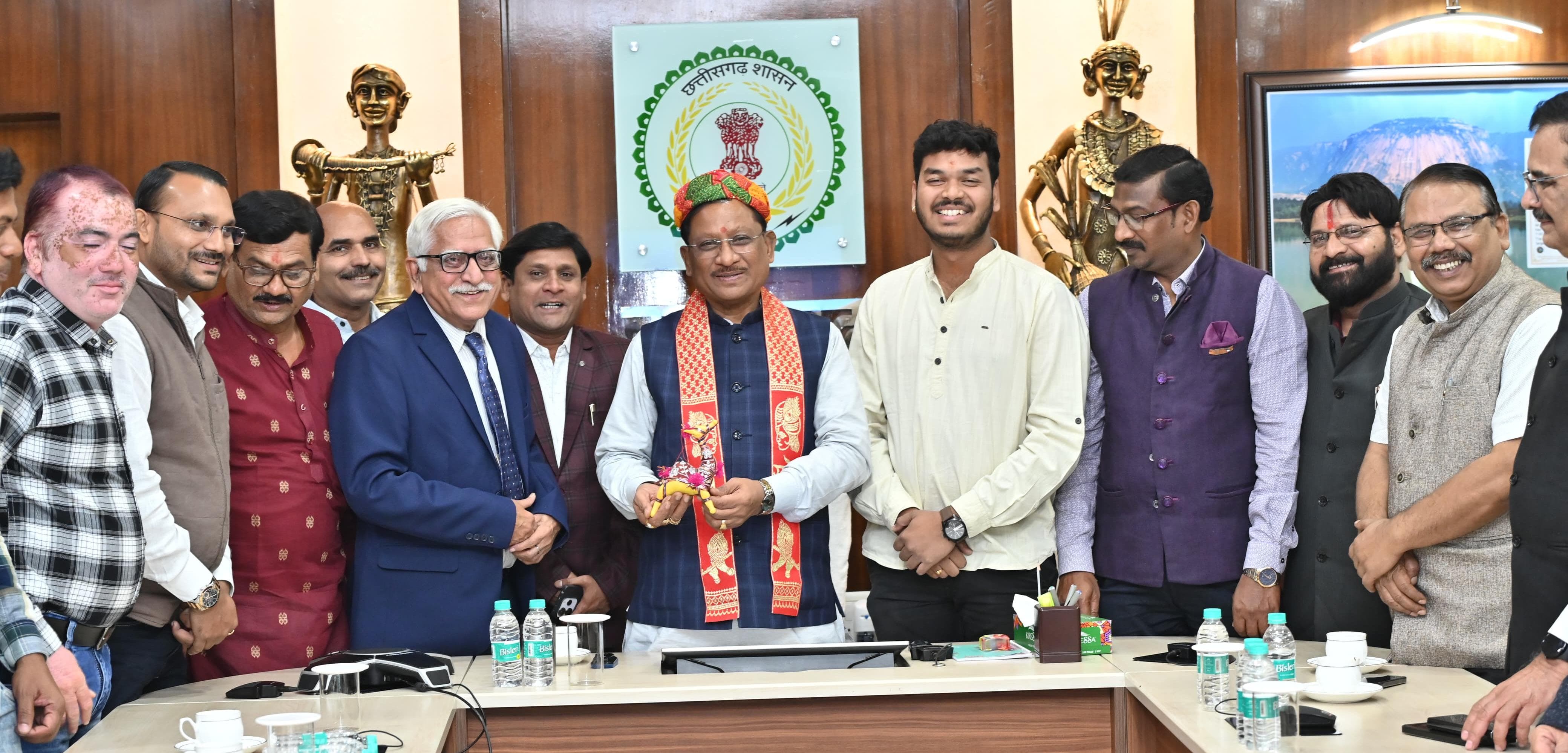
On December 21, 2025, after returning from the inter‑state study tour to Rajasthan, a delegation of journalists from Chhattisgarh met at the Chief Minister’s residence in Raipur for a courtesy visit. The journalists shared their observations about Rajasthan’s legislature, administrative practices, and the innovations introduced in tourism during their trip from December 15 to 20. The Chief Minister, Vishnudev Sai, stated that the Chhattisgarh government has launched an inter‑state study‑tour programme for journalists to understand innovative efforts in governance, tourism and cultural development in other states from a media perspective. He added that, based on the experiences gained from such tours, new and effective initiatives can be started in Chhattisgarh as well. He urged journalists to document these experiences as travel narratives, which would serve as useful guides for general tourists. He emphasized that journalists’ writing is not just an information medium but also a powerful means to promote tourism. Highlighting Chhattisgarh’s immense tourism potential, the Chief Minister reaffirmed the state government’s full commitment to the overall development of tourism. He specifically mentioned the Bastar region, declaring it as a heavenly place in terms of natural beauty, while noting that Naxalism has long been a major obstacle to its development. In line with the commitment of Prime Minister Narendra Modi and Home Minister Amit Shah, he affirmed that the state government is steadfastly working to eradicate Naxalism by March 2026. The Chief Minister also announced that tourism has been incorporated into the state’s new industrial policy, which promotes homestays in remote forest areas so tourists can live with local families and experience their culture, cuisine and lifestyle up close. This initiative will not only boost tourism but also create new employment and income opportunities for locals. He praised the inclusion of Chhattisgarh’s Dhudmaras in the world’s top 20 tourism destinations as a source of pride for the state. The Chief Minister welcomed suggestions from journalists and assured that serious consideration would be given to implement them. On the occasion, Mr Vijay Tripathi from Jashpur recounted seeing the assembly during the Rajasthan tour, where a grand museum was built to acquaint the public with the law‑making process and parliamentary functioning. The museum provides an opportunity to understand the legislative journey from state formation to the present and the contributions of historical personalities. Mr Vijay Khaterpal from Korba explained how the study tour helped him understand how Rajasthan has turned centuries‑old forts and palaces into tourism hubs by linking them with modern amenities, and how desert activities such as jeep safari, camel rides, parasailing and desert camps make tourism attractive—an effective case study for Chhattisgarh. Mr Arjun Jha from Jagdalpur shared his experience of Chokhardiha in Jaipur, describing how rural life, folk culture and cuisine are presented on a single platform. He suggested that Bastar’s Pandhum could similarly showcase Chhattisgarh’s folk culture to tourists. Mr Tinkeshwar Tiwari also emphasized promoting Chhattisgarh’s traditional dishes at tourist sites, following the model of Rajasthani cuisine. Young journalist Mr Rajat Asthavi of State News Service expressed gratitude for the initiative, honoring the Chief Minister with a Rajasthani hat. Present at the event were the Chief Minister’s press officer, Alok Singh; the General Manager of the Public Relations Department, Sanjeev Tiwari; the Joint Manager, Jitendra Nagesh; journalists and other officials.
Journalists’ Writing Is Not Just a Medium of Information but Also a Powerful Tool to Promote Tourism – Chief Minister Vishnudev Sai