

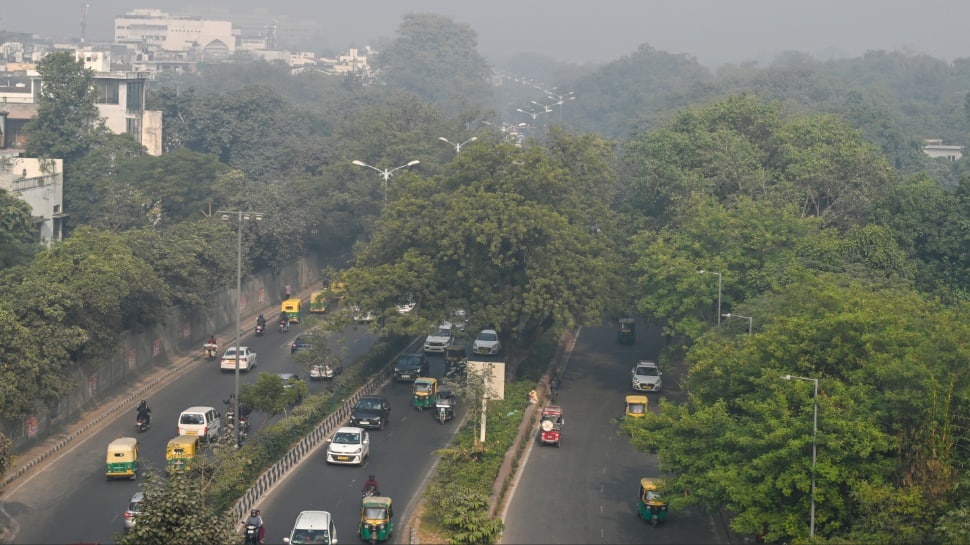
Residents of Delhi are again breathing toxic air as the city’s Air Quality Index (AQI) plummeted to 384, firmly in the ‘Very Poor’ category, with a significant number of hotspots reaching ‘Severe’ levels. This marks the 14th consecutive day of poor air quality, a stark reminder of the ongoing environmental challenge. The situation intensified just two days after the relaxation of strict Stage III anti-pollution measures.
Critical pollution zones have emerged across the National Capital Region (NCR). In Delhi itself, 19 out of 39 monitoring stations recorded AQI readings above 400, signifying ‘Severe’ air. Anand Vihar (411), Bawana (414), and Ashok Vihar (417) are among the worst-affected areas. Chandni Chowk, Narela, and Aya Nagar also crossed the dangerous threshold.
Several other locations are precariously close to the ‘Severe’ mark. ITO registered an AQI of 396, while Alipur (355) and IGI Airport (360) are also experiencing significantly polluted air. The air quality crisis is not confined to Delhi, extending its grip across the NCR.
Noida is experiencing severe air pollution, with Sector 116 (AQI 438) and Sector 125 (AQI 422) being particularly critical. Ghaziabad’s Loni recorded an AQI of 425 (‘Severe’), though Indirapuram was slightly better at 385 (‘Very Poor’). Greater Noida’s Knowledge Park-V is on the cusp of ‘Severe’ at 399. Gurugram’s overall AQI is 318, categorized as ‘Very Poor’.
Winter conditions are exacerbating the problem. Lower temperatures and reduced wind speeds are trapping pollutants, leading to hazardous air. The weather forecast indicates cloudy skies and fog, with minimum temperatures around 8-10 degrees Celsius. Experts predict this ‘Severe’ to ‘Very Poor’ air quality trend will continue for at least the next six days, offering no immediate respite for citizens.