

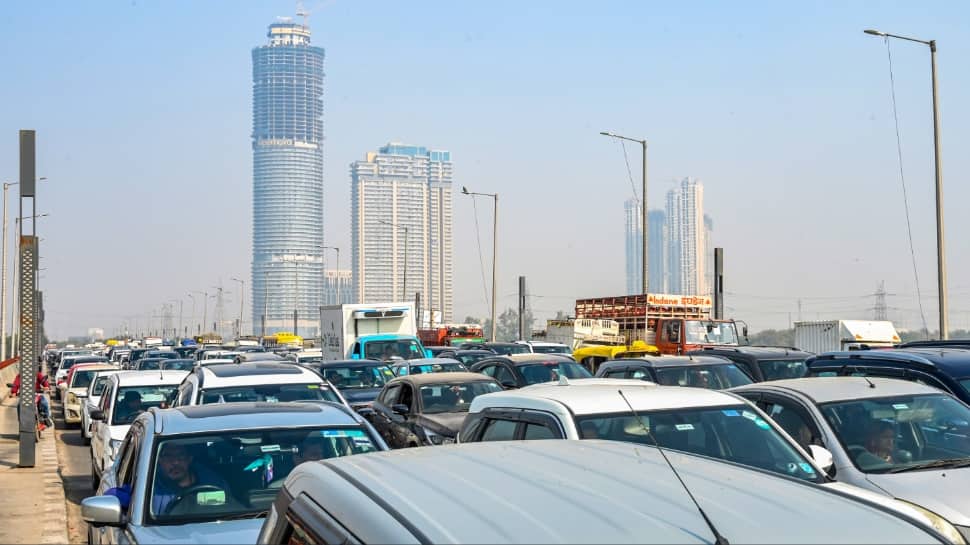
In a move that has drawn sharp criticism from environmental experts, authorities in Delhi-NCR have withdrawn the stringent Stage 3 restrictions of the Graded Response Action Plan (GRAP). This decision comes despite the region’s air quality index (AQI) remaining firmly entrenched in the ‘very poor’ category, a condition that has persisted for 21 consecutive days with AQI readings above 300. The revocation effectively reopens the door for construction activities and allows BS-III petrol and BS-IV diesel light motor vehicles back onto the roads.
Air quality forecasts indicate that the AQI is likely to continue hovering in the ‘very poor’ zone in the coming days, adding to the controversy surrounding the timing of the decision. On Wednesday, Delhi recorded a 24-hour average AQI of 327, still posing significant health risks. The Commission for Air Quality Management (CAQM) justified its stance by pointing to a minor improvement in air quality over the last three days and the recent introduction of its revised, stricter GRAP framework. However, this rationale has been widely disputed. Mukesh Khare, a noted air pollution expert from IIT Delhi, stated that the difference between an AQI of 320 and 350 is negligible and that relaxing Stage 3 measures during peak pollution months like November, December, and January is premature and hasty, especially without substantial environmental improvements or rainfall. Environmental activist Vimlendu Jha went further, suggesting the CAQM should be dissolved given the ongoing poor air quality readings.
The immediate consequences of lifting Stage 3 curbs include the resumption of construction and demolition projects and the return of restricted vehicles. Furthermore, offices will no longer be mandated to operate at 50% work-from-home capacity, and schools will revert from hybrid to full in-person learning. These measures, part of a more proactive approach to pollution control championed by the Supreme Court, have now been rolled back. The situation highlights a disconnect between scientific evidence, public health priorities, and governmental actions. Resident groups had recently called for even more severe GRAP stages, including market closures. Complicating matters further are persistent doubts about the accuracy and completeness of data from Delhi’s air monitoring stations. Despite the Stage 3 withdrawal, the CAQM has instructed implementing agencies to maintain rigorous enforcement of Stage 1 and Stage 2 pollution control measures to avert further air quality degradation.