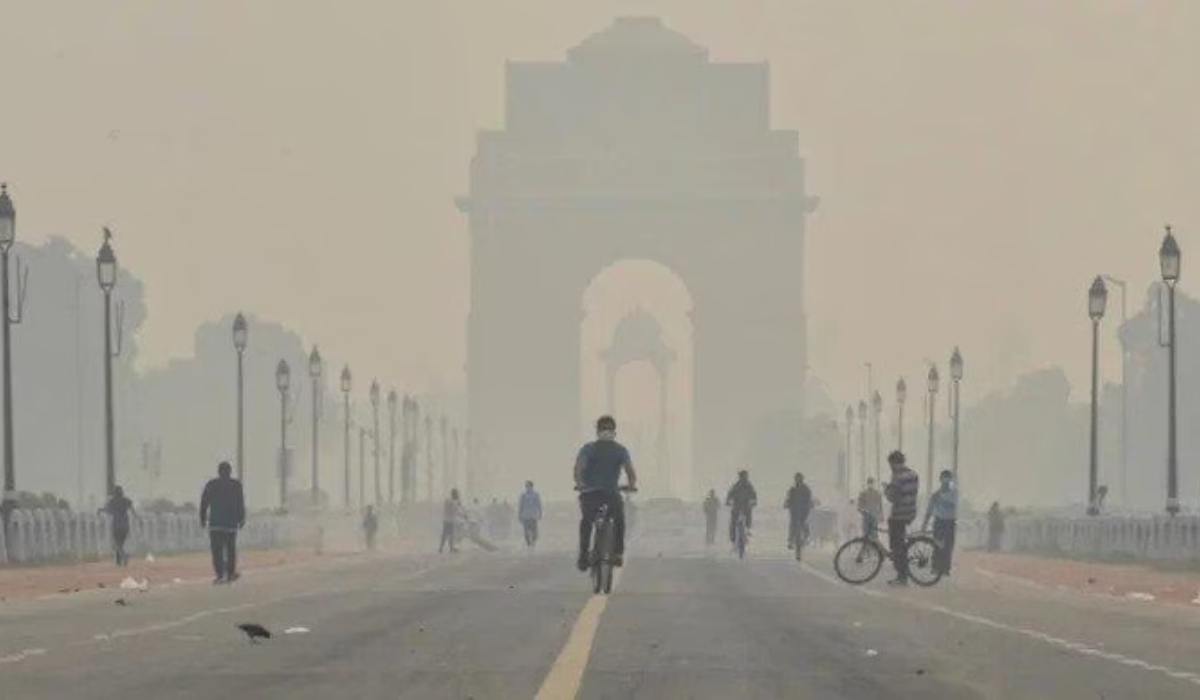
A dense, toxic smog has enveloped Delhi and its surrounding NCR areas, pushing the average Air Quality Index (AQI) to a hazardous 363, classified as ‘very poor’. The Graded Response Action Plan (GRAP) Stage-III, designed to combat severe air pollution, is now in effect. However, this has brought little relief, with air quality remaining stubbornly poor. Several parts of Delhi are experiencing extreme pollution, with Anand Vihar recording an AQI of 401, falling into the ‘Severe’ category. Wazirpur, RK Puram, and Punjabi Bagh are also experiencing very poor air quality. The visual impact is stark, with thick smog severely limiting visibility at key locations like AIIMS and Safdarjung Hospital. The NCR is not spared, facing similarly high AQI readings, including 456 in Noida, 455 in Greater Noida, 454 in Ghaziabad, and 444 in Faridabad. To mitigate the crisis, the Commission for Air Quality Management (CAQM) has initiated GRAP Stage-III. This mandates that government and private offices operate with only half their workforce present, with the remainder working from home. Critical services like healthcare, emergency response, and public transportation are exempt from these restrictions. Medical professionals are alerting the public to the health risks, including eye irritation, skin issues, and aggravated respiratory problems. An unusual factor being considered is the potential atmospheric impact of ash from the recent eruption of Ethiopia’s Hayli Gubbi volcano. Residents voiced their concerns through a protest at India Gate, which was subsequently cleared by law enforcement. The weather outlook predicts continued cold and foggy conditions, with temperatures possibly reaching 9°C, and fog likely to linger until November 26th. The significant levels of PM2.5 (294 µg/m³) and PM10 (396 µg/m³) far surpass safe international health standards.