

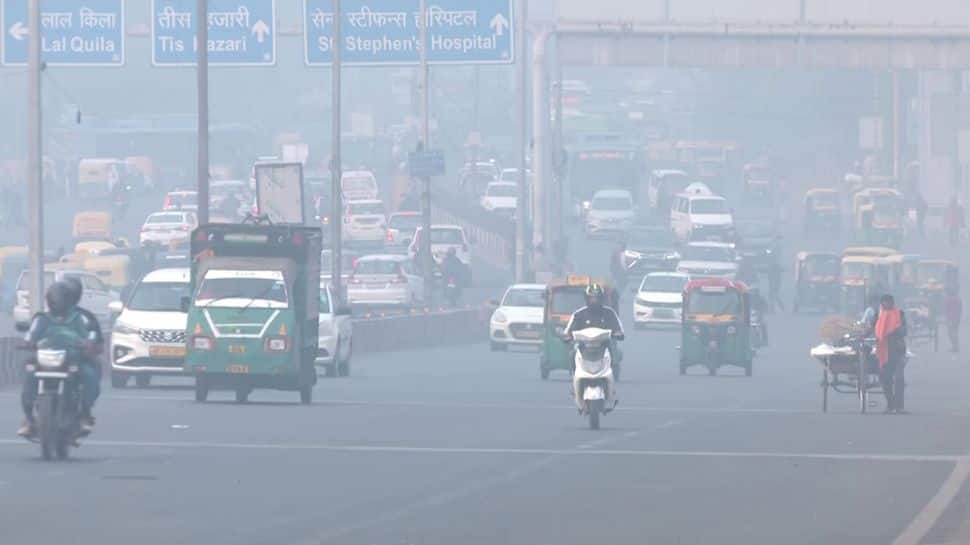
Residents of Delhi woke up to a thick blanket of toxic smog on Saturday, with the city’s air quality index (AQI) averaging a ‘very poor’ 359. Although a slight improvement was noted from Friday’s average of 364, the air remains significantly polluted and harmful to health.
The Indraprastha (ITO) area reported an AQI of 370. Noida, particularly Sector 125, continued to experience ‘severe’ air quality with an AQI of 434, showing a minor decrease. In contrast, Greater Noida’s Knowledge Park 5 recorded 393, while Knowledge Park 3 was comparatively better at 294, falling into the ‘poor’ category.
Key locations were heavily impacted. The India Gate area was obscured by smog, showing an AQI of 370. Akshardham and its surroundings faced ‘severe’ pollution levels with an AQI reaching 422. The Indira Gandhi International Airport area saw an AQI of 296 at 7 AM, categorized as ‘poor’.
Bawana, an industrial hub, recorded a ‘severe’ AQI of 419. Anand Vihar also hit the ‘severe’ mark with an AQI of 422, alongside Ashok Vihar at 403. Aya Nagar and Rohini reported ‘very poor’ to ‘severe’ air, with AQIs of 330 and 414, respectively.
Within the wider NCR, Gurugram’s Sector 51 recorded 323, while Teri Gram’s AQI was 212 (‘poor’), and NISE Gwal Pahari registered 312.
Authorities have taken measures to combat the pollution crisis. The Delhi High Court has prohibited outdoor sports events, recognizing the severe health implications, especially for schoolchildren. Furthermore, Stage 3 of the Graded Response Action Plan (GRAP) continues to be enforced, imposing stringent regulations on industrial activities, construction work, and vehicular traffic since November 11.