

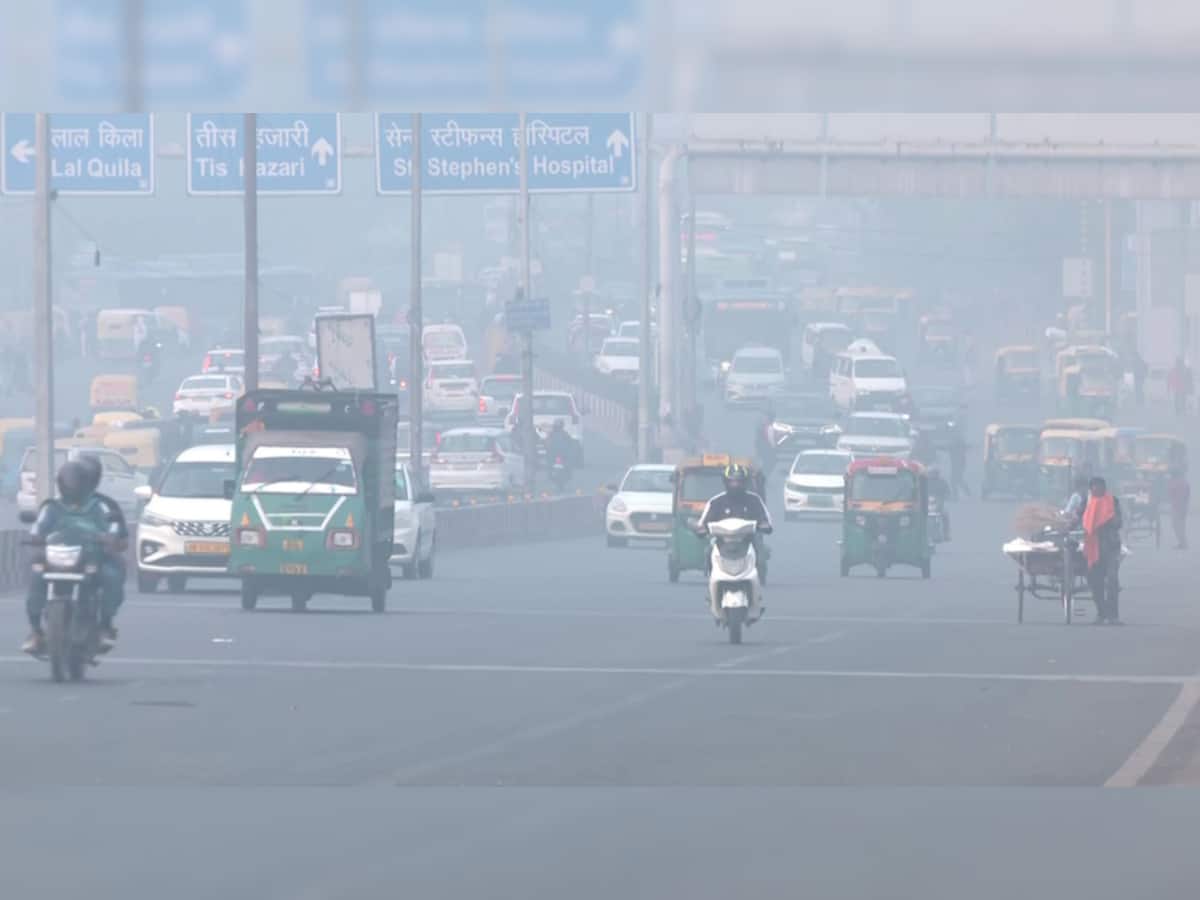
A marginal improvement has been observed in Delhi’s air quality this Friday morning, although pollution levels persist in the ‘very poor’ bracket. The Central Pollution Control Board (CPCB) recorded the city’s average Air Quality Index (AQI) at 370, a slight decrease from the 391 recorded the previous afternoon. This comes as the government’s Stage III of the Graded Response Action Plan (GRAP-III) remains in effect, aiming to mitigate severe pollution.
Despite the minor dip, many parts of the national capital continue to grapple with toxic air. Readings at IGI Airport T3 stood at 307, ITO at 378, and Punjabi Bagh at 379, all indicating unhealthy air. Areas such as Najafgarh (350), North Campus DU (385), Aya Nagar (340), and CRRI Mathura Road (370) also reported high AQI values, contributing to the pervasive haze observed across iconic landmarks like India Gate and Akshardham.
The situation is particularly dire in certain neighborhoods, which have unfortunately slipped into the ‘severe’ category. Anand Vihar (418), Ashok Vihar (411), Rohini (424), and RK Puram (401) are facing extremely hazardous air conditions, underscoring the urgent need for sustained pollution control efforts.
For context, AQI values from 301-400 signify ‘very poor’ air quality, while 401-500 are classified as ‘severe’. The preceding Thursday saw Delhi enveloped in dense smog, with an average AQI of 399, barely better than Wednesday’s reading of 392.
In response to the escalating crisis, judicial bodies have taken decisive action. The Delhi High Court has advised the city administration to halt outdoor sports for students during the peak pollution months of November to January, prioritizing child welfare. Furthermore, the Supreme Court has ordered that construction workers affected by the GRAP-III ban receive financial support and directed states to conduct regular reviews of pollution mitigation strategies.