

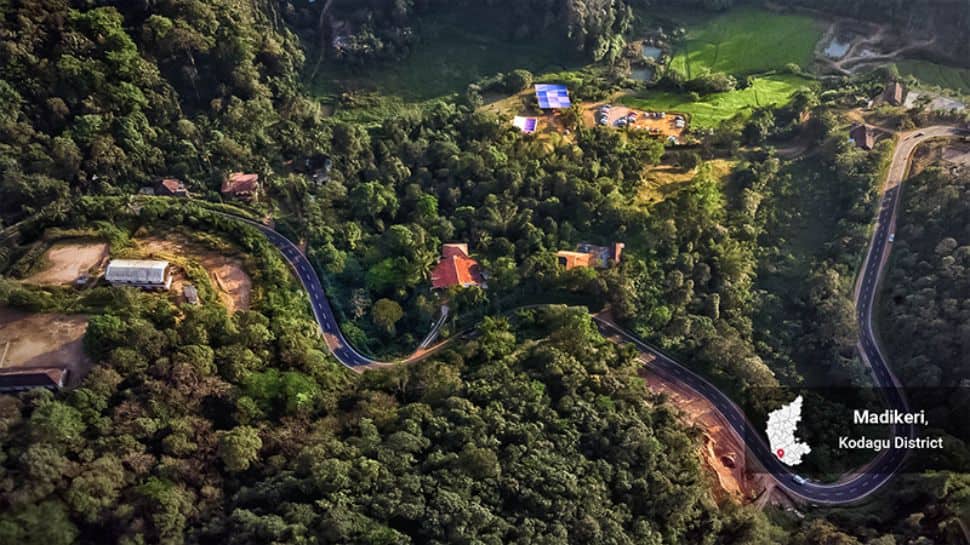
Journey to Coorg, also known as Kodagu, a breathtaking hill station nestled in the Western Ghats of Karnataka, widely acclaimed as the “Scotland of India.” The nickname stems from the admiration of British colonizers who found its rolling landscapes, abundant greenery, and temperate climate strikingly similar to Scotland. Beyond its visual splendor, Coorg is celebrated for its expansive coffee plantations, incredible biodiversity, and the revered River Kaveri, which begins its journey from these hills.
This captivating destination offers an immersive experience of natural grandeur and distinct cultural heritage. Madikeri, the district headquarters, is a bustling hub of activity, celebrated as the “Coffee Bowl of India.” It’s here that vast estates cultivate both Robusta and Arabica coffee beans. The charm that prompted the “Scotland of India” moniker lies in its mist-kissed hills, verdant valleys, and the invitingly cool weather that captivated early visitors.
Coorg is situated within the Western Ghats, recognized internationally as a critical biodiversity hotspot, sheltering a vast array of endemic flora and fauna. The source of the sacred River Kaveri is the Brahmagiri hills, providing essential water resources for much of South India. The local Kodava people possess a rich history of valor and military service, with many contributing to India’s armed forces. A unique aspect of Kodava culture is that men are traditionally exempt from needing a firearm license. Their distinctive traditional dress, the Kupya for men and the rear-pleated saree for women, adds to the region’s unique identity.
As Karnataka’s largest coffee producer, Coorg plays a significant role in India’s coffee economy. The region’s altitude and the practice of shade-grown coffee allow beans to develop complex flavors and intense aromas over a longer period. The soil composition, characterized by iron and aluminum-rich laterite, is perfect for coffee and cardamom cultivation. Coorg enjoys a tropical monsoon climate, receiving ample rainfall that sustains its lush forests and productive plantations. In the past, Virajpet was a leading honey-producing area in Asia.
The region is also home to Bylakuppe, which houses India’s second-largest Tibetan community and the magnificent Namdroling Monastery, often referred to as the Golden Temple. For those seeking adventure, Tadiandamol, the highest peak at 1,748 meters, and Pushpagiri, the second highest, offer excellent trekking opportunities. The landscape is covered in Tropical Wet Evergreen and Semi-Evergreen forests, vital for the region’s hydrological and carbon cycles. Architectural landmarks like the Omkareshwara Temple in Madikeri, a fascinating blend of Gothic and Islamic design, and the Dubare Elephant Camp, dedicated to conservation and interaction on the banks of the Kaveri, are significant attractions.
While Coorg is in seismic Zone II, the geological activity of the Western Ghats warrants attention. The Brahmagiri Wildlife Sanctuary is crucial for protecting the Kaveri’s watershed, safeguarding water quality. The prevalence of orchids points to superior air quality, facilitated by the humid climate. The iconic morning mists, created by rising moist air cooling over the hills, lend Coorg its characteristic atmospheric charm. The dense forest canopy acts as a natural regulator, ensuring cooler temperatures and higher humidity than the surrounding lowlands. Coorg stands as a testament to nature’s artistry, a sanctuary for coffee lovers, and a repository of enduring traditions, truly embodying its moniker as India’s Scotland.