

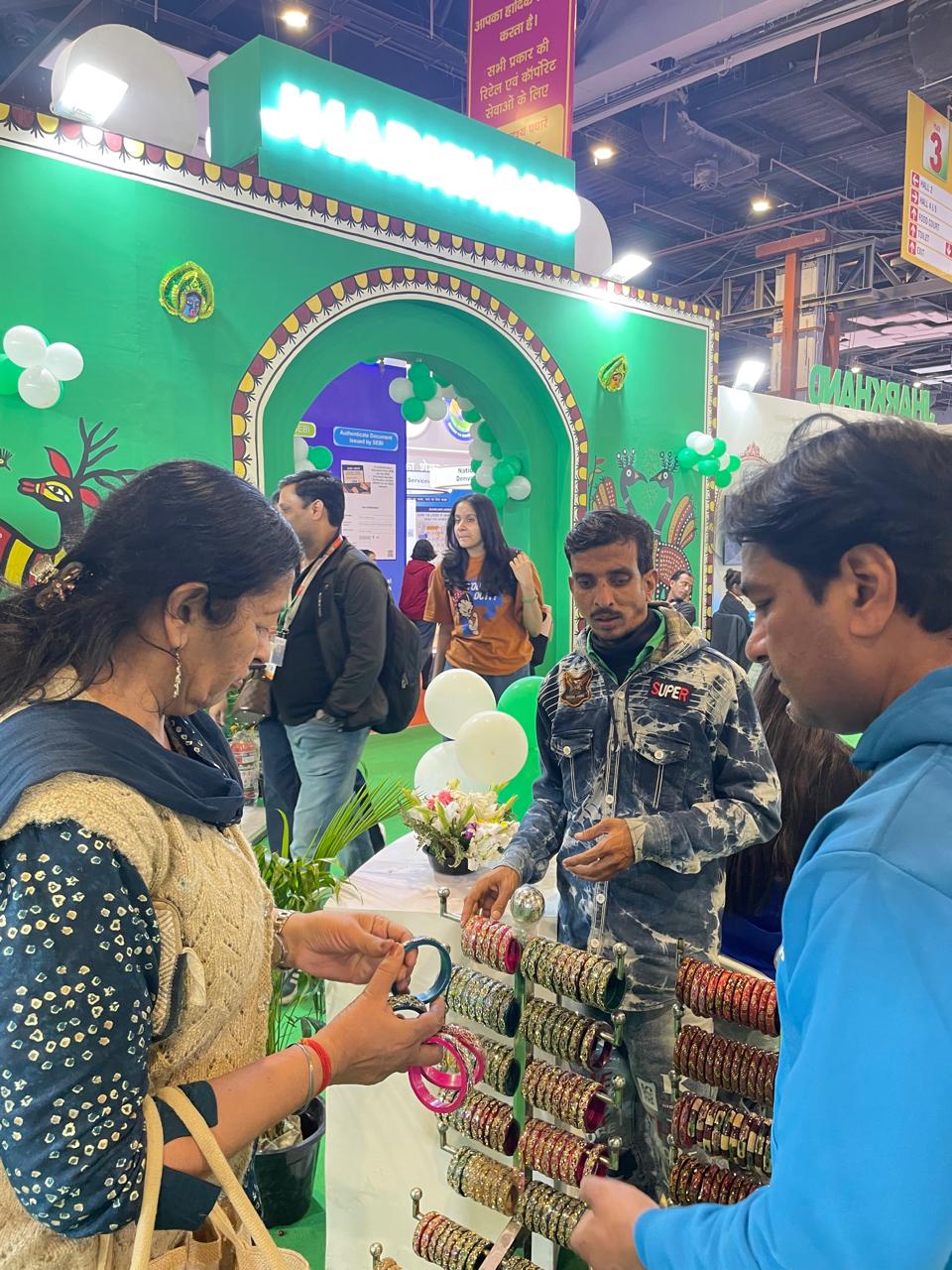
The Jharkhand Pavilion at the Indian International Trade Fair (IITF) in New Delhi has become a special center of attraction this year. The Jharkhand government is emphasizing the promotion of products made by women at this fair. Women artisans and self-help groups from various districts of the state have presented products crafted with their skill, labor, and creativity on a national platform. Through these products, thousands of women in Jharkhand are not only getting employment but are also becoming economically empowered and self-reliant.
Jharkhand’s Tussar Industry: A Sustainable Source of Income for Tribal and Rural Women
The main attraction of the pavilion is the live demo showcasing the traditional process of extracting silk thread from Tussar silk cocoons. Trained women artisans explain to visitors how natural Tussar cocoons are boiled to extract thread, which is then spun into yarn. Further along this live demo, “Tamsum” demonstrates the process of weaving fabric from the same yarn on a loom. This entire experience is unique for the audience and highlights the rich tradition of Jharkhand’s Tussar industry, as well as the significant role of women in it. This industry is not only a sustainable source of income for tribal and rural women but is also becoming an effective medium for connecting them with modern markets.
Diversity, Quality, and Tradition at the Stalls of Various Women’s Self-Help Groups in the Pavilion Reflect Jharkhand’s Cultural Heritage
The stalls of various women’s self-help groups in the pavilion are also attracting visitors. These include handmade textiles, handicrafts, products made from natural and organic materials, Tussar silk-based apparel, and home decor items. The diversity, quality, and tradition displayed at these stalls bring Jharkhand’s cultural heritage to life.
Another Important Attraction at the Fair: The Lac Bangle Handicraft Stall
Another significant attraction at the fair is the lac bangle handicraft stall, operated by Jhabar Mal. He has been participating in IITF for the last four years, bringing new and modern designs for Delhi women each year. Jhabar Mal states that about 400 women in his organization make lac bangles, providing them with a sustainable livelihood. This handicraft is not only traditional but has also become an important means of economic progress for women artisans.
This year’s Jharkhand Pavilion is not just a display of art and culture; it sends a clear message about how the women of the state are making significant contributions to building a self-reliant Jharkhand through their skills, traditions, and hard work.