

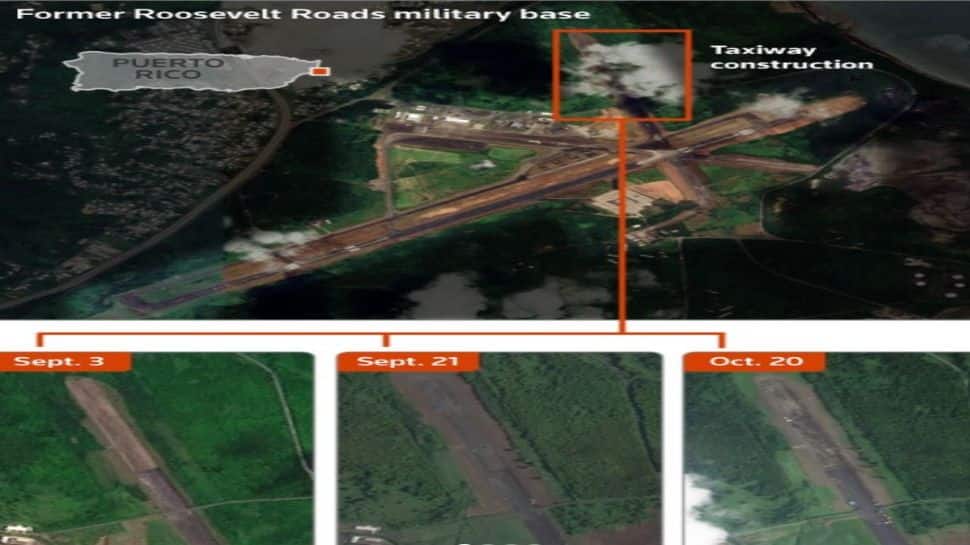
A dormant U.S. naval base in Puerto Rico is buzzing with activity, prompting intense speculation about Washington’s intentions towards Venezuela. The Roosevelt Roads Naval Base, shut down 20 years ago, is undergoing rapid renovations, including runway improvements and road clearing. Located strategically just 800 kilometers from Venezuela, this reactivation is being interpreted by many as a significant military posture.
Originally a vital Cold War installation, Roosevelt Roads once housed thousands of U.S. military personnel and extensive naval and air assets before its closure in 2004. The sudden pace of modernizing the base has drawn considerable attention, with defense experts suggesting it points to escalating U.S. efforts to pressure President Nicolás Maduro.
Adding to the military implications, civilian airports in Puerto Rico and nearby St. Croix are also benefiting from infrastructure upgrades, such as extended runways and enhanced fuel storage. These facilities, while ostensibly civilian, possess the capability to function as crucial logistical hubs for potential military operations, given their strategic proximity to Venezuela.
According to reports from U.S. defense officials and naval analysts, the recent infrastructure developments are designed to send a strong message to Maduro – to cede power or face forceful intervention. The U.S. has long condemned Maduro’s administration for alleged authoritarian rule and suppression of democratic freedoms, employing sanctions and diplomatic pressure since 2019. This visible infrastructure buildup represents a tangible shift in strategy.
In Venezuela, President Maduro is reportedly seeking support from Russia and China, expressing fears of a U.S. armed intervention. This anxiety was amplified by the recent arrival of a Russian cargo aircraft in Venezuela, reportedly linked to the Wagner Group. While the cargo’s specifics are unknown, its delivery signifies robust Russian backing for Caracas.
Maduro’s administration has repeatedly alleged that the U.S. aims to destabilize Venezuela to gain control of its substantial oil reserves. Despite holding the world’s largest crude oil reserves, Venezuela is grappling with a deep economic crisis, further intensified by U.S. pressure.
The geopolitical landscape in South America is becoming increasingly tense. While the U.S. claims its actions are aimed at promoting democracy, international observers suggest underlying interests in Venezuela’s oil wealth and regional influence. Russia and China are strengthening their alliances with Maduro, viewing Venezuela as a key partner in challenging American hegemony.
The United Nations has expressed serious concerns about the potential for escalation. Any miscalculation could lead to a wider regional conflict, especially considering Venezuela’s existing border disputes. The renewed focus on the Puerto Rican base highlights how past geopolitical rivalries can resurface, potentially leading to a significant confrontation.