

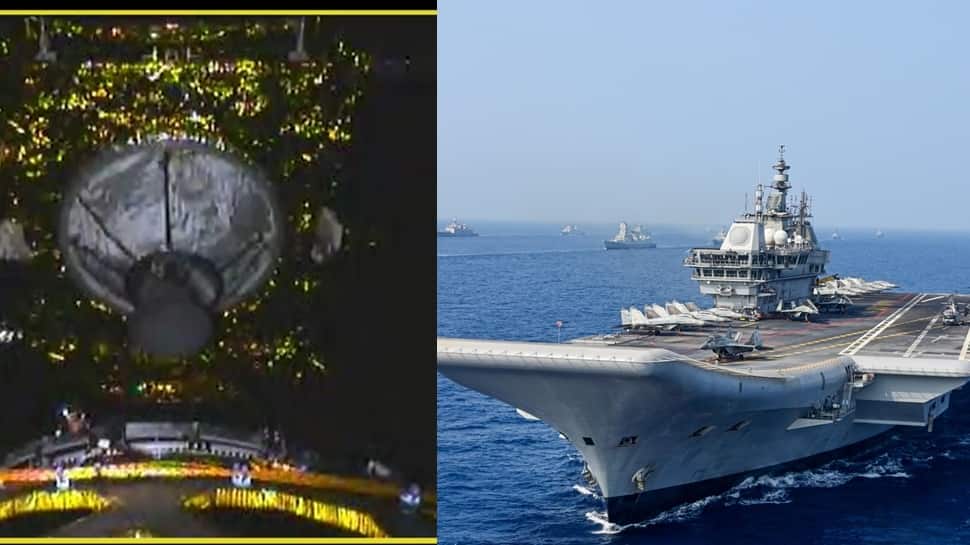
The Indian Space Research Organisation (ISRO) has successfully launched GSAT-7R, a state-of-the-art communication satellite codenamed CMS-03, specifically engineered for the Indian Navy. This significant milestone, occurring on November 2, 2025, from the Satish Dhawan Space Centre, weighs approximately 4,400 kg, making it India’s most substantial communication satellite to date. The launch underscores India’s increasing capacity for heavy-lift missions and its strategic focus on integrating space technology with military operations.
This advanced satellite is poised to revolutionize maritime operations in the Indian Ocean Region (IOR). It will serve as a vital replacement for the aging GSAT-7 ‘Rukmini,’ launched in 2013, offering a substantial upgrade in communication capabilities. The GSAT-7R is designed to provide secure, multi-band communication links across the vast expanse of the IOR, including critical areas like the Strait of Malacca. This enhanced connectivity will empower the Indian Navy with real-time voice, data, and video transmission capabilities among its surface vessels, submarines, and aircraft, irrespective of their distance from the mainland.
The strategic importance of this launch cannot be overstated. In an era where space-based intelligence is a critical factor in warfare, as evidenced by recent reports of China sharing reconnaissance data with Pakistan, India’s investment in dedicated military satellites is a proactive measure. The GSAT-7R directly contributes to India’s broader goal of establishing a seven-satellite ISR constellation for comprehensive coverage of the IOR.
This indigenous development aligns with the national objective of ‘Aatmanirbharta’ in defense, reinforcing India’s technological leadership. The satellite’s enhanced spatial reach bolsters the Indian Navy’s ‘blue-water’ capabilities, enabling more confident operations in contested maritime lanes and projecting power effectively. By providing reliable, high-capacity satellite links, GSAT-7R facilitates network-centric operations, leading to faster decision-making and superior situational awareness. This move also ensures operational redundancy and resilience, reducing dependence on commercial or foreign satellites and strengthening India’s strategic autonomy in the Indo-Pacific.