

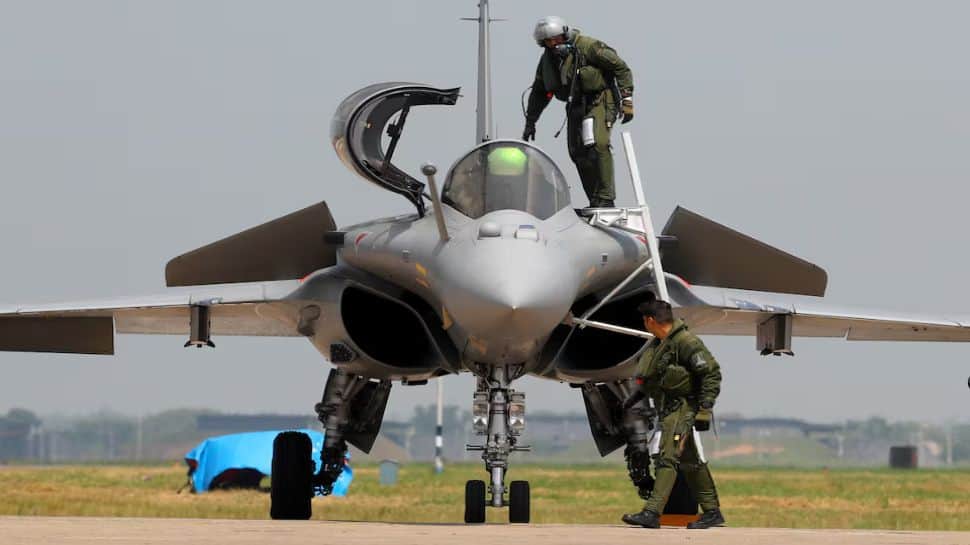
A significant shift is underway in India’s fighter jet procurement strategy. While the nation’s air defense requires bolstering, the government is increasingly focusing on developing its own advanced combat aircraft rather than solely relying on foreign suppliers. This move towards self-sufficiency in aviation technology marks a pivotal moment, potentially impacting future large-scale foreign purchases like the Rafale.
The Indian Air Force (IAF) faces a considerable challenge, operating with 31 fighter squadrons against the mandated 42. Despite the urgent need for more aircraft, a recent request for 114 Rafale jets, with an estimated cost exceeding Rs 2 lakh crore, has been returned by the government for further clarification. Key to the government’s request is a robust plan for local manufacturing and substantial technology transfer from the French manufacturer, Dassault Aviation.
Defense analysts believe the timeline for finalizing a third Rafale deal is becoming increasingly constrained. As India’s indigenous fighter projects, the Tejas Mk-2 and the stealthy AMCA, progress, the strategic rationale for acquiring more foreign jets may weaken. The Tejas Mk-2 is on schedule for its prototype by mid-2026 and first flight in 2027, with serial production anticipated by the end of the decade. The advanced AMCA is projected for a prototype around 2030.
India has already procured 36 Rafale jets, with 29 more destined for the Navy. However, a new deal would entail significant costs and lengthy delivery schedules, potentially overlapping with the availability of India’s homegrown fighters. This strategic dilemma prompts a re-evaluation of massive foreign investments.
Adding to the complexity is Russia’s offer of its Su-57E fifth-generation fighter, including a 100% technology transfer. While this presents an opportunity to deepen strategic ties and acquire advanced technology, India’s primary objective remains fostering domestic defense capabilities.
The government is actively stimulating the indigenous defense sector, urging HAL and private companies to increase production and build a comprehensive manufacturing ecosystem. This proactive approach underscores a commitment to independence, job creation, and long-term national security, making a third Rafale deal increasingly improbable.