

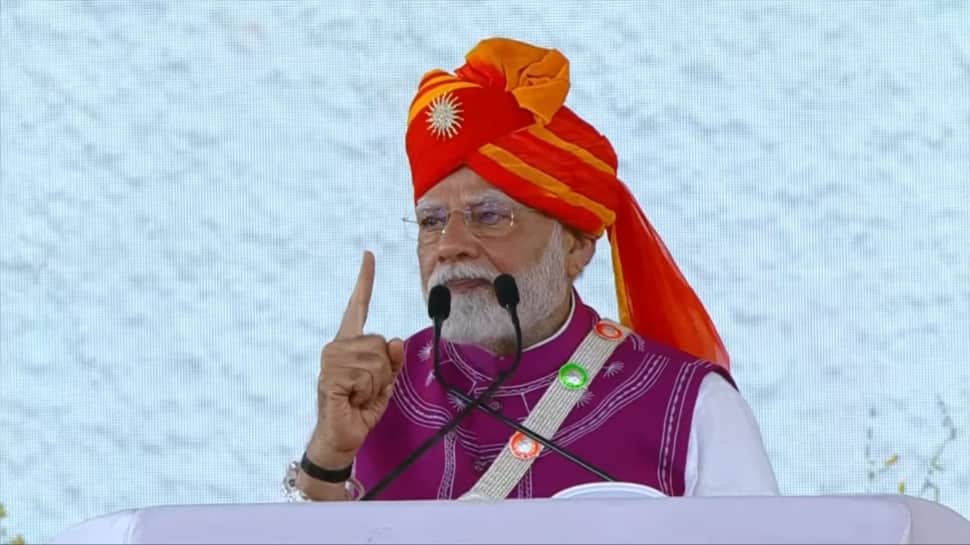
A striking image from Prime Minister Narendra Modi’s recent campaign tour in Bihar has become a focal point of discussion: his distinctive gamcha gesture. The Prime Minister was seen waving a traditional gamcha to an enthusiastic crowd in Muzaffarpur, a moment that has quickly gone viral and infused the state’s election season with vibrant symbolism.
During his Thursday visit, thousands of supporters braved the heat at the Muzaffarpur helipad ground to greet the Prime Minister. Responding to the roaring ‘Modi, Modi’ chants, he displayed a gamcha featuring the intricate Madhubani art, offering a warm smile before departing for his next rally in Chhapra.
Modi has previously used similar gestures during his visits to Bihar, including a notable instance in August following the inauguration of a bridge. This practice aligns with his broader strategy of incorporating local cultural markers into his public appearances. From donning regional turbans to using specific regional scarves, the Prime Minister consistently employs such elements to forge connections with diverse communities across India.
The gamcha is deeply ingrained in the cultural fabric of Bihar and much of eastern India. It signifies the working class, farmers, and those engaged in daily labor, serving as a practical item for comfort and protection from the elements. By wielding the gamcha, Modi effectively taps into this shared identity, positioning himself as a leader who understands and empathizes with the daily lives of the populace. This image reinforces his connection with the laboring classes, a key aspect of his political messaging.
Economic data highlights the agrarian nature of Bihar, with agriculture supporting over half of its workforce (53.2%). The state’s significant population of landless agricultural laborers and migrant workers holds considerable sway in the upcoming Assembly elections. Political analysts interpret Modi’s gamcha display as a calculated move to resonate with these rural voters, emphasizing the NDA’s continued focus on the concerns of the rural poor. As the electoral battle heats up against the opposition alliance, the gamcha’s uncomplicated, regional, and familiar appeal is expected to be a vital component of the BJP’s electoral strategy.
Ultimately, the gamcha for the Prime Minister is more than just a piece of fabric; it is a potent symbol of connection and identity. In a state heavily reliant on agriculture, such culturally relevant gestures carry significant weight. As Bihar heads to the polls, Modi’s gamcha moment underscores a deliberate blend of solidarity, traditional values, and strategic political communication.