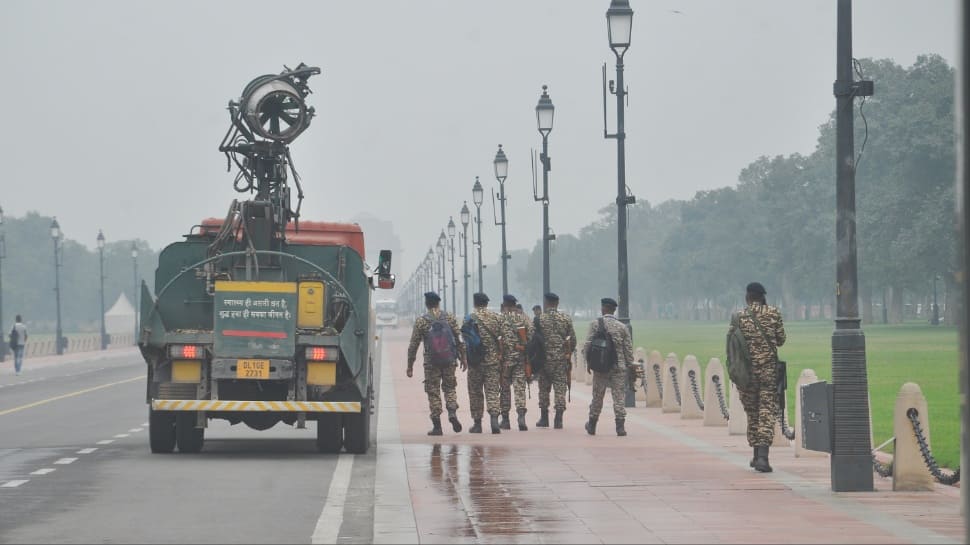
Residents of Delhi are facing severely compromised air quality, with morning air classified as ‘very poor’ and ‘poor’ across the capital. In response to the escalating pollution, authorities have activated Stage II of the Graded Response Action Plan (GRAP II), bringing in immediate control measures. Data from the Central Pollution Control Board (CPCB) revealed concerning AQI levels on Wednesday, with Bawana topping the charts at 322, placing it in the ‘very poor’ bracket (301-400). Several other key locations, including RK Puram (308), Anand Vihar (307), ITO (306), and Ashok Vihar (302), also registered AQI values within this dangerous range. While slightly less severe, areas like Dwarka Sector 8 (298) and India Gate (282) remain in the ‘poor’ category (201-300), indicating a pervasive air quality challenge. Mitigation efforts are underway, including the use of truck-mounted water sprinklers in heavily polluted zones like Lodhi Road (AQI 226). A major initiative to curb vehicular pollution commences on November 1, 2025. The CAQM has mandated a ban on the entry of all non-BS-VI compliant commercial vehicles into Delhi. This order affects light, medium, and heavy goods vehicles, regardless of fuel type (CNG, LNG, EV), if they are registered outside the NCT. For vehicles within Delhi, the non-BS-VI compliant rule will be enforced from November 1, 2026. Meanwhile, the government is exploring innovative solutions like cloud seeding. Two experimental operations have been conducted to induce rainfall and help wash pollutants out of the air. These scientific endeavors are geared towards developing effective, long-term strategies for cleaner air in Delhi.
Delhi Wakes to ‘Very Poor’ Air, GRAP-II and Vehicle Ban Measures Implemented
 By The Chhattisgarh2 Mins Read