

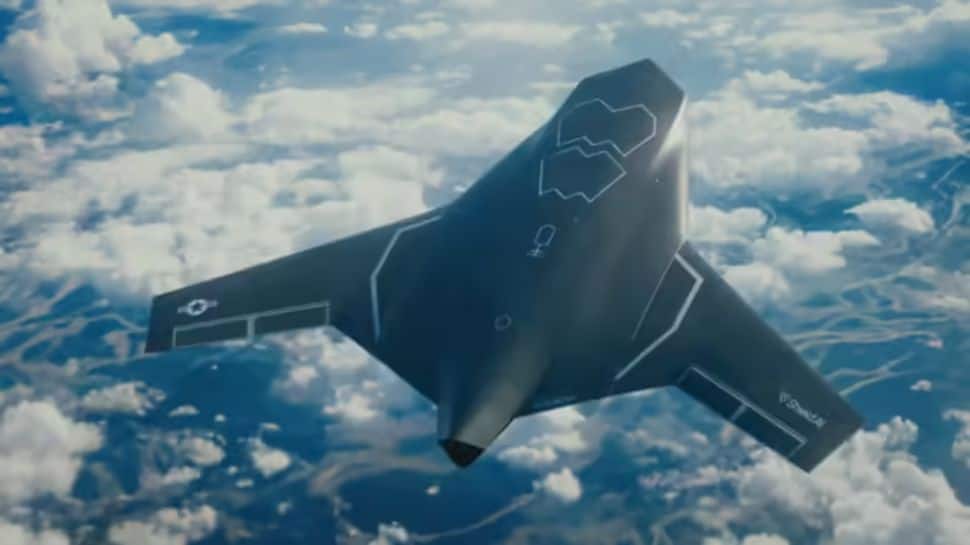
The United States is at the forefront of a new era in aerial warfare with the introduction of Shield AI’s X-BAT, an advanced robotic fighter jet that requires neither a pilot nor a runway for operation. This development signals a significant leap in defense technology, aiming to redefine combat aviation.
The X-BAT, unveiled symbolically, will navigate missions autonomously using Shield AI’s proprietary Hivemind software. This intelligent system is designed to process battlefield information rapidly, enabling the aircraft to make critical decisions and adapt to dynamic surroundings.
Future iterations of the X-BAT are expected to be equipped with a powerful jet engine and thrust vectoring capabilities, allowing for high-G maneuvers. Stealth characteristics are also a priority, with the design focusing on minimizing its radar footprint during flight.
Defence News reports an impressive operational range exceeding 2,000 nautical miles. The aircraft’s design includes internal weapons bays capable of carrying a diverse arsenal for engaging both aerial and ground targets. A standout feature is its vertical takeoff and landing (VTOL) capability, offering unparalleled deployment flexibility.
This VTOL system means the X-BAT can operate from confined spaces such as the decks of ships, remote outposts, or even unprepared sites, liberating operations from the constraints of traditional airfields. Shield AI plans to conduct the first VTOL tests in 2026, with certification and production anticipated to commence by 2029.
Shield AI’s vision is to make advanced combat aircraft more accessible and cost-effective, positioning the X-BAT as a more economical alternative to established fighter jets like the F-16. The Hivemind AI not only permits independent mission execution but also facilitates coordinated swarm tactics, a concept known as collaborative combat by the U.S. Air Force.
This autonomous capability allows for potent offensive actions even when conventional airbases are compromised. Shield AI, founded in 2015, has already established a strong presence in the defense sector with its autonomous systems. Its drones and AI software are currently utilized by the U.S. Air Force, Special Operations Command, and allied nations, including a notable deployment of its MQ-35 V BAT drone in Ukraine, which can operate without GPS or constant communication.
The X-BAT represents a significant expansion of this proven technology into the fighter jet arena, promising to reshape the dynamics of future air conflicts.