

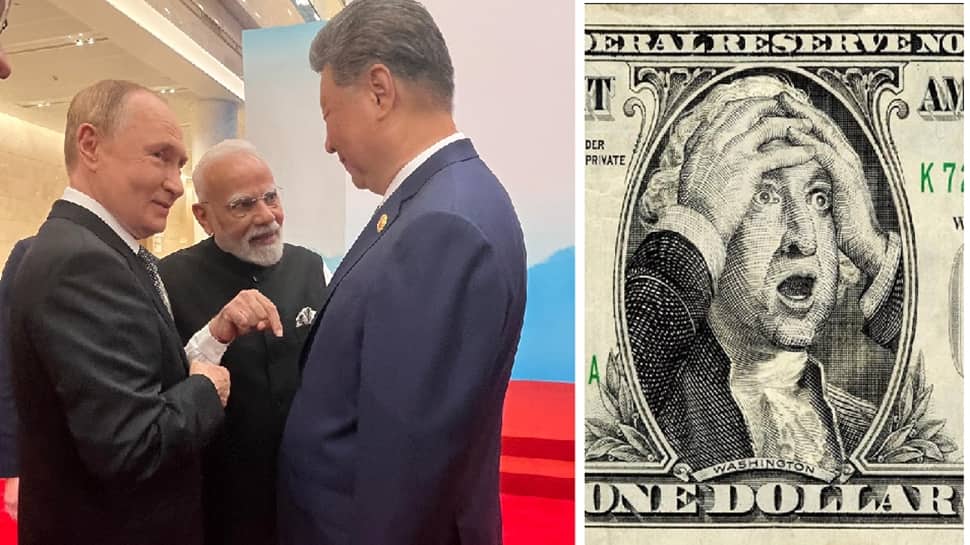
For decades, the US dollar has been the unchallenged global currency, a tool of immense financial and geopolitical power. However, the era of dollar dominance is facing a significant reckoning, propelled by the strategic initiatives of BRICS nations and the introduction of Central Bank Digital Currencies (CBDCs).
China’s ambitious expansion of its Digital Renminbi (e-CNY) marks a critical juncture. By enabling cross-border settlements with numerous ASEAN and Middle Eastern nations, Beijing is rerouting a substantial volume of global trade away from the dollar-centric SWIFT system. The e-CNY, facilitated by platforms like the “Digital Currency Bridge” (mBridge), offers unprecedented speed and cost efficiencies. Settlements that once took days via SWIFT are now completed in seconds, with transaction fees slashed dramatically. This innovation provides a crucial escape route for countries wary of financial sanctions and seeking greater monetary independence.
This digital currency push is deeply embedded in China’s long-term geopolitical strategy. The objective is to dismantle the foundational elements of dollar supremacy: its role in oil trade, the reliance on SWIFT for international payments, and the global holding of dollar reserves. The increasing use of the yuan in intra-BRICS trade and the growing acceptance of RMB for commodity transactions by Middle Eastern countries underscore this strategic pivot.
Emerging economies are increasingly viewing CBDCs as the most practical path forward for international transactions. These digital currencies offer a stable, regulated, and efficient alternative to the traditional dollar system and the uncertainties of private cryptocurrencies. The proven scalability and security of China’s e-CNY are now influencing other regions, including Africa and Latin America, to explore similar digital currency frameworks.
India’s approach with its digital rupee (eRs) offers a complementary vision. The Reserve Bank of India is developing a CBDC focused on inclusivity and interoperability, aiming to foster a multipolar financial system. Key features of the eRs include retail and wholesale applications, offline transaction capabilities for enhanced accessibility, and pilot programs for direct settlements with partner nations. India aims to position its eRs as a neutral reserve asset within BRICS+, offering a transparent and trust-based alternative.
The BRICS bloc, collectively representing a significant portion of global economic power, is actively building the infrastructure for a de-dollarized future. Their efforts are moving beyond rhetoric to tangible implementation, with countries like Russia leveraging the yuan for trade and others exploring blockchain-based payment solutions. The next crucial step will be ensuring seamless interoperability between various CBDCs, creating a robust ecosystem independent of the dollar.
While the US dollar’s global reserve status remains substantial, its dominance is gradually being diluted. The rise of CBDCs and alternative payment networks signifies a long-term shift towards a multipolar financial order. This evolution suggests that while the dollar may not collapse overnight, its unchallenged reign is demonstrably ending, replaced by a more interconnected and diverse global financial system.