

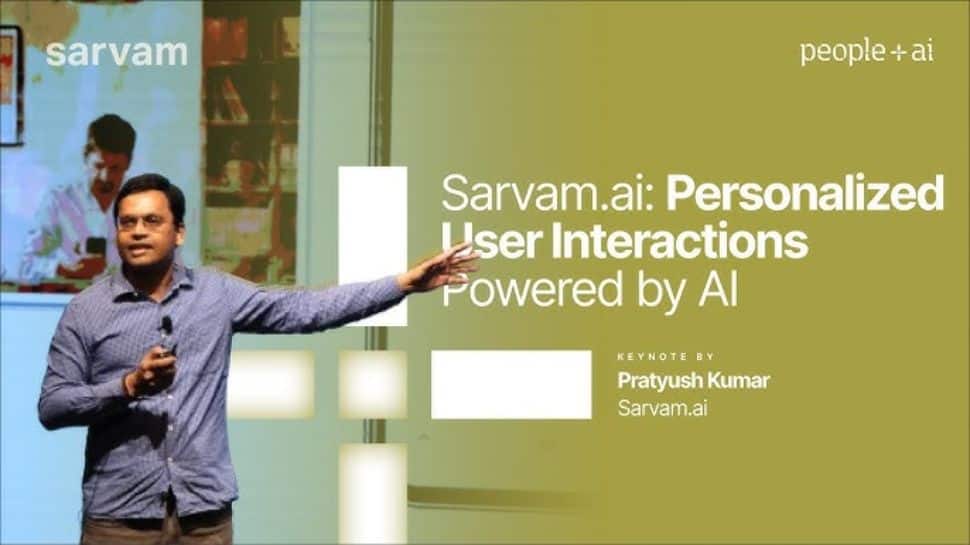
Get ready for Sarvam AI, India’s soon-to-be-released artificial intelligence chatbot, capable of speaking and listening in Hindi and nine other regional languages. Minister Ashwini Vaishnaw announced the imminent launch, targeting December 2025 or January 2026 for full operational status. This national initiative highlights India’s drive towards developing indigenous AI solutions.
The AI is the product of a Bengaluru startup dedicated to translating advanced AI research into actionable tools. Their previous innovation included a voice-based customer service solution trained on ten Indian languages, demonstrating a strong commitment to local linguistic needs. Unlike globally dominant chatbots, Sarvam AI’s primary advantage lies in its deep understanding and utilization of India’s diverse linguistic landscape, offering a more accessible and relatable AI experience for millions.
Sarvam AI is being built with features for natural, real-time voice conversations and the automation of everyday tasks. It’s seen as a pivotal step in India’s journey with generative AI.
A key partnership has already been established with the Unique Identification Authority of India (UIDAI) to bolster Aadhaar services. Since April, efforts have been underway to integrate Sarvam AI for a smarter, faster, and more secure Aadhaar ecosystem. The AI will provide users with immediate feedback on enrollment and update procedures. Crucially, it will enhance security by monitoring authentication processes for suspicious behavior and issuing rapid alerts for potential fraud.
The initial language roster for Sarvam AI includes Hindi, English, Telugu, Tamil, Marathi, Gujarati, Kannada, Odia, Punjabi, and Malayalam, with a roadmap for further expansion. This broad language support is central to its mission.
Sarvam AI is more than just a chatbot; it’s a testament to India’s ambition for technological sovereignty. Its unique blend of multilingual voice capabilities and fraud prevention mechanisms is set to redefine user interaction with AI across the nation.