

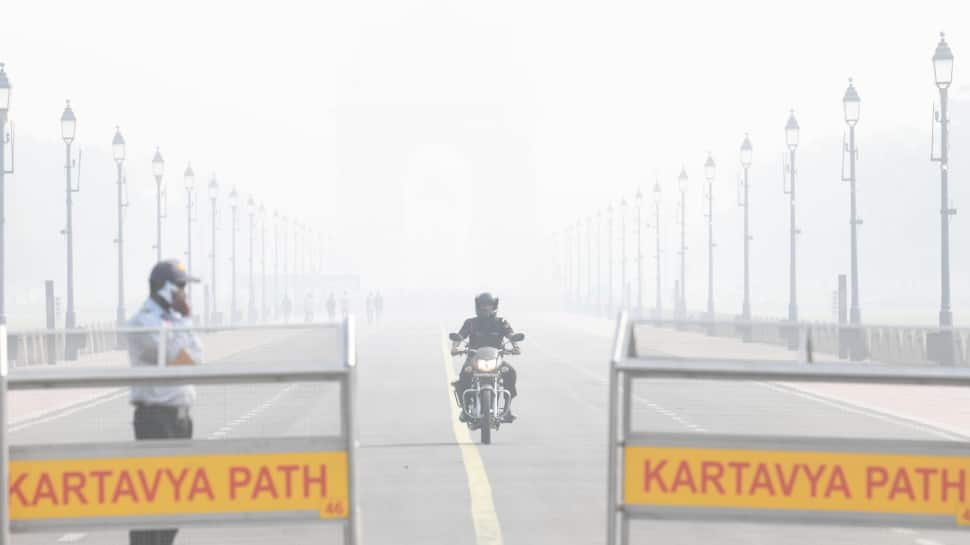
Delhi residents woke up to severely polluted air on Tuesday morning, a day after Diwali festivities. The Air Quality Index (AQI) has slipped into the ‘very poor’ category, with predictions of it worsening to ‘severe’ levels by Wednesday. This sharp decline in air quality is a direct consequence of post-Diwali pollution.
The ITO area recorded an AQI of 259, indicating ‘poor’ air quality. Earlier on Diwali morning, the CPCB registered Delhi’s AQI at 335, and by Monday evening, it had climbed to 345, firmly in the ‘very poor’ zone. This trend is mirrored in surrounding cities like Ghaziabad and Noida, which are also experiencing ‘very poor’ air quality.
Faridabad remains in the ‘moderate’ category with an AQI of 182, while Gurugram’s AQI is at 295 (‘poor’). The escalating pollution levels are a significant public health concern.
Medical professionals are highlighting the immediate and long-term health dangers associated with Delhi’s deteriorating air quality. Acute effects include worsening of respiratory conditions like asthma and COPD, alongside eye irritation. Chronic exposure can lead to serious health problems such as heart attacks, strokes, and even cognitive decline and mental health deterioration. Children and the elderly are particularly susceptible.
To combat the crisis, the Commission for Air Quality Management (CAQM) has activated Stage-II of the GRAP. Citizens are urged to utilize public transportation, minimize travel dust, maintain vehicle filters, cease dusty construction activities from October to January, and strictly avoid open waste burning. The NCR is now under a 12-point action plan that includes intensified road cleaning, strict dust control at construction and demolition sites, and guaranteed power supply.