

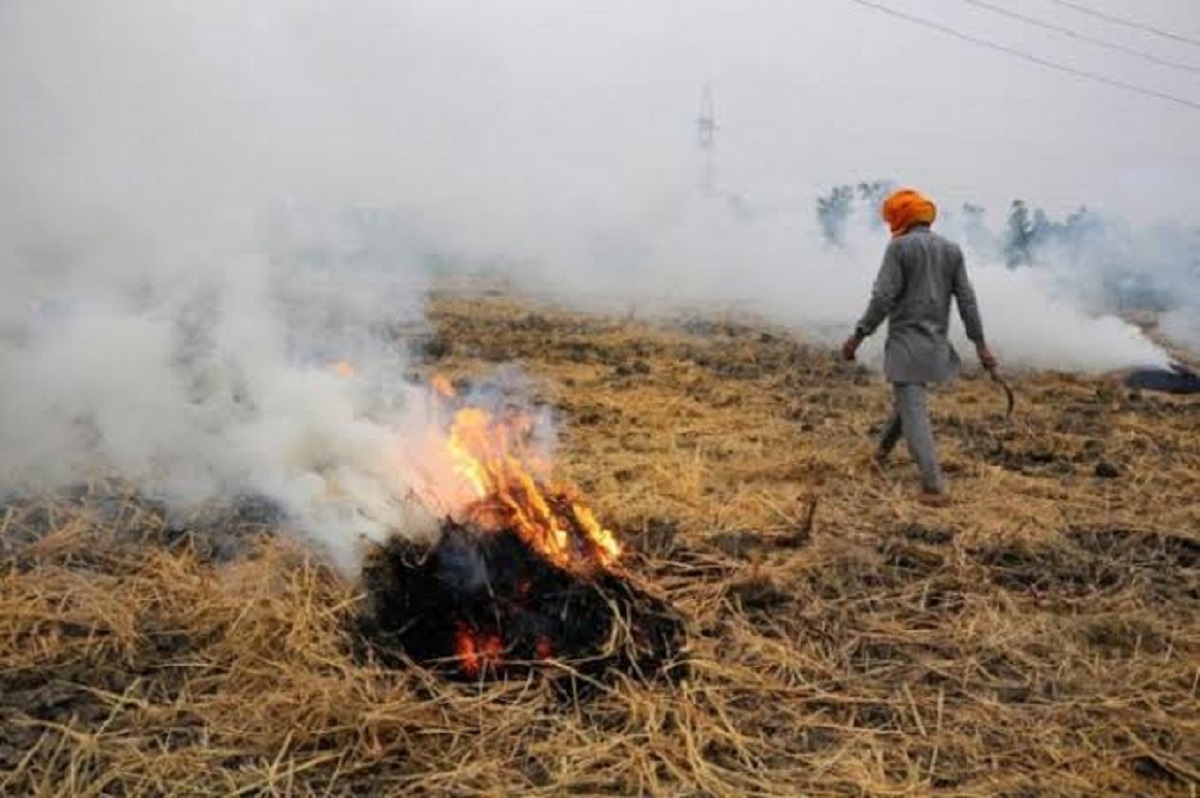
With Delhi’s air quality dipping to alarming levels, evidence points to a resurgence of stubble burning in Punjab. Official figures indicate that since September 15, as many as 308 instances of crop residue burning have occurred in the state. Tarn Taran district tops the list with 113 cases, closely followed by Amritsar, which has reported 104 such incidents, according to the Punjab Pollution Control Board (PPCB).
Farmers are reportedly continuing the practice of burning stubble, even as the state government urges them to adopt alternative methods. The limited time available for sowing the subsequent Rabi crop after the paddy harvest necessitates rapid field preparation, leading many farmers to resort to burning to clear the agricultural residue efficiently. This seasonal phenomenon in Punjab and Haryana is a significant factor exacerbating air pollution in the National Capital Region.
The PPCB data highlights a sharp increase in recent days, with the number of stubble burning incidents climbing to 308 by October 19, a substantial jump from the 116 reported on October 11. Besides Tarn Taran and Amritsar, other districts contributing to the count include Ferozepur (16 cases), Patiala (15 cases), and Gurdaspur (7 cases).
Enforcement actions are underway, with over Rs 6.5 lakh in environmental fines levied across 132 cases, and a significant portion of this amount already collected. The authorities have also registered 147 FIRs, including 61 in Tarn Taran and 37 in Amritsar, under Section 223 of the Bharatiya Nyaya Sanhita for non-compliance with official directives. Despite government efforts to promote crop residue management machinery and raise awareness about the environmental consequences, the practice remains prevalent among a segment of farmers.
Looking at historical data, Punjab recorded 10,909 farm fires in 2024, marking a considerable 70% reduction compared to the 36,663 fires witnessed in 2023. This indicates progress in tackling the issue, though the current spike raises renewed concerns.