

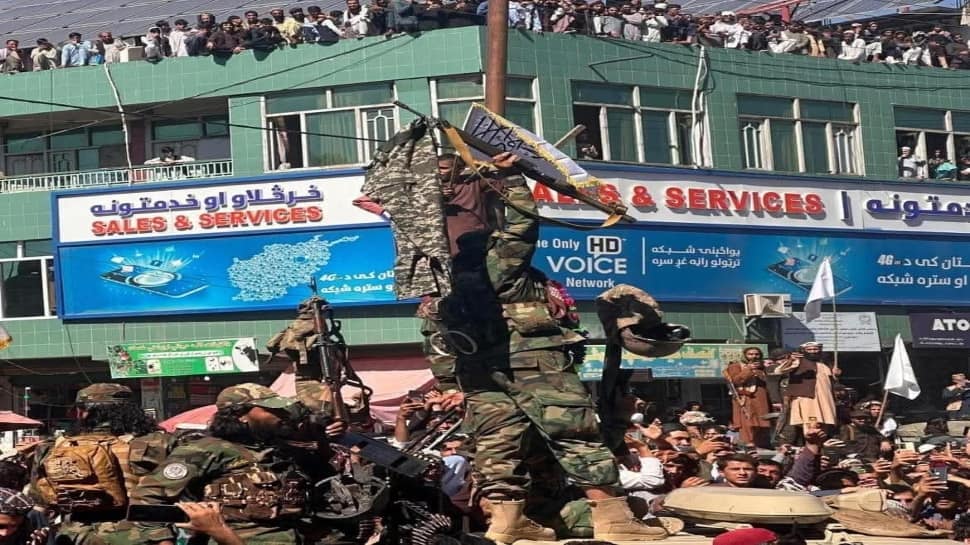
A new propaganda low for Pakistan has emerged online following recent border clashes with Afghanistan. Videos circulating widely show Taliban fighters parading with captured Pakistani military gear, most notably, what are alleged to be Pakistani soldiers’ trousers. This display, which has gone viral, has resurrected painful memories of Pakistan’s 1971 military defeat, underscored by the trending ‘#93000’ hashtag.
The ‘#93000’ hashtag directly references the staggering number of Pakistani soldiers who surrendered to Indian forces and the Mukti Bahini during the 1971 war, a defining moment that led to the birth of Bangladesh. Many observers are now framing the current situation as a modern echo of that historic surrender, with some dubbing it ‘93,000 pants ceremony 2.0.’ This comparison suggests a recurring narrative of military vulnerability.
Commentators are drawing parallels between the Taliban’s display of abandoned trousers – likely shed during a hasty retreat – and the formal surrender of arms and regalia by Pakistani commanders in 1971. This symbolic act by the Taliban is being interpreted as a calculated move to demoralize Pakistan and highlight its perceived military weaknesses.
Afghan activists and former military officials have actively participated in the online discourse, sharing historical images of the 1971 surrender alongside contemporary critiques of Pakistan’s border security failures. The humiliating footage surfaced during a period of heightened conflict along the disputed Durand Line.
The skirmishes began when Pakistan conducted raids on TTP strongholds, a move that Pakistan’s government claims was necessitated by the Afghan Taliban’s alleged support for the group. The Afghan Taliban, however, reported inflicting heavy losses on Pakistani forces. A ceasefire, brokered by international mediators, is now in effect, though both nations interpret its origins differently, adding another layer of tension to the region.