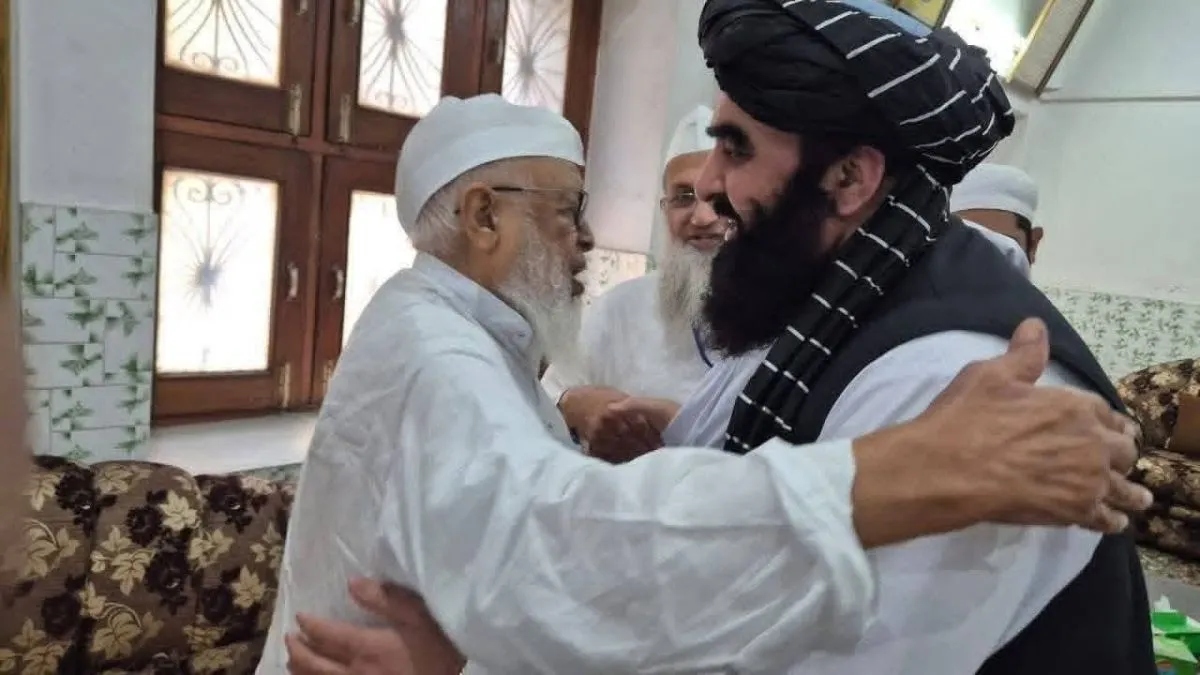
Amir Khan Muttaqi, Afghanistan’s Foreign Minister, has made a notable visit to the influential Darul Uloom Deoband seminary in India. During his time at the institution, Muttaqi met with key religious leaders, including Maulana Arshad Madani, and voiced aspirations for a more robust partnership between Afghanistan and India. This diplomatic and spiritual outreach is a significant component of his ongoing six-day visit to India, occurring at a time of shifting geopolitical landscapes. Arriving from Delhi, Muttaqi and his delegation were met with a considerable reception at the historic Darul Uloom. Vice-Chancellor Mufti Abul Qasim Nomani and Maulana Arshad Madani, president of Jamiat Ulama-e-Hind, were among those who extended a welcome, amidst a gathering of students and locals, under strict security. Muttaqi conveyed his gratitude for the warm reception, stating, “I hope that India-Afghanistan ties advance further.” This visit holds strategic importance, offering a counterpoint to perceptions of Pakistan as the sole patron of Deobandi Islam and the primary supporter of the Taliban. By engaging directly with Darul Uloom, a venerable Islamic seat of learning, Muttaqi signals the Taliban government’s historical and intellectual roots extending into India. Established in 1866, Darul Uloom Deoband is a cornerstone of Islamic education in the region, shaping scholars and leaders. Its graduates hold positions of influence in Afghanistan, and the institution is highly regarded by the Taliban. The number of Afghan students at Darul Uloom has seen fluctuations over the years due to visa policies, but currently stands at approximately 15. Beyond religious discourse, Muttaqi also addressed bilateral matters, expressing his hopes for increased diplomatic exchanges and potential visits to Kabul. He also alluded to potential joint ventures, such as the development of the Chabahar port in Iran, acknowledging the hurdles posed by global sanctions. This visit takes place amidst ongoing tensions between India and Pakistan, highlighting Afghanistan’s strategic move to cultivate broader diplomatic ties across South Asia.
Afghanistan’s Top Diplomat Tours Deoband, Eyes Deeper India Partnership
 By The Chhattisgarh2 Mins Read