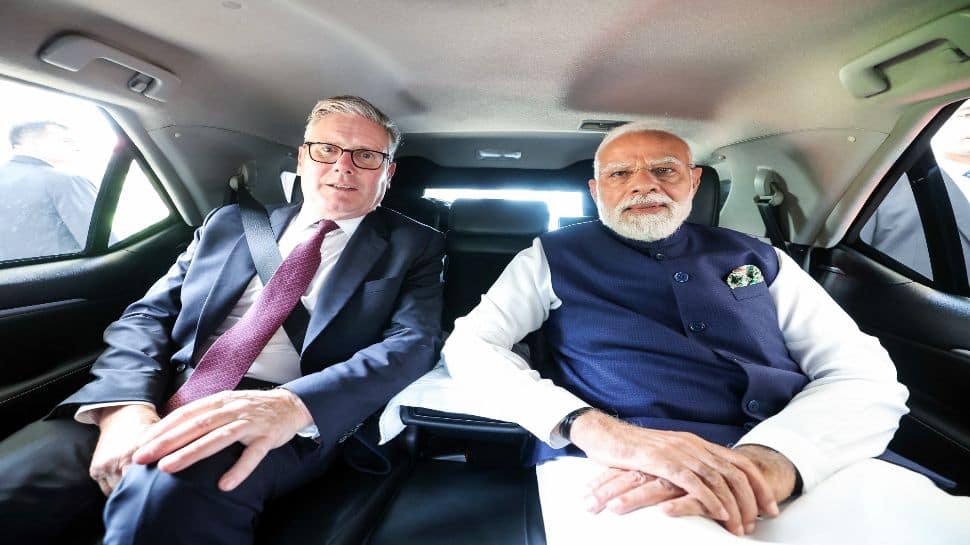
During his visit to India, UK Prime Minister Keir Starmer affirmed his nation’s support for India’s aspiration to secure a permanent seat on the United Nations Security Council (UNSC). Speaking alongside Prime Minister Narendra Modi in Mumbai, Starmer conveyed the UK’s desire to see India occupy its appropriate position within the UNSC, noting existing collaborations through the Commonwealth and G20. A joint statement released post-meeting underscored a mutual dedication to global stability, economic growth, and a multilateral system governed by international law. The leaders pledged to work collaboratively towards reforming multilateral institutions, with a specific focus on the UNSC. The UK officially reaffirmed its enduring endorsement of India’s legitimate pursuit of permanent membership within a reformed Security Council framework. Foreign Secretary Vikram Misri elaborated on this support, confirming the UK’s backing for India’s aim to achieve a permanent place in a reconstituted UNSC. Beyond diplomatic discussions, the visit prioritized trade and investment. Both leaders acknowledged the strong anticipation from business sectors in both countries regarding the forthcoming ratification and full implementation of the Free Trade Agreement (FTA) finalized in July. Plans for future trade and investment collaborations were a key focus for business leaders. The visit facilitated discussions on strengthening strategic economic ties to maximize the benefits of tariff reductions stipulated in the FTA. An inaugural meeting of the reconstituted India-UK CEOs Forum also convened, reviewing long-term trade and investment strategies and supporting FTA implementation. Joint initiatives were unveiled, including an expanded Climate Technology Startup Fund to foster innovation in climate technology and Artificial Intelligence, reinforcing the FTA’s emphasis on innovation. Technology and innovation were identified as crucial pillars of the bilateral relationship, with significant announcements concerning an India-UK Connectivity and Innovation Centre, a Joint Centre for Artificial Intelligence, and a Critical Minerals Industry Guild aimed at ensuring robust supply chains and advancing green technologies. The launch of phase two of the UK-India Critical Minerals Supply Chain Observatory and a new IIT satellite campus were also announced. Defense ties were significantly bolstered by a £350 million deal providing India with air defence missiles and launchers, expected to safeguard numerous jobs in Northern Ireland. This agreement is seen as a precursor to deeper collaboration in defense manufacturing. The presence of the UK Carrier Strike Group in the Indian Ocean, participating in joint naval exercises, further signifies the growing strategic partnership. India and the UK also committed to enhancing Indo-Pacific maritime security and intensifying efforts against terrorism and extremism. Cultural exchange was celebrated through a musical performance, and Starmer’s visit to Yash Raj Films Studios highlighted plans for major film productions in the UK, boosting cultural ties and economic opportunities.
Starmer in India: UK Pledges Support for UNSC Permanent Membership
 By The Chhattisgarh3 Mins Read