

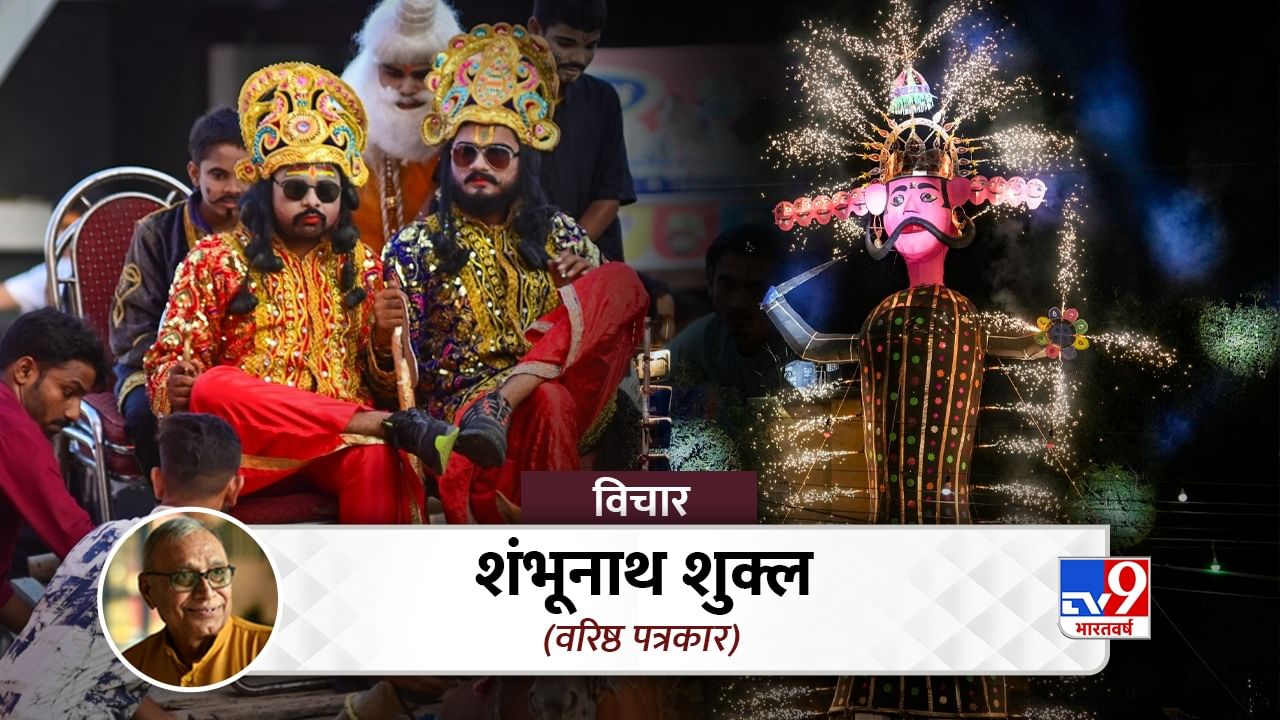
The author recalls an experience in Kolkata when he was the editor of Jansatta. He was approached by Yogesh Ahuja, representing the Punjabi community, who wished to stage a Ram Leela during Dussehra. Ahuja sought assistance. The challenge was to stage the entire story from Ram’s birth to Ravana’s death within a few hours.
The initial plan faced several obstacles, but the idea was eventually approved. The author sought the expertise of Syed Mahfooz Hasan Khan Pundarik, an expert on Ram Katha. Pundarik crafted a concise play that began with Ram’s marriage and concluded with the slaying of Ravana, omitting the birth of Ram as it was considered common knowledge that he was an incarnation of Vishnu.
The play’s performance, which was a success, showcased a diverse aspect of society. The Ram Leela was organized in Kolkata to ensure that the younger generations were aware of this narrative.
The author then discusses the importance of understanding the nuances of Ram’s character rather than simply participating in the ritual of burning Ravana. He emphasizes that the focus should be on Ram’s policies, particularly his approach towards his enemies. Ram, while on his mission to Lanka, was alone. Finding allies in a foreign land with different customs and ethics was difficult.
Ram’s relationship with the marginalized sections of society and his respect for them is admirable. However, Ram’s character also included discriminatory practices, which presents a complex picture. Ram is considered a subject-loving, egalitarian, and just person. Ram’s ideals are not perfectly suitable for today’s world. The importance is in understanding those traits that are eternal. The author stresses that Ram’s values and reverence should be taken into account.
Ram’s humility is highlighted by his seeking counsel from Sugriva, Angada, Jamvant, and Hanuman before deciding whether to offer refuge to Ravana’s brother, Vibhishana. After Ravana’s death, Ram mourns his death, recognizing the great scholar he was.
The author then refers to Maharishi Valmiki’s depiction of Ram as a patient, radiant, and self-controlled individual from the Ikshvaku dynasty, known for his greatness. Ram is both a human and a divine figure, and he represents an ideal king in the Indian feudal system. Valmiki envisioned a king with exceptional qualities, who was devoted to his wife and willing to sacrifice everything to protect her.
The story of Ram is about a king who prioritized his character and earned a divine status.