

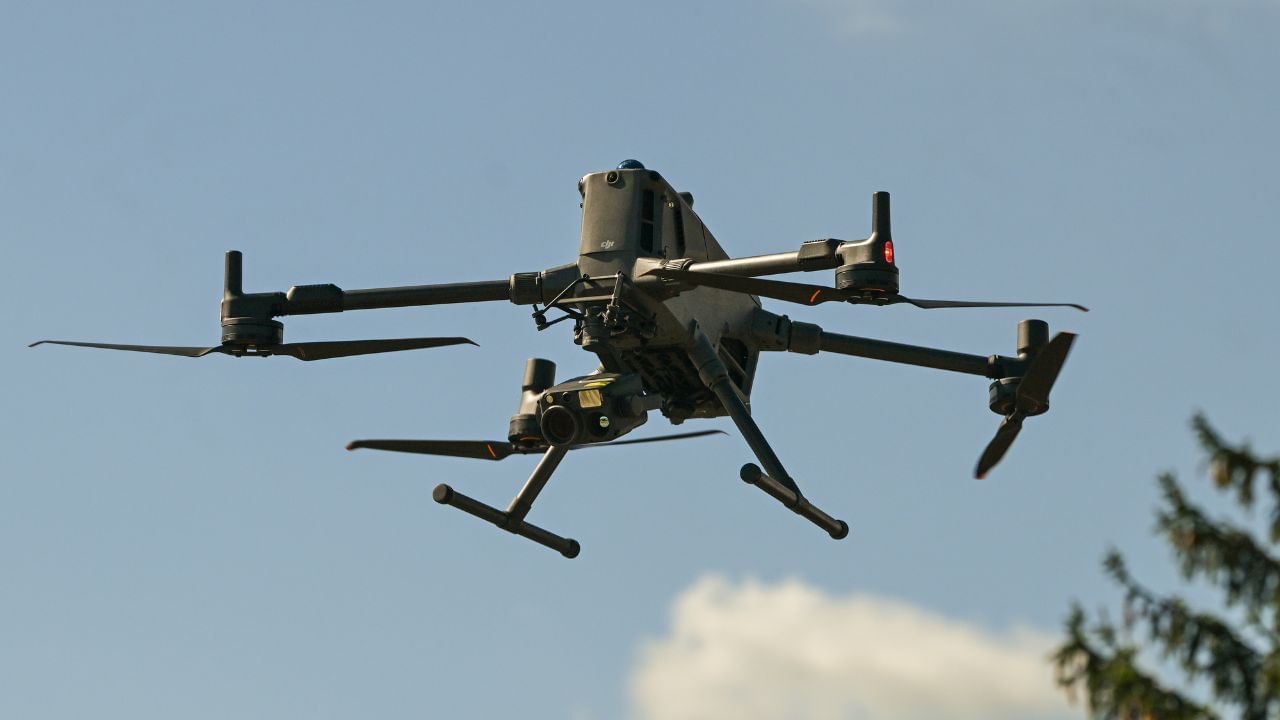
Amidst ongoing instances of Russian airspace violations, the European Union (EU) has officially announced the creation of a ‘drone wall’ along its eastern border. The primary goal of this project is to both identify and neutralize the presence of drones. The initial meeting dedicated to this initiative took place on Friday, drawing participation from various member states including Bulgaria, Denmark, Estonia, Hungary, Latvia, Lithuania, Poland, Romania, Slovakia, and Finland. Ukraine was also invited, recognized for its significant advancements in drone technology and its capacity to manufacture approximately 4 million drones annually. NATO’s presence was limited to an observer role. The matter will be revisited at an informal meeting of EU leaders scheduled for next week in Copenhagen.
Over the past several weeks, Poland, Romania, Estonia, and Denmark have reported multiple drone sightings. Poland encountered incursions from 19 Russian drones, while a drone incident at Copenhagen Airport resulted in a four-hour flight delay. Danish Prime Minister Mette Frederiksen acknowledged that Russia’s involvement couldn’t be entirely discounted, but that definitive evidence was lacking. The Danish Defence Minister characterized these occurrences as a hybrid attack.
In a related development, Sweden has offered Denmark a military-grade anti-drone system, aimed to be in place before the upcoming Copenhagen summit. According to Swedish Prime Minister Ulf Kristersson, this system has the capability to intercept and destroy drones. Details on Denmark’s response to this offer are still pending.
EU Commissioner Andrius Kubilius pointed out the technological requirements for the drone wall, which will include radar systems, acoustic sensors, signal jammers, interceptors, and conventional artillery. Poland was compelled to allocate billions of dollars towards missile systems to counter less expensive drones, and Denmark does not possess a ground-based air defense system. The undertaking also introduces challenges related to alignment with NATO and the coordination of defense policy. Russia’s ongoing aggression has compelled the EU to intensify its efforts in the domain of self-defense.