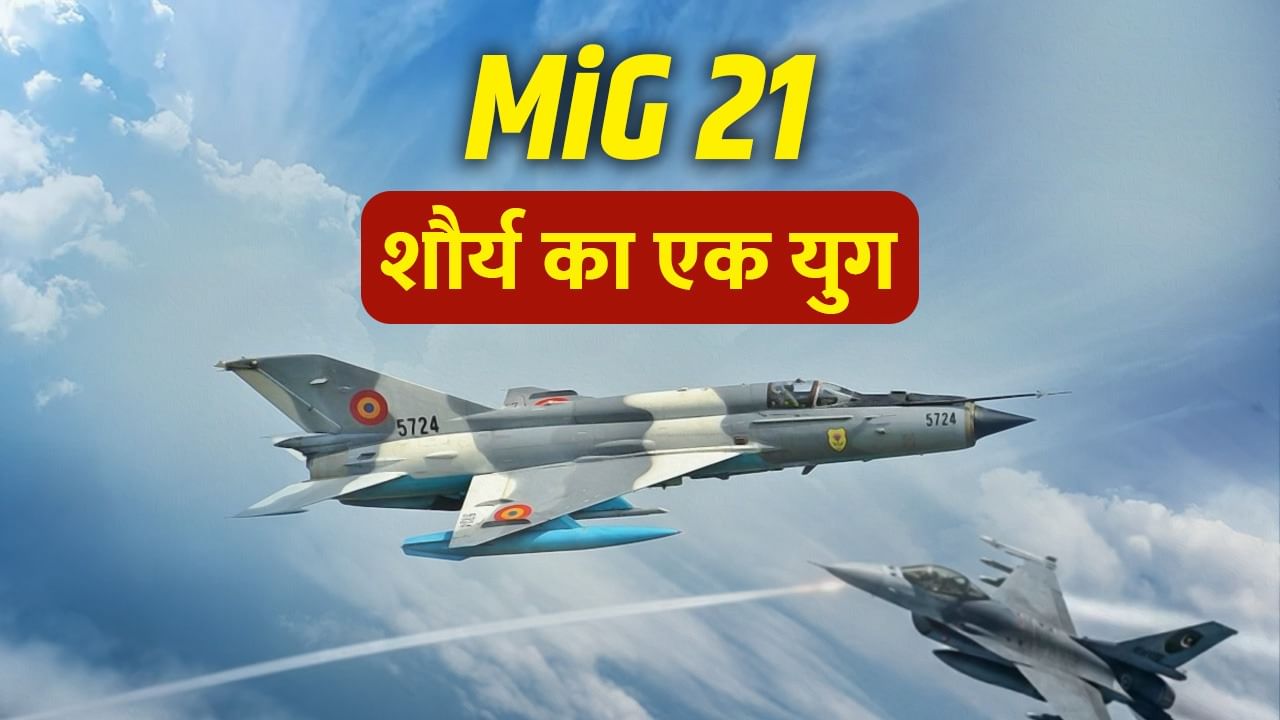
The MiG-21, a legendary fighter jet that formed the backbone of the Indian Air Force for six decades, is set to retire, concluding a remarkable chapter in aviation history. This aircraft represented India’s bravery and was a key element in numerous conflicts, defending the nation in times of war. Its importance is evident in its service from the 1965 war to Operation Safed Sagar. The Indian Air Force will decommission the final MiG-21 fighters during a ceremony in Chandigarh on September 26th. These aircraft were instrumental in several pivotal moments for India. Air Chief Marshal A. P. Singh recently piloted the MiG-21 from the Nal Air Force Base, where the first MiG-21 was integrated into the Air Force in 1963, following the 1962 India-China war. The MiG-21 was considered an advanced aircraft at the time, providing a formidable aerial defense against both Pakistan and China. The 28th Squadron of the Indian Air Force was the first to operate the MiG-21, and it was known as “First Supersonics”. The MiG-21 was repeatedly upgraded, and HAL initiated its production in India in 1971. Throughout its service, the MiG-21 played a key role in the 1971 India-Pakistan war, with its successes well documented. It also served in the 1999 Kargil war and the 2019 Pulwama attack. Despite its achievements, the MiG-21 earned the moniker ‘Flying Coffin’ due to numerous crashes. The MiG-21’s retirement was delayed due to the repeated postponements of its replacement program but now, with the arrival of the LCA Tejas Mk.1 and Mk.1A, it will finally be phased out.
MiG-21’s Glorious Exit: The Fighter Jet That Guarded India’s Skies for 60 Years to Retire from Chandigarh
 By The Chhattisgarh2 Mins Read