

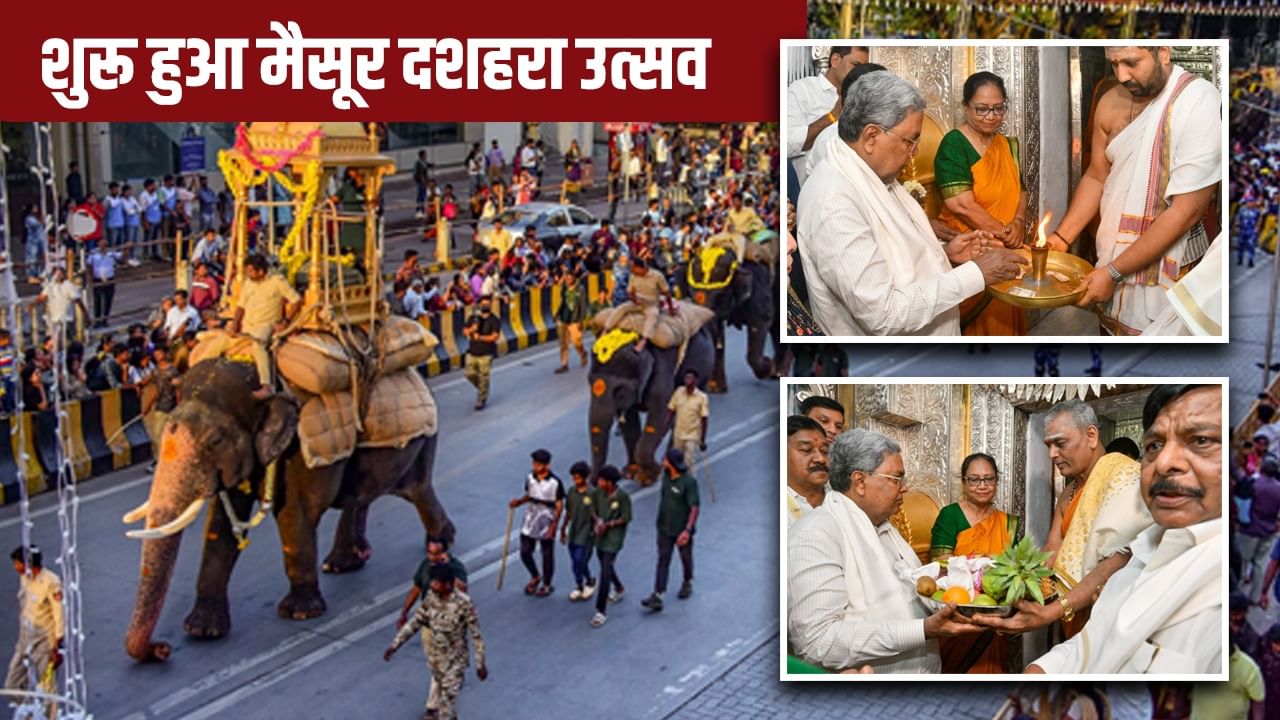
The annual Dasara festival in Karnataka, at the historic Chamundi Temple in Mysore, began with a controversial opening. Muslim Banoo Mushtaq, a Booker Prize laureate, was chosen to inaugurate the event, which drew criticism and protests. The situation escalated to the Supreme Court, where the state government’s decision was affirmed, emphasizing the official nature of the event and dismissing religious discrimination. Despite the court’s ruling, the festival’s commencement was met with renewed opposition.
Mushtaq, addressing the criticism, underscored the importance of unity, inclusivity, and cultural harmony. During the inauguration, she paid respects at the temple with floral offerings and the lighting of a ceremonial lamp. She remarked on the significance of the honor, celebrating the cultural ethos and harmony of the region.
The Chief Minister, Siddaramaiah, also faced interruptions during his speech at the ceremony, prompting a sharp rebuke from him directed at those leaving the event. He questioned their behavior and instructed the police to prevent any departures, continuing with his address.
Siddaramaiah acknowledged Mushtaq’s Muslim identity while emphasizing her fundamental humanity, stating that they are all part of the same human race. He asserted that a lack of mutual affection does not constitute true humanity.
Mushtaq responded to the criticism, stating she delivered a message of unity in her speech. She envisioned a society rooted in love, where everyone is equally treated and cared for.
She expressed a hope for unity, eradicating intolerance and promoting global peace, justice, and patience. The festival, dating back over 500 years, has immense importance in India, established by Raja Wodeyar I in 1610 to honor Goddess Chamundeshwari.
Mushtaq, a 62-year-old Kannada writer, social activist, and recipient of the International Booker Prize in 2025, was recognized for her literary achievements and selected as the chief guest by the state government.