

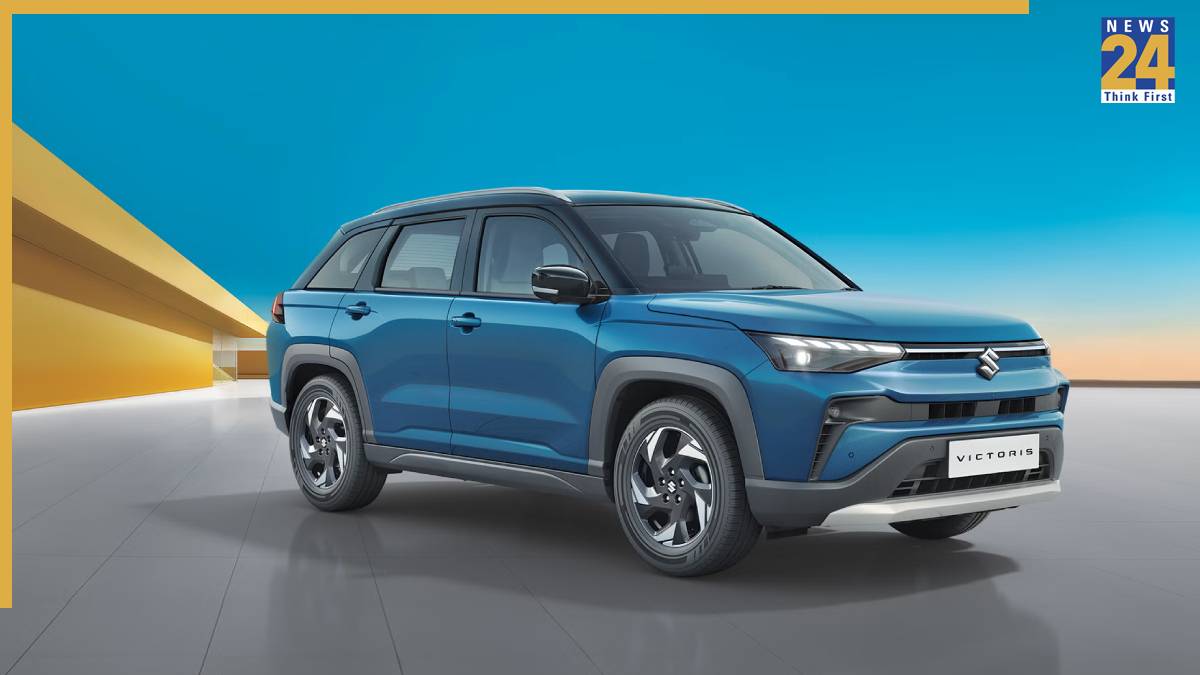
Maruti Suzuki’s Victoris, a new model, has been introduced to challenge competitors such as the Hyundai Creta and Kia Seltos. The company is not only focused on domestic sales but is also planning to export the vehicle to various international markets to boost global sales. Suzuki’s export strategy involves targeting numerous countries. The Grand Vitara is currently exported to approximately 60 countries. The Victoris, however, is designed to reach a wider geographical area, potentially covering over 100 countries. The e-Vitara is another model with a similar export plan, and its exports have already commenced.
Shipments of the e-Vitara have been sent to 12 European countries, including the UK, Germany, Sweden, the Netherlands, Hungary, Austria, Iceland, and Belgium. The Victoris is likely to follow a similar export route. Both the Victoris and e-Vitara are destined for markets in Asia, the Middle East, South and Central America, and Africa, in addition to Europe.
India’s export sector is witnessing a rise, and Maruti’s contribution to exports is also increasing. In August 2025, Maruti exported 36,538 cars, which represented about 20% of its total sales of 1.8 lakh units for the month. Maruti accounted for 40% of all car exports from India in FY25. With new models such as the Victoris, Maruti anticipates a further increase in its export capabilities.
Maruti already exports a range of its models globally, including the Fronx, Jimny, Dzire, Baleno, Swift, Ertiga, Celerio, S-Presso, Eeco, Ciaz, Grand Vitara, Alto, Brezza, Ignis, XL6, and Wagon R. The Fronx is currently the most successful export model, with over 1 lakh units exported. The Fronx is exported to more than 80 countries, and Suzuki is planning to replicate this success with the Victoris.