

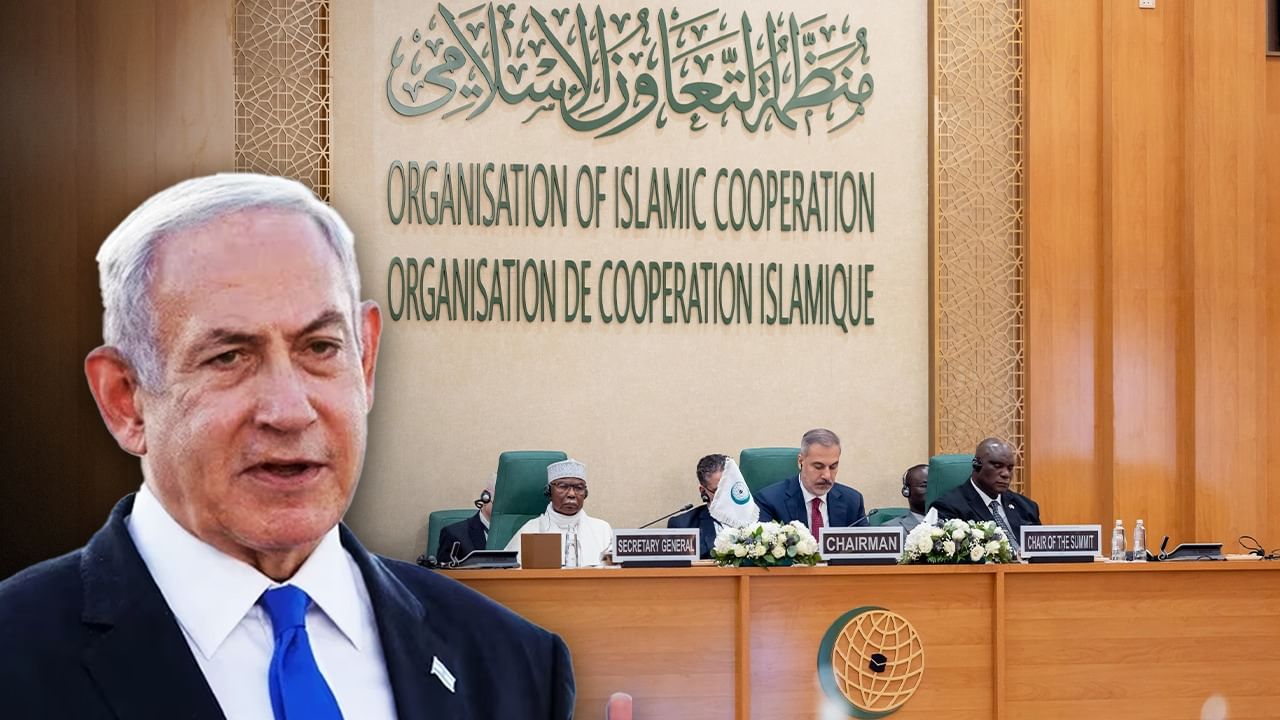
An Arab-Islamic summit in Doha, Qatar, involving the Arab League and the Organization of Islamic Cooperation (OIC) with 57 Muslim countries, highlighted the ongoing tensions between Israel and several nations. The summit was triggered by Israeli airstrikes targeting Hamas leaders. Despite repeated OIC meetings, including three in the previous year, little action has been taken against Israel, leading to questions about its position. This article investigates why Israel seems unfazed by these countries, focusing on its crucial agreements with various Muslim states.
Azerbaijan supplies 60% of Israel’s oil, making it a major supplier. A gas exploration agreement was signed in March 2025. During the Hamas-Israel war in October 2023, Azerbaijan played a critical role in ensuring Israel’s energy needs were met. The Abraham Accords, signed in September 2020, led to the UAE recognizing Israel, followed by Bahrain, Morocco, and Sudan. Bilateral trade increased in 2024, and Israel imports 10% of its petroleum products from the UAE. Both countries collaborate in areas such as tourism, education, health, and trade. However, the UAE has warned that the accords may be at risk because of actions in the West Bank following the Gaza war.
A natural gas agreement between Egypt and Israel is crucial for their energy security. Gas from Israeli fields is transported through Egyptian LNG terminals to Europe. The Dolphin agreement in 2018 provides Israel with natural gas from Egypt, generating substantial revenue. Both nations seek to become an energy hub through gas pipeline infrastructure.
Saudi Arabia faces challenges from the Houthi rebels, who have launched attacks on Saudi Arabia since 2014. Saudi Arabia views Israel as a barrier to Iranian influence. If Israel weakens, it could embolden Iran and strengthen the Houthis. Israel’s presence aids in curbing Iranian expansionism. Houthi attacks have affected the global oil market, and Israel conducts attacks on Houthi rebels. A weaker Israel may exacerbate existing difficulties in Saudi Arabia.
Turkey ended trade ties with Israel due to the Gaza war, but its embassy remains active in Tel Aviv. Trade continues through third-party countries such as Georgia and Armenia. This trade reached $1.2 billion in 2024. Turkey, a NATO member, has defense ties with Israel and also has a Jewish population. While the Erdogan government publicly supports Palestine, it maintains relationships with Israel for commercial interests.
The United States’ role in the establishment of relations between Pakistan and Israel is complex. The U.S. wants more Muslim countries to recognize Israel, but the majority of Pakistanis support Palestine. Pakistan, reliant on U.S. aid, is in a difficult position. U.S. pressure relates to IMF loans and aid, compounded by the China-Pakistan Economic Corridor (CPEC). Recognizing Israel could face significant domestic opposition, so no decisions have been made.