

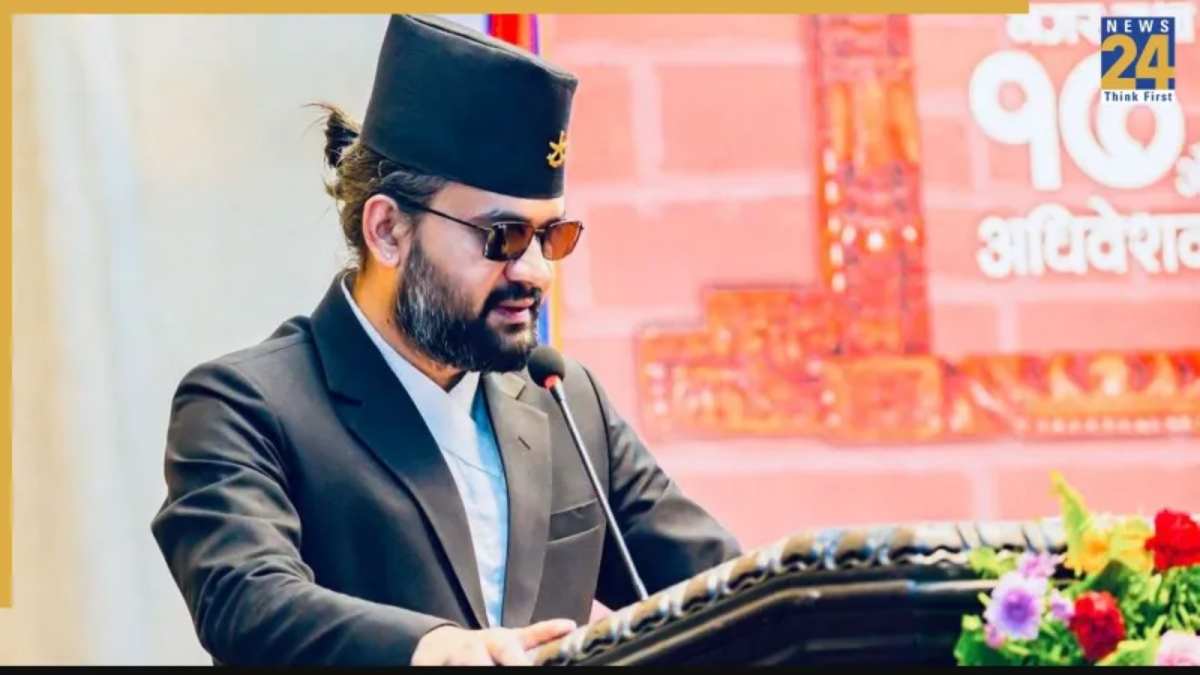
The political landscape of Nepal is in flux, marked by Gen Z-led protests against social media bans and corruption, creating an environment where anti-India sentiment is on the rise. At the center of this narrative is Kathmandu Mayor Balendra Shah, whose actions have marked him as a nationalist figurehead. His opposition to Indian films and his stance against KP Sharma Oli have set him apart.
Shah’s advocacy for a ‘Greater Nepal,’ as demonstrated by the map displayed in his office, presents a direct challenge to India’s territorial claims. This move, along with his growing popularity among Nepal’s youth, positions him as a potential leader. If Shah were to become Prime Minister, the ramifications for India would be significant. His endorsement of the youth movement and his specific calls for the government to resign during the protests showcase his pivotal role in the ongoing tensions.
The controversy surrounding the Hindi film ‘Adipurush,’ where Shah sought to ban the film, further illustrates his critical stance against perceived Indian influence. His comments regarding the court’s decision to lift the ban reflect a view that Nepal has been under India’s rule, which is a sensitive topic. Shah, a rapper-turned-mayor, has a civil engineering background and has brought important reforms to Kathmandu. With his ties to India, there’s a possibility of strengthened trade and diplomatic relations, but also a need for diplomatic stability in the region. The 30th government in 35 years is a testament to Nepal’s political instability. In this context, a stable leadership provided by Shah could be beneficial to India, or his shift towards the left could lead to friction. The mayor’s meeting with the US Ambassador and his critical stance could be viewed as diplomatic maneuvers impacting India. The potential fallout from canceling the 1950 India-Nepal Treaty of Peace and Friendship cannot be ignored.