

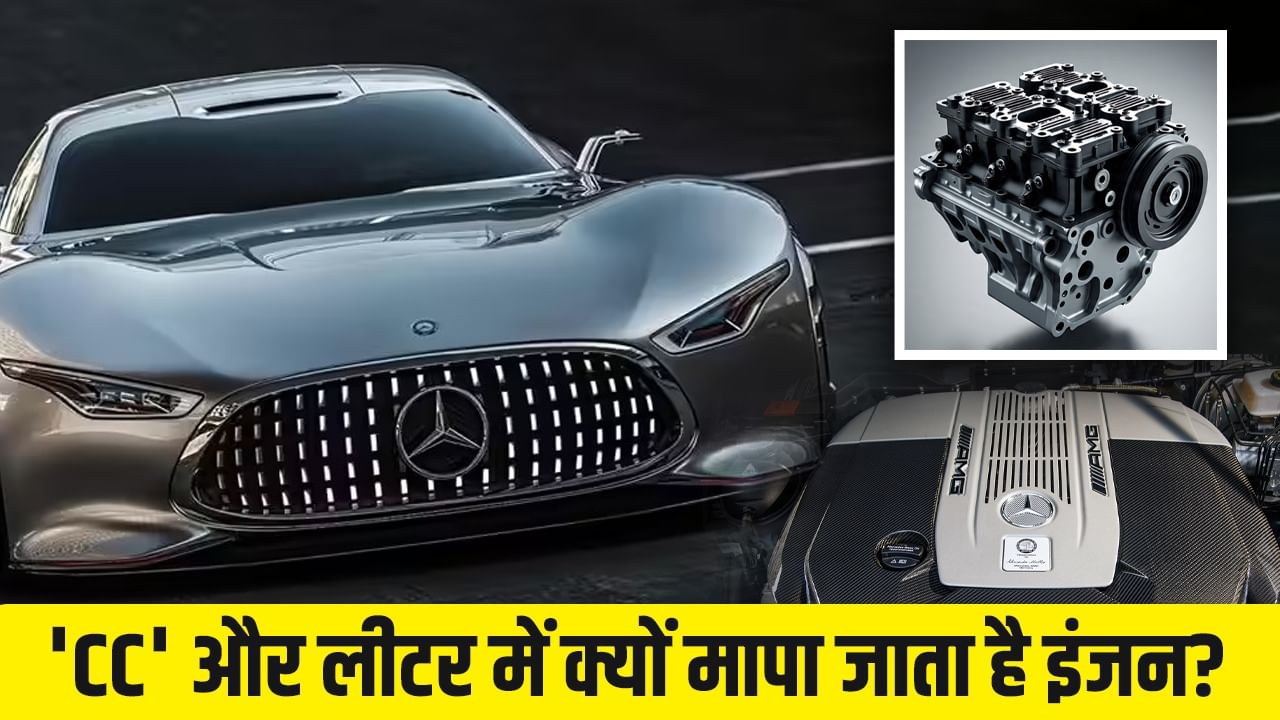
Engine capacity, measured in cubic centimeters (CC), is a fundamental aspect of vehicle specifications for cars, motorcycles, and scooters. The prominence of CC in automotive discussions, from promotional materials to showrooms, begs the question: Why is this measurement used, what does it mean, and how does it relate to taxes, such as GST?
CC, or cubic centimeter, quantifies the volume within an engine cylinder where the fuel-air mixture combusts, producing power. A larger CC indicates a greater volume for fuel and air intake, directly correlating to increased engine power. Scooters with 100cc engines are suitable for daily short-distance travel, prioritizing fuel efficiency. Motorcycles with 350cc engines offer enhanced power, ideal for longer journeys and highway use. Cars commonly feature engines ranging from 1000cc to 2000cc.
There’s a direct conversion: 1000cc equals 1 liter. Both CC and liters are volume measurements. The engine size represents the combustion chamber’s volume. Automakers and consumers often use rounded figures; a 1197cc engine might be called a 1.2-liter engine, and a 1498cc engine a 1.5-liter engine. Liters are more universally understood, while CC is a technical term. Cars and large bikes are often described in liters because of their higher capacities (over 1000cc). Smaller bikes and scooters frequently use CC measurements (100cc, 150cc, 350cc).
The government has used CC to determine GST rates to streamline taxation and regulate vehicle pricing. Larger engine vehicles tend to consume more fuel and are usually priced higher, thus, a taxation structure based on CC was adopted.
The latest GST 2.0 framework continues this practice: motorcycles with engines under 350cc incur an 18% GST, making them more affordable. Motorcycles exceeding 350cc are subject to a 40% tax. Cars with engines up to 1.2 liters (petrol) and 1.5 liters (diesel) have lower tax rates, favoring hatchback and sub-compact car buyers. Luxury vehicles and SUVs, with engines over 1500cc, face a 40% GST.