

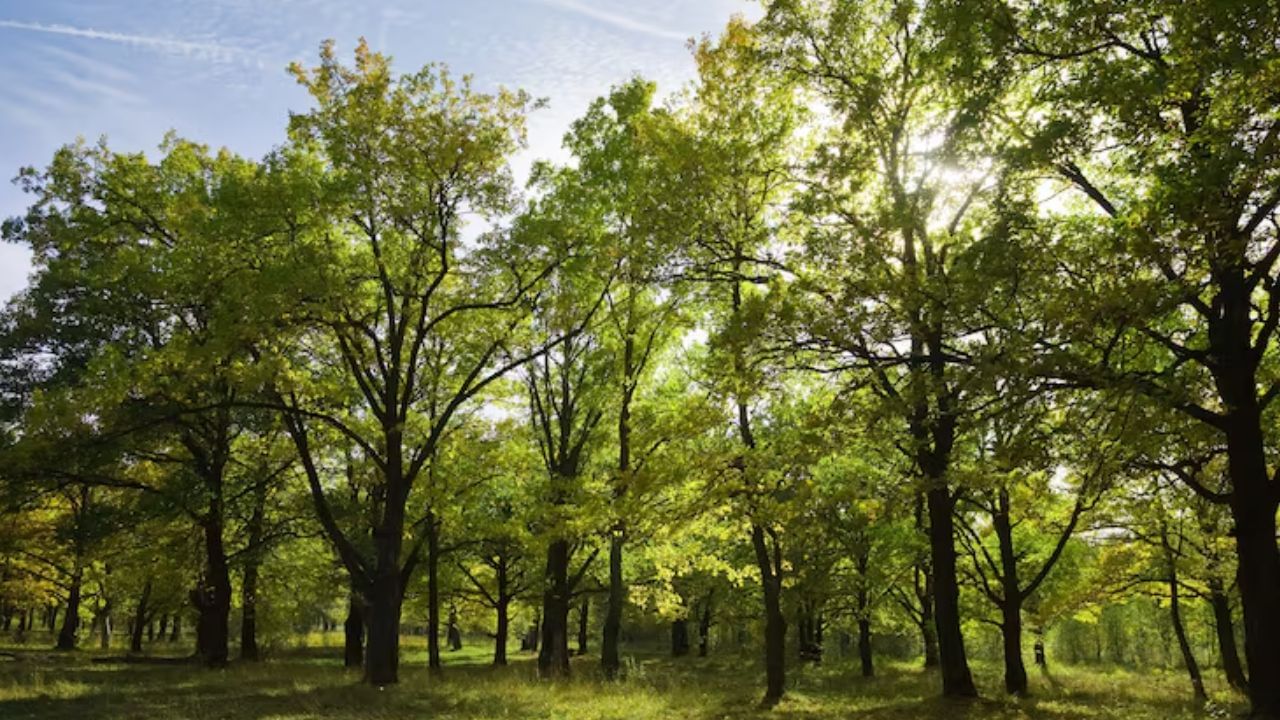
Trees are a common sight in our surroundings, varying greatly in size and appearance. The Delhi Forest Department has recently issued a circular clarifying the definition of a tree to remove any ambiguity in identifying them.
The circular addresses how a tree is legally defined. It is aimed to clarify which plants are considered trees and which are not, ensuring consistent application of the law.
The official order, based on the Delhi Preservation of Trees Act (DPTA), 1994, defines a tree as a woody plant with branches originating from a single trunk. That trunk must be at least 5 centimeters thick, measured at a height of 30 centimeters from the ground. Furthermore, the tree must stand at least one meter tall from the ground.
The DPTA, 1994, specifies the following conditions for a plant to be classified as a tree:
1. It must be a woody plant.
2. Its branches must originate from a single main trunk.
3. The trunk must measure a minimum of 5 centimeters in thickness at 30 centimeters above the ground.
4. The overall height of the plant must be at least 1 meter.
This definition excludes smaller plants, bushes, or thin-stemmed plants from being considered trees. Only plants meeting these specific criteria are legally classified as trees.
The circular reiterates the tree definition from Section 2(i) of the DPTA, 1994 to eliminate any confusion and ensure uniform compliance with the law. It stresses that the definition should be strictly followed and not misinterpreted, such as considering separate branches as individual trees.
A senior forest official highlighted that individual branches are not generally regarded as separate trees. Previously, trees such as Kikar and Babul, which might have multiple ground-level branches, were sometimes treated as distinct trees. However, this is no longer the case under the revised definition.
The department further clarified that new shoots emerging from the ground should also not be considered separate trees.
This clarification is significant because it impacts the implementation of tree pruning regulations under the DPTA. Standard operating procedures (SOPs) are in place to remove hazardous branches near infrastructure like roads and railways to prevent accidents. The SOPs emphasize that pruning away weak branches encourages the growth of new branches and fruit, providing a food source for wildlife.
According to the India State of Forest Report 2021, Delhi’s forest cover is 13.15% and tree cover is 9.91%, resulting in a total green cover of approximately 23%.