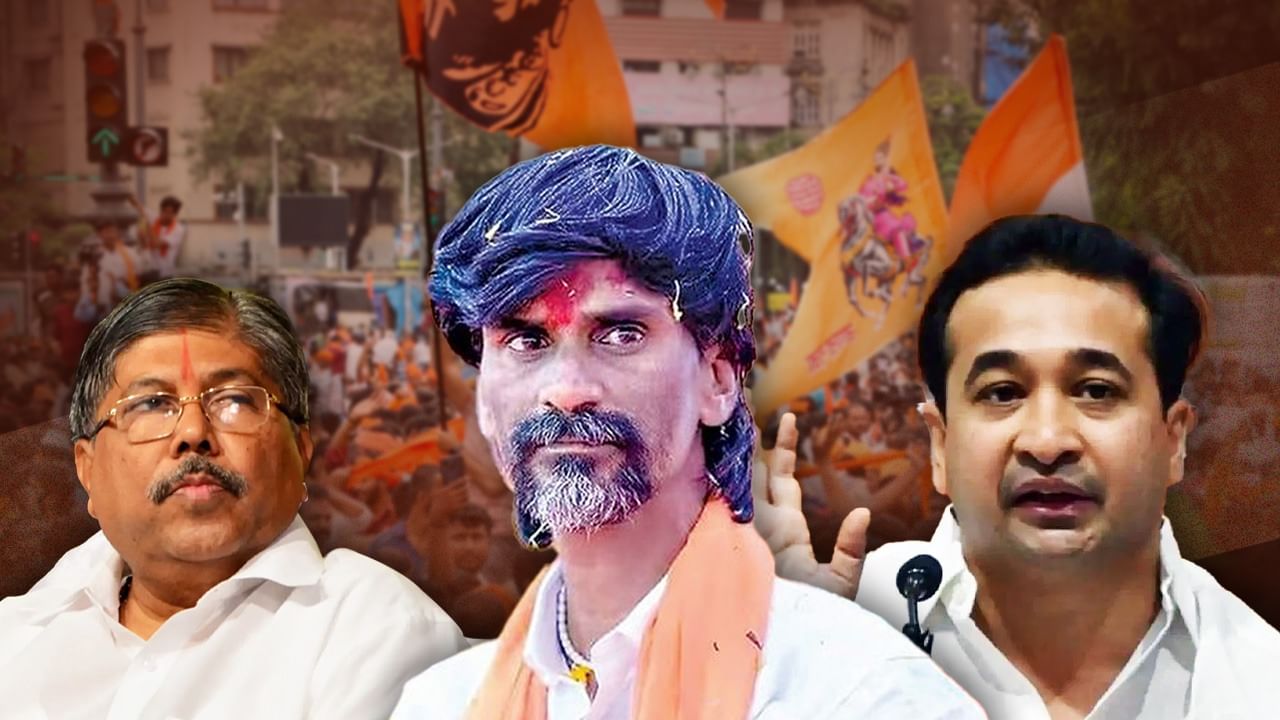
The issue of Maratha reservation in Maharashtra continues to generate controversy. Manoj Jarange Patil’s hunger strike, aimed at securing reservation benefits, has escalated with his decision to forgo water from September 1st. Amidst the protests, government ministers Chandrakant Patil and Nitesh Rane have proposed that the Maratha community should instead focus on the existing EWS quota, rather than seeking inclusion in the OBC category. Suggestions have also been made to potentially increase the scope of the EWS quota. Nitesh Rane has also alleged that NCP (SP) MLA Rohit Pawar is funding Jarange’s demonstrations, while BJP leader Keshav Upadhyay claims that some members of the opposition MVA are using the Maratha reservation issue for political gain. Jarange commenced his hunger strike at Mumbai’s Azad Maidan on Friday, demanding 10% reservation for Marathas. His primary goal is to have them recognized as Kunbi, a caste under the OBC umbrella, which would grant them access to reservation benefits in government employment and education. This demand is being opposed by OBC leaders. Minister Nitesh Rane has stated that Jarange’s push to be included in the OBC category is unlikely to succeed. He added that if Jarange’s demands were limited to the Marathwada region, the government may consider them. He highlighted the distinct identities of Marathas and Kunbis in the Konkan region, where he comes from, who are satisfied with their present situation. Rane stated that the Marathas in his area would not agree to be classified as Kunbi to get OBC benefits. Rane further clarified that the state government has already enacted legislation for the community to receive 10% reservation via the EWS for educational institutions and government jobs, along with financial aid. Any proposal to expand this reservation can be discussed with the government. Chandrakant Patil, commenting on the Maratha reservation, stated that the community never faced untouchability and isn’t caste-based backward. He argued that the decline in landholdings has contributed to their economic hardship. The major problem arose when agricultural income fell, making it difficult for Maratha families to afford quality education for their children. Consequently, they are seeking reservation in education and employment. The EWS reservation offered by the central government, already affirmed by the Supreme Court, offers a viable support system. The EWS, or Economically Weaker Section, was introduced by the central government in 2019. This was to give the general category people a reservation in education and government jobs. The 103rd amendment was made in the constitution. This can be availed by families having an annual income less than 8 lakh rupees.
Maratha Reservation Debate: Leaders Advocate for EWS Quota, Address OBC Inclusion
 By The Chhattisgarh3 Mins Read