

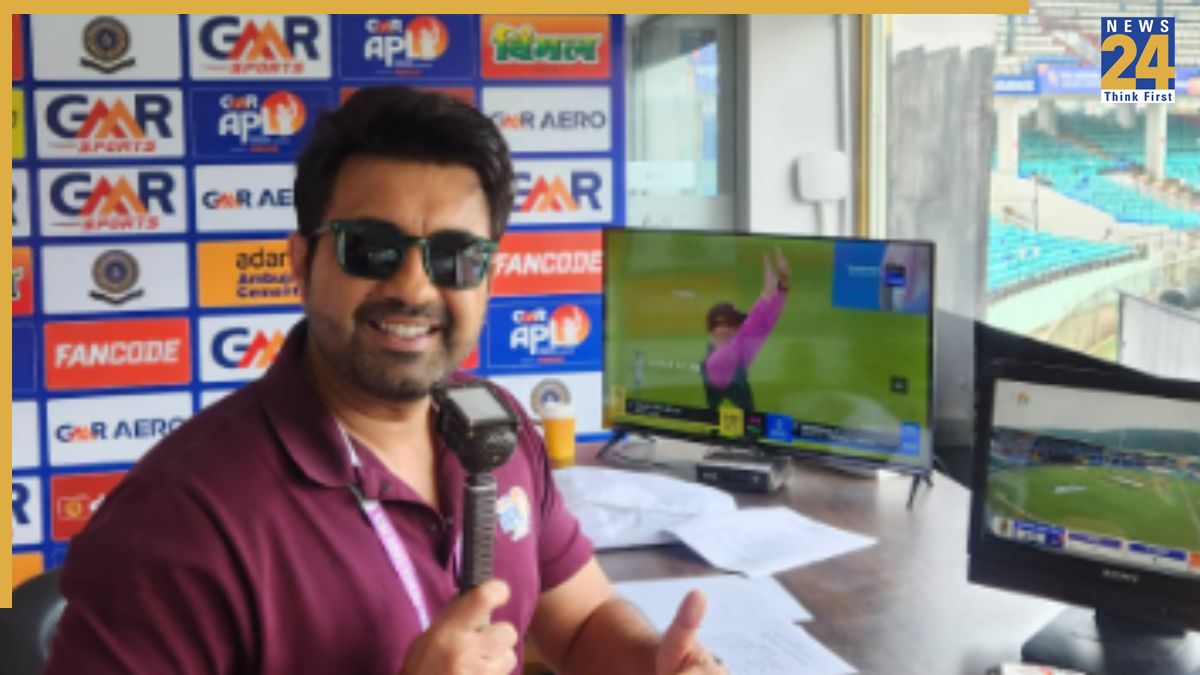
The 2025 Annual Conference of the International Cricket Council (ICC), a gathering of all 108 member nations, was recently held to determine the direction of cricket for the next decade. Chaired by Jay Shah, the four-day meeting covered critical topics such as scheduling, global tournament expansion, and efforts to boost fan engagement. Alongside these key cricketing discussions, a surprising development emerged: veteran cricket commentator Mikkhail Vaswani announced his foray into the world of cinema.
Vaswani, who moderated a prominent session alongside Rahul Dravid and Mahela Jayawardene during the conference, quickly became the subject of widespread discussion among media outlets and sports enthusiasts. The debate centered on whether his skills as a commentator could translate effectively to acting. Many believe that commentary is a form of entertainment in itself, with a seamless connection between sports presentation and general entertainment. This is particularly true in an era where media figures are diversifying their careers beyond their established fields.
Vaswani is set to make his acting debut in the Malayalam film “I’m Game,” which is being produced by Wayfarer Films. The film features intense action sequences choreographed by the Anbariv Masters, the team behind the action in films like KGF and Leo. “I’m Game” is anticipated to be a significant project for Dulquer Salmaan, promising a blend of mass appeal with high-octane action and compelling storytelling. The first phase of filming was completed in Thiruvananthapuram. The screenplay was penned by Sajeer Baba, Ismail Aboobacker, and Bilal Moidu.
Cricket and cinema share a unique relationship within India and much of Asia. These two domains often have overlapping audiences and cultural significance. Individuals who transition between them bring with them an existing fan base and valuable storytelling experience. Vaswani’s move into the film industry has highlighted the growing intersection between sports and entertainment news, providing fresh opportunities for collaboration and audience engagement.
This crossover from sports to cinema is not unprecedented. Previously, former players, presenters, and even referees have found roles in films, sometimes acting and sometimes appearing as themselves. These moves are frequently driven by a personality’s ability to connect with audiences, a skill refined over years of engaging with millions during live broadcasts.
Today’s sports industry is built on both the game and the personalities involved. The transition of a commentator to film is a significant development, as the lines between live sports coverage and scripted entertainment become increasingly blurred. The skills in voice projection, timing, and audience interaction developed in commentary are now finding applications in film. Cricket fans are eager to see how this combination of sports and entertainment will play out.
India’s love for cricket and cinema is well-established, as evidenced by biopics and guest appearances by cricketers in films. A commentator’s move into cinema is a new and exciting development. Commentary thrives on drama, emotion, and audience connection, aspects that also fuel cinema. This shift suggests that further crossovers may occur as the fervor of the sports world and the creativity of the film industry converge.