

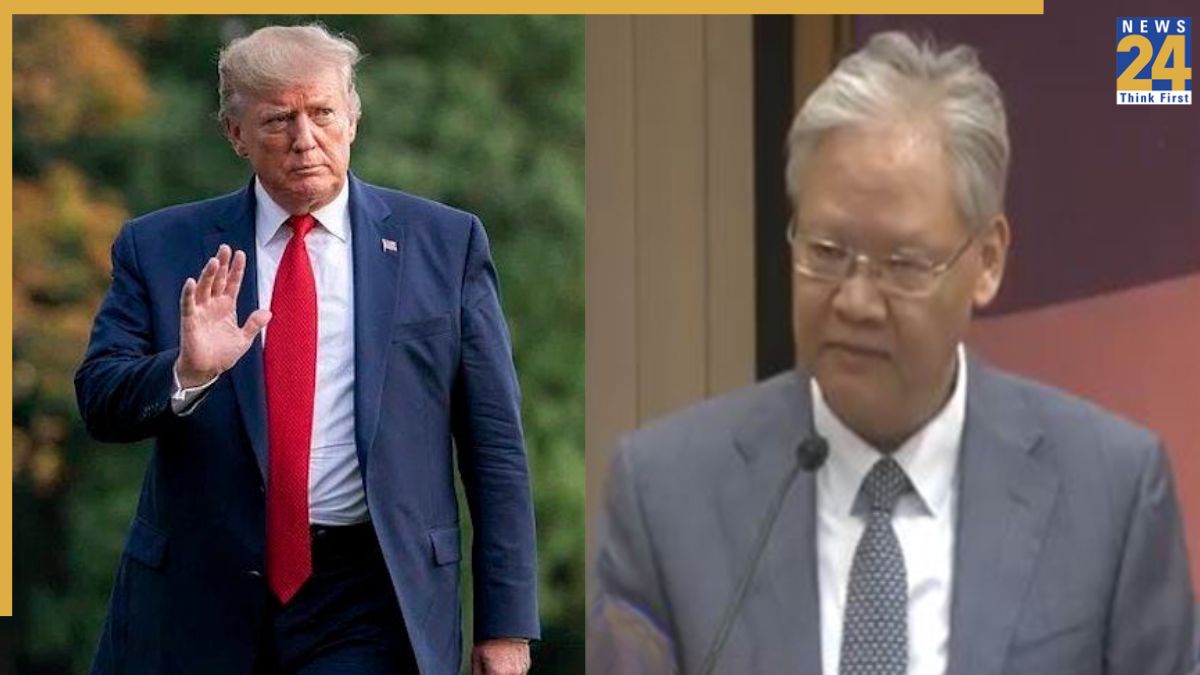
In a speech delivered in New Delhi, the Chinese envoy expressed China’s openness to Indian commodities, framing it within the context of ongoing global trade disputes. He criticized the use of tariffs and trade wars, attributing them to disruptions in the world’s economic structure. The envoy stated that power politics and the ‘law of the jungle’ have taken precedence, which is detrimental to international rules. He then emphasized the need for China and India to enhance cooperation, particularly to assist developing countries in overcoming challenges. He views trade as a means of mutual benefit rather than a tool to achieve individual selfish interests. The envoy directly addressed the U.S.’s imposition of tariffs on India, emphasizing China’s strong opposition to the tariffs and the potential consequences of appeasement. The U.S. had previously imposed tariffs, first at 25% and later increasing to 50%, citing India’s imports of Russian oil as the justification.
He reiterated China’s support for India in upholding the multilateral trading system centered around the WTO. The envoy also highlighted ongoing talks between India and China on direct flights and China’s willingness to deepen friendly exchanges. He then spoke of the proposed BTA between India and the U.S., with the U.S. seeking more access to Indian agriculture. Details of the U.S. tariffs and the deadline for reciprocal tariffs were also discussed. The Chinese Foreign Minister met with India’s NSA to discuss the border issue, and the two countries agreed to establish two groups to address it.
The Chinese envoy referenced the upcoming SCO Summit in China, with the visit by Prime Minister Modi as a significant event for the bilateral relationship. The envoy highlighted ten points of agreement from talks between the Special Representatives of China and India, focusing on border issues. The two sides have agreed to an Expert Group to explore Early Harvest of boundary delimitation, and a Working Group to advance effective border management. They have also agreed to create General-Level Mechanisms and re-open traditional border trading markets.