

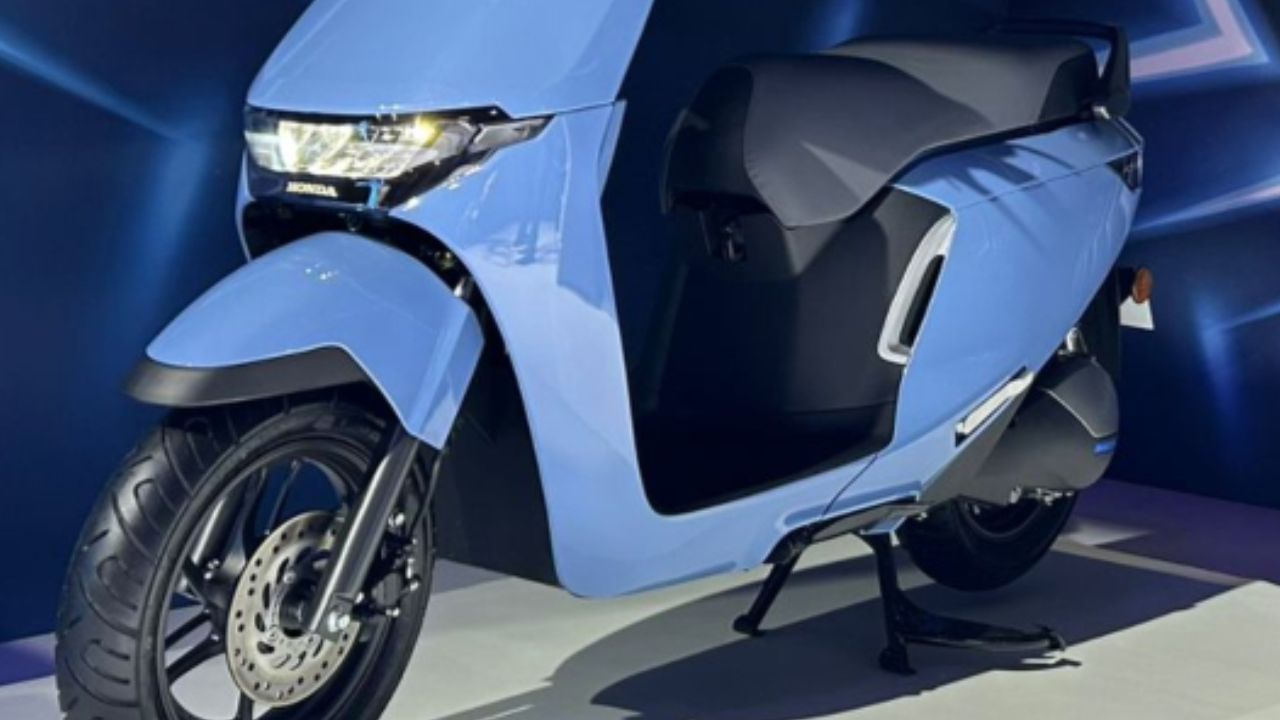
Honda’s foray into the electric two-wheeler market with the Activa e and QC1 scooters has yielded mixed results. Over a six-month period from February to July 2025, Honda produced 11,168 units, selling 5,173. Deliveries commenced in March 2025.
The Activa e, designed for personal use, features a swappable battery system. The QC1, on the other hand, is geared towards gig workers and urban environments, with a fixed battery. Of the 4,950 units sold in the first five months, the QC1 dominated sales with 4,252 units compared to only 698 Activa e units, representing an 86% share.
Despite its stylish design and advanced features, the Activa e’s sales are hampered by its battery-swapping requirement. Unlike the QC1, the Activa e’s battery cannot be charged at home, necessitating the use of swapping stations. It boasts a claimed range of 102 km, a top speed of 80 km/h, and acceleration from 0 to 60 km/h in 7.3 seconds. The standard model is priced at ₹1,17,428 ex-showroom, and the RoadSync Duo model is priced at ₹1,52,028 ex-showroom. However, the limited availability of swapping stations, with just over 80 in Bengaluru, and the recent expansion to Delhi and Mumbai, is a significant constraint.
Conversely, the QC1 is gaining traction due to its affordability and home-charging capability. Starting at ₹90,022 ex-showroom, it is the most affordable Japanese electric scooter in India. It offers a claimed range of 80 km, reaching 40 km/h in 9.4 seconds, and a top speed of 50 km/h. The QC1 is currently available in cities including Bengaluru, Hyderabad, Mumbai, Pune, Delhi, and Chandigarh.